
Japan Launches MMX Probe to Retrieve Mars Moon Samples by 2031
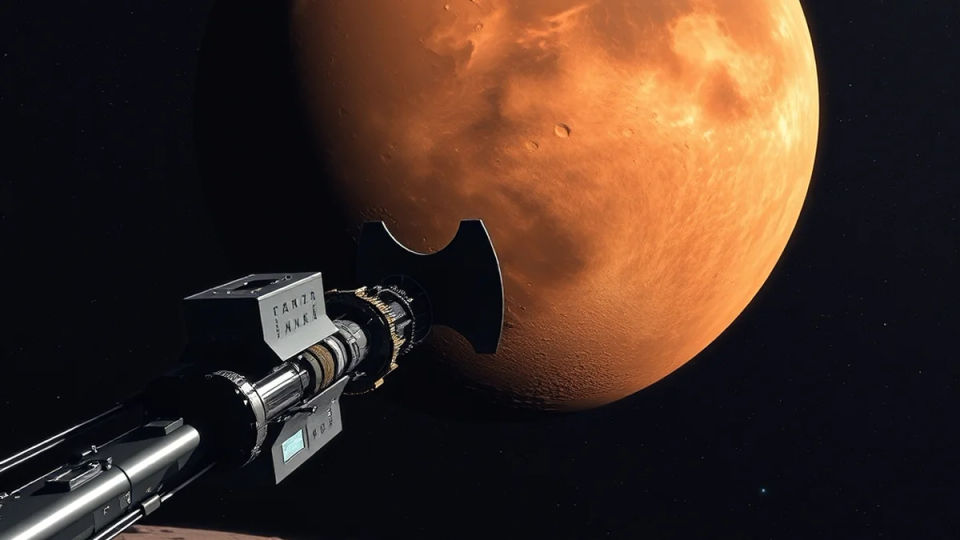
Japan Launches Historic Martian Moons Exploration Spacecraft
Japan successfully launched an ambitious interplanetary mission designed to retrieve pristine surface samples from Phobos, the innermost moon of Mars. The flagship H3 launch vehicle carrying the robotic Martian Moons eXploration probe lifted off from the Tanegashima Space Center into clear nighttime skies. If successful, the five-year exploration endeavor will represent the first robotic mission in human history to return physical samples from the Martian celestial system. NASA administrator Nicky Fox praised the initiative, affirming that returned extraterrestrial specimens will deliver transformative scientific breakthroughs ahead of planned crewed voyages to Mars.
During operations on the Martian satellite, the vehicle will execute surface collection procedures over a brief duration before returning aloft.
Orbital Trajectory and Rover Deployment on Phobos
The exploratory spacecraft is scheduled to complete its interplanetary cruise and arrive in the orbital vicinity of Mars by August 2027. Upon reaching the Red Planet, the spacecraft will execute remote reconnaissance observations of the smaller outer moon Deimos before synchronizing orbits with Phobos. Mission plans include deploying a compact surface rover to examine low-gravity terrain and identify secure touchdown zones for the mothership. Navigating the extremely weak gravitational pull of Phobos alongside the immense gravitational field of Mars presents complex orbital maneuvering hurdles for flight engineers. The surface rover will perform preliminary geological surveys to scout safe landing coordinates for the primary sampling spacecraft.
In 2021, China landed on the Martian surface, but no mission has attempted landing on Phobos or Deimos.
Robotic Sampling and Australian Return Capsule Timeline
Following touchdown on the celestial body, the probe will deploy a specialized robotic arm to collect at least ten grams of surface regolith. The harvested extraterrestrial dust will be sealed securely inside an aerodynamic reentry capsule engineered for interplanetary transit back to Earth. The return capsule is programmed to complete its return journey in 2031, executing a targeted desert parachute landing in South Australia. Laboratory astrophysicists noted that even microscopic dust particles will provide unprecedented chemical data regarding planetary accretion processes. The long-duration expedition will spend approximately three years conducting proximity operations before firing engines for the homeward return cruise.
Scientific Mysteries Surrounding Martian Moon Origins
Planetary scientists anticipate that physical specimens will resolve a foundational astronomical debate regarding the origins of Mars' irregular moons. Researchers remain divided between the giant impact hypothesis suggesting debris coalesced after a collision and the capture theory proposing trapped asteroids. Because Phobos orbits exceptionally close to Mars, surface samples may also contain ancient impact fragments ejected directly from the Red Planet. Evaluating the mineral chemistry of the returned dust will clarify whether early planetary environments across the inner solar system could support biological life. The Japanese space agency also hopes the round-trip flight will validate technological requirements for using Phobos as a staging post for future crewed exploration.