
NASA JPL Showcases NISAR Partnership With ISRO and Lunar Lander Tests
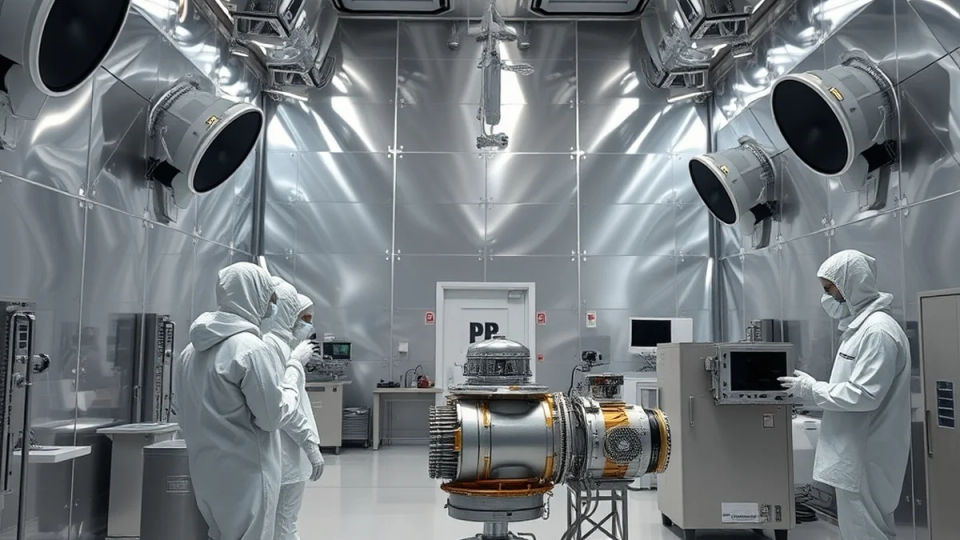
NASA's Jet Propulsion Laboratory in California is advancing critical space exploration initiatives spanning planetary science, quantum mechanics, and international radar observation. The facility serves as a focal point for expanding bilateral aerospace collaboration between the United States and India, demonstrated through the joint NASA-ISRO Synthetic Aperture Radar mission. Deployed in July 2025, the Earth-observing satellite monitors dynamic transformations across planetary terrain, ice caps, and plant ecosystems to track seismic activity and environmental hazards. The spacecraft's radar systems detect microscopic movements across the terrestrial crust, supplying public telemetry data to scientific researchers internationally.
At 2015, C-band data have been routinely available from Sentinel-1, but are limited to dual polarization with penetration limitations in higher-biomass wetlands.
The NISAR satellite is designed to scan the entire Earth in 12 days.
In October 2008, India's Chandrayaan-1 mission carried NASA's Moon Mineralogy Mapper, providing the data that established the presence of water and hydroxyl on the lunar surface.
Bilateral Engineering Architecture of the NISAR Mission
During an operational briefing at the laboratory, JPL chief technologist Jason Hyon outlined how Indo-US partnership accelerates high-precision planetary observation. Under the joint engineering division, NASA contributed the primary L-band radar system, whereas the Indian Space Research Organisation fabricated the S-band radar alongside the spacecraft bus and launch vehicle. Both national space organizations share day-to-day operational control and telemetry monitoring responsibilities for the orbiting observatory.
Frontier Quantum Physics and Micro-Device Engineering
JPL research groups are developing exploratory technologies to support future deep-space voyages beyond planetary surface missions. The Cold Atom Laboratory located on the International Space Station enables scientists to analyze exotic quantum interactions within sustained microgravity conditions. Simultaneously, the laboratory's Quantum Gravity Gradiometer Pathfinder program evaluates experimental sensors designed to measure fractional variations in gravitational fields. Scientists inside the Microdevices Laboratory fabricate miniature electronic components and radiation-hardened sensors that must maintain continuous reliability across unserviceable outer-space environments. At Caltech's Center for Autonomous Systems and Technologies, researchers within the AMBER Laboratory design bipedal walking robotic platforms capable of traversing uneven extraterrestrial geography.
Commercial Lunar Lander Environmental Testing Campaigns
Beyond bilateral research projects, JPL recently finalized comprehensive environmental qualification testing for a private commercial spacecraft intended for lunar outpost infrastructure. Developed under NASA's Commercial Lunar Payload Services initiative, Voyager Technologies' Griffin-1 lander is scheduled to launch aboard a SpaceX Falcon Heavy rocket. The infrastructure-scale vehicle is configured to transport more than 1,100 pounds, or 455 kilograms, of technical cargo to Nobile Crater near the lunar south pole. The mission manifest incorporates ten scientific demonstrations originating across six sovereign nations, including Astrolab's FLIP rover as the largest commercial payload delivered to the Moon.
Venturi Astrolab's FLIP lunar rover is scheduled for deployment on the Moon in late 2026 on an Astrobotic mission.
Environmental Simulation Facilities and Launch Readiness
JPL's Environmental Test Laboratory has evaluated robotic space hardware across six decades, tracing operational heritage back to the historic Ranger lunar missions of the 1960s. Charles Whetsel, manager of the Exploration Systems Development Office at JPL, emphasized the laboratory's dedication to supporting private lunar exploration through state-of-the-art testing infrastructure. Testing regimens placed Griffin-1 inside the 25-Foot Space Simulator and acoustic testing chambers that blast spacecraft with sound levels reaching 153 decibels to simulate rocket ascent dynamics.