
US Backs USD 4.4B Plan to Revive Shuttered Nuclear Plants for AI
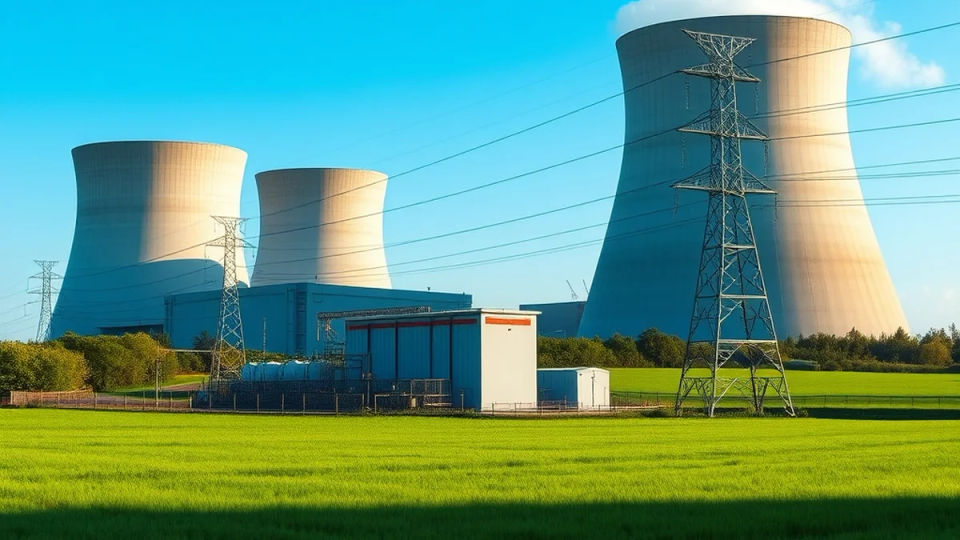
The United States has launched an unprecedented initiative to resurrect three decommissioned nuclear power stations to satisfy surging electricity demand from artificial intelligence computing clusters. No commercial nuclear reactor in global history has previously returned to active grid generation after formally entering the decommissioning process. The Department of Energy is providing up to 4.4 billion dollars in federal loan financing to reactivate the three mothballed facilities. The multi-state revival targets the Palisades plant in Michigan, the Crane Clean Energy Center at Three Mile Island in Pennsylvania, and the Duane Arnold Energy Center in Iowa. Together, the three recommissioned reactors will deliver approximately 2.25 gigawatts of continuous electricity, sufficient to energize two million homes and enterprise facilities.
Shut down in 1985, Browns Ferry 1 was restarted in May 2007 after a roughly 22-year outage and a refurbishment estimated at $1.8bn.
The Electric Power Research Institute projects that United States data center electricity consumption could reach between 380 and 790 terawatt-hours by 2030.
Shifting Economics Driven by AI Data Centers
All three facilities originally ceased operations before their regulatory licenses expired because their atomic generation costs could not compete with inexpensive shale gas and renewables. That commercial landscape has transformed fundamentally as technology conglomerates seek vast quantities of round-the-clock carbon-free power to train generative models. Hyperscalers have executed bilateral contracts offering substantial price premiums to secure continuous baseload electricity directly from revived reactor sites. President Donald Trump's administration is prioritizing nuclear energy expansion to support domestic artificial intelligence infrastructure and advanced manufacturing hubs. The federal government is also committing billions in supplemental loan guarantees to finance output uprates across currently active commercial reactors.
Technical Restoration and Workforce Mobilization
Nuclear engineering expert Todd Allen explained that reviving shuttered reactors provides substantial power far more rapidly and affordably than constructing new gigawatt-scale plants. Allen noted that the United States faces acute national demand for clean power, making previously grid-interconnected thermal assets prime candidates for reactivation. He compared the restart process to rehabilitating an idle vehicle, noting that while technically complex, the engineering steps remain relatively straightforward. Plant operators must rehire certified technicians, refresh training regimens, secure enriched uranium fuel assemblies, and petition the Nuclear Regulatory Commission for license reinstatement.
Safety Concerns and Climate Resilience Risks
However, nuclear safety advocates argue that deploying billions in public loan financing overlooks critical operational vulnerabilities in aging plant designs. Edwin Lyman observed that most operational American reactors were constructed between 1970 and 1990 to withstand meteorological disaster baselines of that era. Lyman cautioned that accelerating climate change is generating extreme weather phenomena of unprecedented severity that older containment structures were never engineered to endure. He warned that while restoring reactors to safe operable standards is theoretically feasible, current commercial reboot initiatives have not committed adequate capital to safety overhauls.
The Duane Arnold Case Study in Iowa
The commercial trajectory of Iowa's sole nuclear station, the Duane Arnold Energy Center, highlights the dramatic reversal in utility planning. Duane Arnold commenced commercial electricity generation in 1975 and was originally scheduled to decommission in October 2020 to transition to cheaper regional wind generation. Utility analysts previously projected that replacing the atomic reactor with renewable wind farms would save Iowa ratepaying consumers 300 million dollars.