
Crusoe Scraps $1.25 Billion Turbine Deal With Boom Supersonic
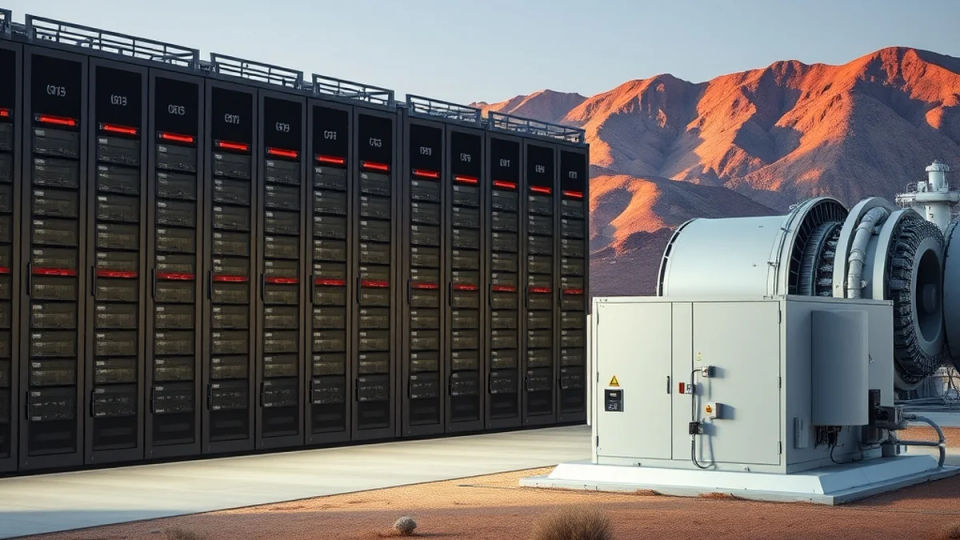
Crusoe Energy Systems has terminated its $1.25 billion agreement to purchase 29 stationary power turbines from Boom Supersonic, marking a significant shift in the AI infrastructure startup's energy strategy. The deal, which was intended to supply 1.21 gigawatts of power to Crusoe's data centers, was originally positioned as a cornerstone partnership for Boom's new stationary power business. Boom Supersonic, primarily known for developing the Overture supersonic passenger jet, had adapted its Symphony engine technology into the 42-megawatt Superpower turbine for ground-based energy generation.
Strategic Pivot in AI Infrastructure
The collapse of the partnership follows Crusoe's recent $3.9 billion Series F funding round, which valued the Denver-based company at approximately $30.9 billion. As Crusoe scales its operations, the company appears to be moving away from long-term, gigawatt-scale fixed infrastructure commitments in favor of more flexible, modular energy solutions. Crusoe spokesperson Andrew Schmitt confirmed the company is maintaining flexibility in its energy sourcing, utilizing a mix of grid power, wind, solar, batteries, and various turbine technologies depending on the specific needs of each site.
The fresh capital supports the expansion of existing initiatives and the construction of artificial intelligence factories ranging from large campuses to modular units. By treating the infrastructure as a manufactured good, deployments can be completed in approximately three months.
Boom Supersonic CEO Blake Scholl addressed the termination in a post on X, noting that while the partnership helped shape the development of the Superpower turbine, the technology no longer aligns with Crusoe's near-term primary power requirements. Despite losing its launch customer, Boom maintains that it has other clients in its pipeline, with plans to deliver 250 megawatts of capacity next year and a target of 1 gigawatt by 2028.
Impact on Boom's Diversification
For Boom Supersonic, the loss of the Crusoe contract represents a notable setback in its efforts to commercialize aerospace engineering for the energy sector. The company had raised $300 million last year specifically to launch the stationary power business, which was intended to provide a steady revenue stream to support the development of the Overture aircraft. The Superpower turbine shares roughly 80% of its components with the Overture's engine, making the stationary power business a key derivative play for the aviation firm.
Industry observers note that the failure of the deal underscores the challenges of deploying unconventional power solutions in the rapidly evolving AI data center market. While companies like Crusoe are under immense pressure to secure reliable, high-capacity energy, the practical demands of deployment and cost-efficiency often favor proven, scalable infrastructure. Baker Hughes, which had been contracted to supply generators for the original Crusoe order, remains involved in the broader energy supply chain as the industry continues to navigate the power-constrained landscape of AI expansion.