
Edited by Editor-in-Chief, The Indus Pulse 24 Sept 2026, 12:33 PM 4 min readtech
Meta Unveils Audio-Only AI Glasses and $1,299 VR Headset at Connect
Sources & Citations
Meta unveiled a new lineup of hardware products anchored by its personal artificial intelligence assistant Muse during its annual Connect conference at its Menlo Park headquarters. Chief Executive Officer Mark Zuckerberg introduced an audio-only, camera-free version of the company smart glasses, scheduled to ship on October 13 starting at $349. The release arrives amid global scrutiny regarding privacy violations and the unconsented filming associated with camera-equipped wearables, which critics have frequently termed pervert glasses.
The audio-only hardware complements expanded updates to Meta's flagship Ray-Ban smart glasses and a newly teased handheld device called the Muse Charm. Alongside these wearables, Zuckerberg debuted the Meta VR Glasses priced at $1,299, slated for a spring 2027 release. Designed to compete across personal computing and wearable ecosystems, the announcements highlight Meta's strategy to deploy its Muse AI agent across hardware interfaces ranging from desktop operating systems to standalone headsets.
Audio-Only Smart Glasses and Privacy Pushback
The new camera-free smart glasses are engineered specifically to provide audio interaction and AI access without incorporating photographic or video recording capabilities. Meta executives acknowledged the growing international pushback against camera-equipped eyewear. Vishal Shah, Meta vice president of AI product, emphasized that building explicit recording indicator lights remains critical for models that retain filming features, noting that the company has worked to make indicator lights more explicit over successive generations.
The audio-only model will retail at $349 and arrive on October 13, running alongside dozens of new smart glasses variations that continue to support photo and video capture. Meta also announced that its display-equipped smart glasses, priced starting at $799, will expand to international markets including Britain, France, Italy, Germany, and Canada. Zuckerberg noted that nearly two billion people wear prescription or standard glasses globally, representing a vast addressable market for future AI upgrades.
Meta VR Glasses and External Processing Architecture
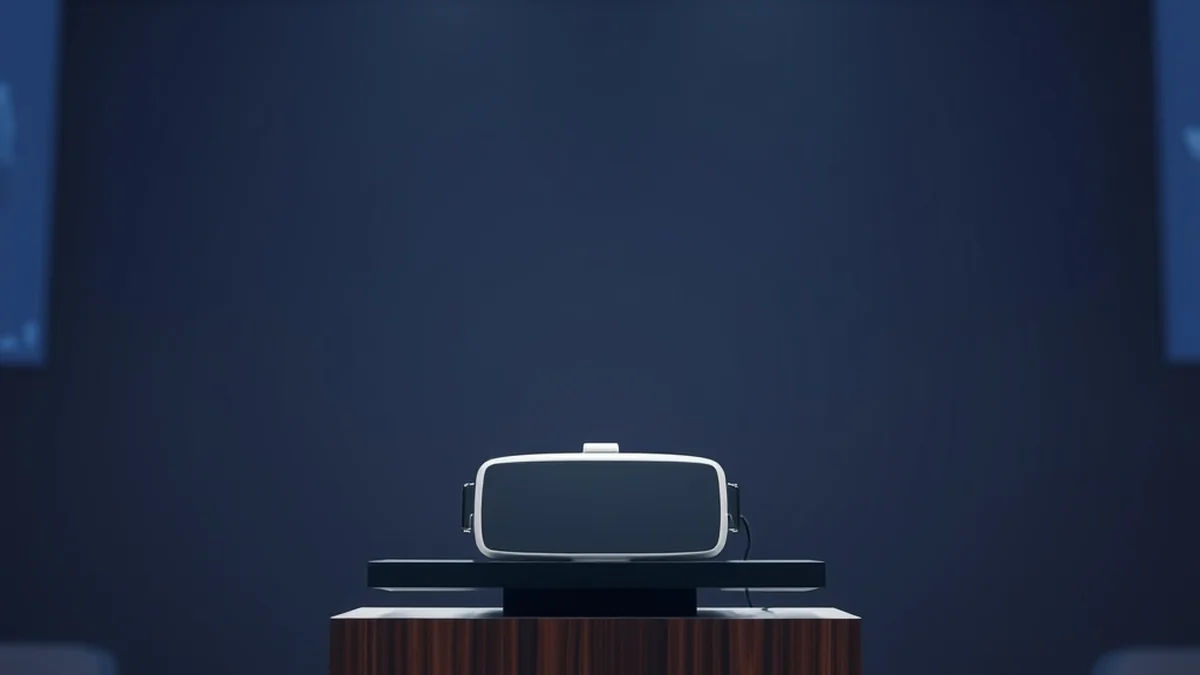
The newly introduced Meta VR Glasses represent a significant architectural departure from older Quest-branded VR headsets by utilizing a lightweight form factor comparable to a deck of cards. To achieve this reduction in weight, the headset relies on an external puck tethered by a cord, housing a Qualcomm processor and battery to function as a localized mini-computer.
The device features high-resolution displays, eye-tracking sensors, and hand-gesture recognition capabilities, eliminating the requirement for handheld controllers. Scheduled to launch in spring 2027, the mixed-reality glasses will retail at $1,299. Meta aims the hardware at users seeking immersive virtual environments without the heavier physical footprint characteristic of previous standalone headsets like the $299 Quest 3S introduced in 2024.
Muse Agent Ecosystem and Desktop Integration
Central to Meta's hardware rollout is Muse, the company agentic AI app launched in early September. Powered by the Muse Spark multimodal model, the assistant is designed to execute multi-step tasks across personal accounts and desktop applications. Meta announced that Muse will soon operate desktop apps on Mac computers, allowing users to delegate autonomous tasks while away from their desks.
The assistant is also expanding its communication tools by acquiring its own dedicated email address, enabling users to forward messages or integrate Muse directly into active email threads. Meta's chief AI officer Alexandr Wang detailed growing retail and developer support, noting that the company received over 1,500 applications from developers building custom connectors within a week of opening the platform.
Retail Partnerships and Blocked Integrations
The commercial deployment of Muse faces immediate competitive friction alongside widespread retail adoption. While retailers including Stripe, Shopify, PayPal, Walmart, Best Buy, Gap, Sephora, Wayfair, Expedia, and Instacart have integrated or announced integrations with Muse, platform restrictions have simultaneously emerged.
Amazon blocked Meta from utilizing its AI bots to execute automated shopping on behalf of users. Meanwhile, Meta continues to navigate significant regulatory and legal headwinds, including an August settlement with United States states requiring up to $18 billion in payments and restrictions related to consumer protection and child privacy laws. Despite these challenges, Meta confirmed that the Muse Charm, a puck-like handheld pendant featuring a display for direct voice interaction with the assistant, will ship ahead of the holidays in December.
Sources & Citations
The Indus Pulse is committed to accuracy and transparency.