
Edited by Editor-in-Chief, The Indus Pulse 23 Sept 2026, 04:16 PM 4 min readworld
Trump and Xi Open High-Stakes Washington Summit Amid Tariff and Tech Tensions
Sources & Citations
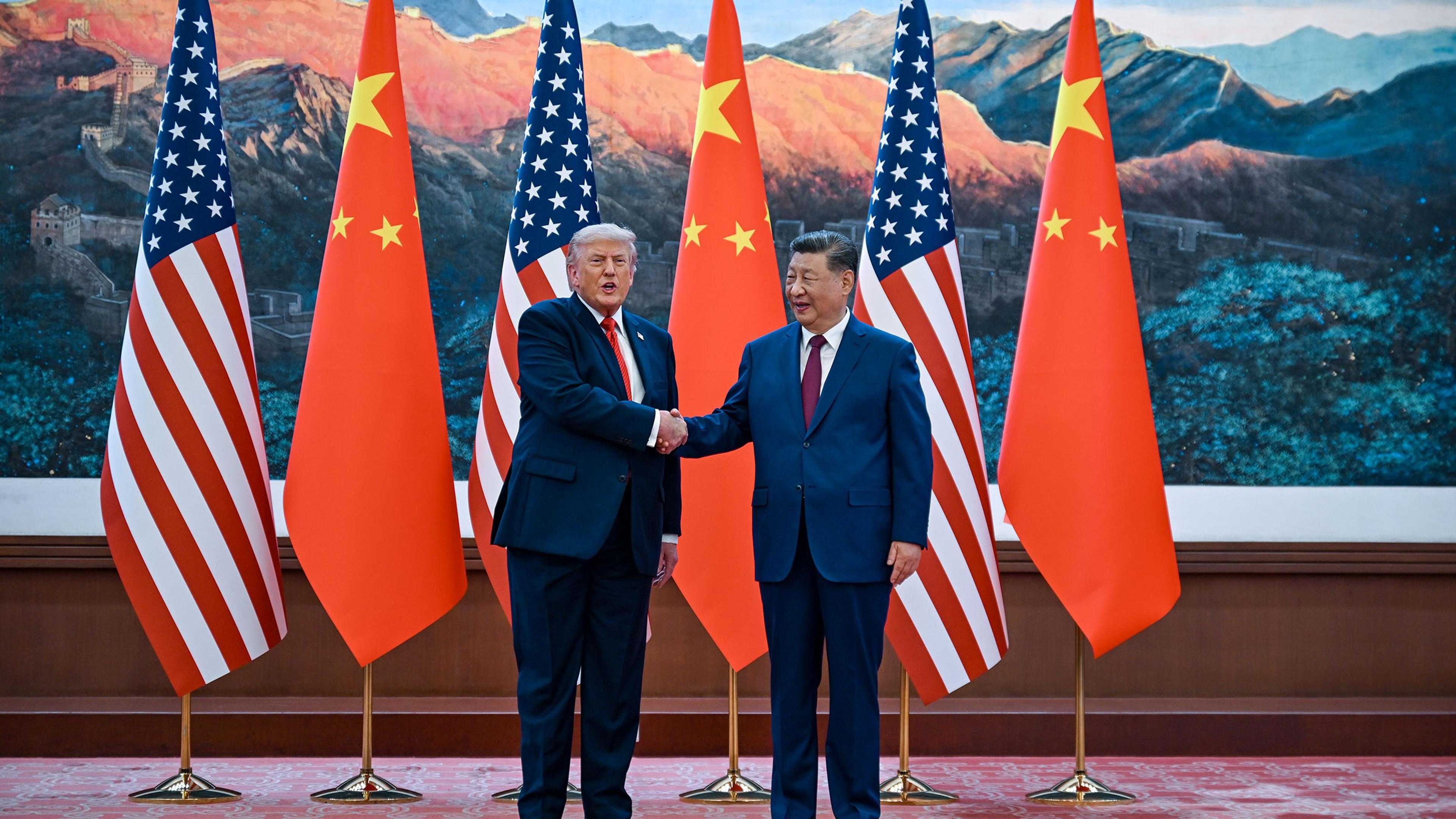
Chinese President Xi Jinping arrived in Washington on Wednesday for a high-stakes three-day state visit, marking his first trip to the United States capital in over a decade. U.S. President Donald Trump personally greeted Xi at Joint Base Andrews, setting the stage for a summit intended to stabilise strained relations between the world's two largest economies ahead of a looming November 10 expiration on their bilateral tariff truce.
The diplomatic engagement comes as negotiators grapple with critical geopolitical and commercial friction points, including rare-earth mineral supply chains, artificial intelligence competition, and divergent positions on Taiwan and Iran. While U.S. officials anticipate discussions centering on agricultural non-tariff barriers and rare-earth shipments, domestic political opposition and legislative pushback have highlighted the sensitivity of the diplomatic overture.
Tariff Truce and Rare Earths Leverage
Global markets are monitoring whether Washington and Beijing will successfully extend their trade truce before the November 10 deadline, which would otherwise reinstate severe tit-for-tat tariffs on global supply chains. Chinese Vice-Premier He Lifeng has held preparatory meetings with Treasury Secretary Scott Bessent in the U.S. to seek progress on agricultural duties and trade barriers. Concurrently, critical minerals remain a central leverage point, with Washington pressing Beijing to ease rare-earth shipments while Beijing demands the delay of rules barring Chinese firms from advanced technologies.
Mr. Trump has adopted a less combative stance ahead of the discussions, influenced by China's dominant control over up to 70 percent of global rare-earth mining and 85 percent of refining capacity. Despite these economic negotiations, trade data indicates persistent imbalances, with China's trade surplus with the U.S. surging nearly 44 percent year-over-year in August to more than $29 billion, the widest gap since Mr. Trump returned to office.
Corporate Delegations and Political Divisions
The summit has also highlighted contrasting delegations and domestic political friction. Unlike his 2015 state visit, which featured a sizeable contingent of Chinese corporate executives, Mr. Xi arrived without a delegation of chief executive officers, according to a senior U.S. official. In contrast, a robust gathering of prominent American technology and finance leaders, including executives from Meta, Nvidia, OpenAI, Microsoft, Amazon, Apple, Tesla, and JPMorgan Chase, is expected to attend the White House state dinner.
The warmth of the official reception has drawn criticism from domestic political figures. Senate Armed Services Committee Chairman Roger Wicker delivered a floor speech lambasting the administration's invitation, criticizing the lavish pageantry and urging the president to confront Beijing over its military buildup and support for Iran.
Artificial Intelligence and Geopolitical Friction
Artificial intelligence has emerged as a parallel arena for competition and cautious dialogue. While U.S. officials stated the two sides agreed to establish a new dialogue on AI, deep-seated rivalry persists. Anthropic CEO Dario Amodei warned of security risks posed by Chinese AI dominance, drawing swift dismissal from Chinese state media, which characterized the remarks as part of a Cold War playbook. Meanwhile, Mr. Trump brushed aside calls to slow domestic AI development, stating that exaggerated concerns were being raised by negative forces.
Beyond technology, tensions persist over Beijing's economic ties to Iran and the ongoing dispute regarding Taiwan. Asian allies have expressed concern that diplomatic or arms concessions regarding Taiwan could be utilized to secure economic gains, even as Chinese officials press Washington to block a proposed $14 billion U.S. weapons package for the island.
Itinerary and Concluding Schedule
The formal state visit continues on Thursday with an arrival ceremony across the South Lawn, State Floor, and Rose Garden, featuring 479 military personnel, a troop review, and a flyover by a B-2 Spirit and four F-22 Raptors. Evening events include a state dinner in the White House East Room. The summit concludes on Friday with private tea at the South Portico and a joint tour of the National Archives before official farewells.
Sources & Citations
The Indus Pulse is committed to accuracy and transparency.