
Edited by Editor-in-Chief, The Indus Pulse 22 Sept 2026, 07:10 AM 4 min readworld
United Russia Secures Supermajority in State Duma Following Three-Day Wartime Election
Sources & Citations
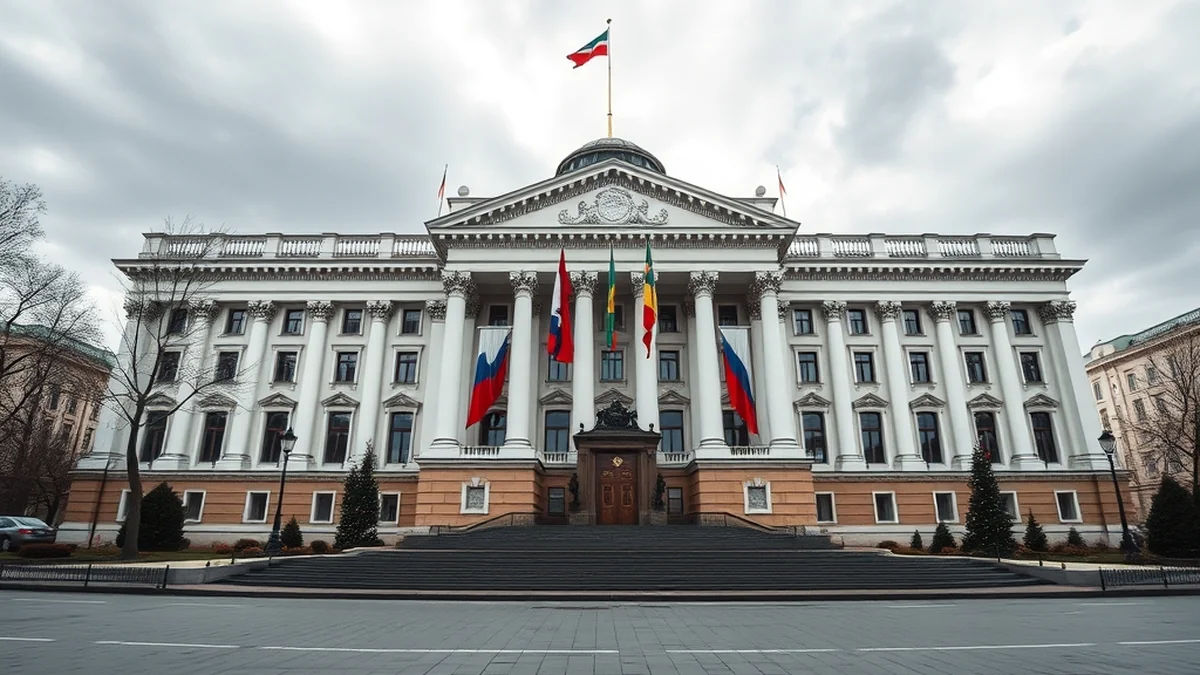
President Vladimir Putin's ruling United Russia party has secured a record supermajority in Russia's parliamentary elections, capturing nearly 80 percent of the seats in the State Duma, near-complete official results announced on Monday showed. The three-day voting period, which concluded on Sunday, marked the first national legislative election since Russian forces invaded Ukraine in 2022 and incorporated four illegally annexed Ukrainian territories.
The CPRF legislative faction aligns completely with the Kremlin on national defense and foreign policy, having initiated the legislative formalization of the Donbas intervention while confining its dissent to economic issues. The reported turnout surpassed recent elections and set a record for multi-day voting, but remains below historical turnouts.
According to Ella Pamfilova, chair of the Central Electoral Commission, United Russia garnered 57.83 percent of the national vote, an increase from the 49.8 percent it won in the previous parliamentary elections held in 2021. The tally places the party on track to control 355 seats in the 450-seat lower house, preserving its constitutional majority and enabling lawmakers to pass legislation and constitutional amendments without requiring support from other political factions.
Election Framework and Opposition Exclusion
The electoral process proceeded under tightly managed conditions that excluded virtually any substantive political opposition. The nation's sole registered anti-war political organization, Yabloko, was removed from the national ballot last month by a ruling from Russia's Supreme Court, leaving only a limited number of candidates contesting single-seat races.
The liberal Yabloko party, the sole registered political entity fielding an explicit anti-war ceasefire platform, was barred by judicial rulings from participating in the 2026 State Duma elections amid criminal convictions of senior leaders. A two-thirds supermajority in the State Duma possesses the constitutional authority to override presidential legislative vetoes under Article 107 and initiate presidential impeachment proceedings under Article 93.
Despite the national exclusion, Yabloko secured a foothold in the regional legislature of western Russia's Novgorod region. Party officials stated on social media that they received approximately 12,000 votes, accounting for just over six percent of the ballots cast in the area. Meanwhile, opposition groups and the Communist Party reported that numerous independent observers were blocked from entering polling stations across various districts.
Parliament Composition and Regional Results
The Communist Party finished second in the national ballot, capturing 13.81 percent of the vote and securing 40 seats in the State Duma. The nationalist Liberal Democratic Party of Russia won 8.98 percent resulting in 25 seats, while the New People party secured 7.96 percent accounting for 20 seats. The Just Russia party hovered just below the mandatory five percent threshold required to enter the legislature.
In the republic of Chechnya, regional leader Ramzan Kadyrov secured a fifth term in office with an official vote tally approaching 100 percent. Electoral officials reported that nationwide voter turnout reached 59.3 percent among an electorate of approximately 111 million citizens, continuing despite a heavy Ukrainian drone strike targeting Moscow on the final day of voting.
International Monitors and Foreign Reaction
Russian authorities declined to invite monitors from the Organization for Security and Cooperation in Europe, with the Foreign Ministry citing alleged double standards regarding prior criticism. Pere Joan Pons, president of the OSCE Parliamentary Assembly, stated that the exclusion violated Russia's obligations as a member state.
International condemnation followed the announcement of the preliminary outcomes. European Union foreign policy chief Kaja Kallas dismissed the proceedings as a constrained electoral exercise, stating that the silencing of dissent and exclusion of monitors left only a superficial democratic framework. Concurrently, a joint statement issued by Australia, Britain, and Canada condemned the voting conducted in Russian-occupied regions of Ukraine as an extension of an occupying administrative system.
Domestic Sentiment and Expert Outlook
Public reaction inside the capital reflected widespread anticipation of the outcome. Several residents noted that the dominance of United Russia was expected, while expressing individual desires for a prompt conclusion to the ongoing conflict in Ukraine through diplomatic channels.
Independent analysts cautioned that the government is likely to interpret the high participation figures and parliamentary majority as public endorsement of wartime policies. Tatyana Stanovaya of the Carnegie Russia Eurasia Center observed in a commentary that public demand for peace continues to grow despite the official outcome, raising domestic concerns regarding potential measures such as renewed mobilisation and heightened internal security enforcement.
Sources & Citations
The Indus Pulse is committed to accuracy and transparency.