
Saudi Air Defenses Intercept Missiles over Riyadh Following Pipeline Strike
Missile Interceptions Over the Capital
The military coalition led by Saudi Arabia intercepted incoming aerial projectiles aimed toward Riyadh and the southern regions of the kingdom on Tuesday. Defense forces downed a second ballistic projectile across southern territorial airspace during the coordinated military engagement. Multiple detonations echoed across urban neighborhoods in Riyadh as authorities distributed text alerts advising residents to seek immediate shelter. The municipal civil defense agency issued an update shortly afterward indicating that the acute aerial threat had passed without reported casualties.
Energy Infrastructure Targeted in the West
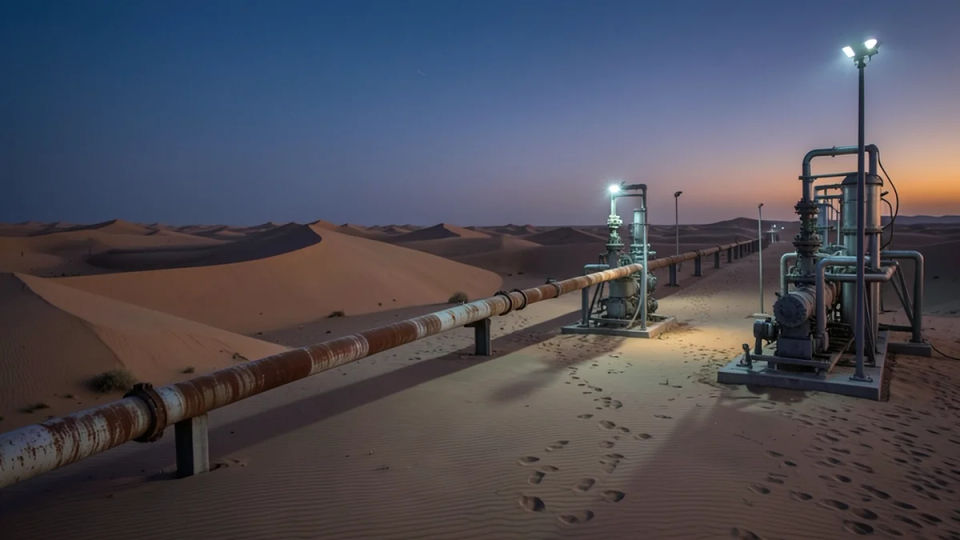
The missile interception followed an aerial assault on Monday that struck the strategic East-West petroleum pipeline in the Medina province. A Saudi Ministry of Energy official stated through state media that the pipeline strike ignited a limited fire that was brought under control. Energy ministry authorities verified that pipeline pumping operations remained entirely unaffected and reported no operational injuries or deaths. The 1,200 km transit corridor runs across the Arabian Peninsula as an essential export alternative for bypassing navigation restrictions through the Strait of Hormuz. Kingdom authorities reroute roughly 4 million barrels per day of crude oil through the overland system toward export terminals in Yanbu. The East-West pipeline previously faced a drone attack in May 2019 when strike craft targeted pumping stations west of Riyadh, according to House of Saud. To protect crude operations at the Yanbu terminal amid regional shipping disruptions, France deployed troops, radar systems, and air defense batteries to Yanbu in September 2026 under a bilateral security arrangement with Saudi Arabia, according to House of Saud.
Cross-Border Attacks and Retaliatory Strikes
Deputy regional governor Prince Mohammed bin Abdulrahman bin Abdulaziz inspected an administrative building belonging to state oil producer Aramco damaged by falling debris. Saudi officials noted that falling debris from an attempted attack caused minor damage to several office floors of the Aramco Tower on Sunday. Prince Mohammed stated that the assault highlighted continued aggression by Yemeni fighters against civilian commercial infrastructure. Yemen's Houthi movement claimed responsibility for the Aramco Tower attack as regional tensions expand across critical Red Sea navigation corridors. Regional fighting intensified following territorial movements in September toward maritime choke points along the strategic Bab el-Mandeb Strait.
Media outlets controlled by the Houthi administration reported retaliatory air strikes conducted by the Saudi coalition across the capital city of Sanaa. Local news reports indicated that coalition aerial bombs struck the al-Mufazir gas terminal situated in the Jadar district north of Sanaa. Civil defense firefighting crews mobilized to contain blazes that ignited across several gas storage trailers at the northern municipal facility. Additional aerial strikes damaged an administrative complex belonging to the national petroleum corporation in the southern portion of the Yemeni capital. Continued military exchanges threaten a pipeline route that carries about 4 million barrels per day, equivalent to roughly 4% of global crude supply.