
Edited by Editor-in-Chief, The Indus Pulse 25 Sept 2026, 12:13 PM 3 min readworld
Nepal PM Proposes Himalayan Climate Resilience Mechanism With India and China
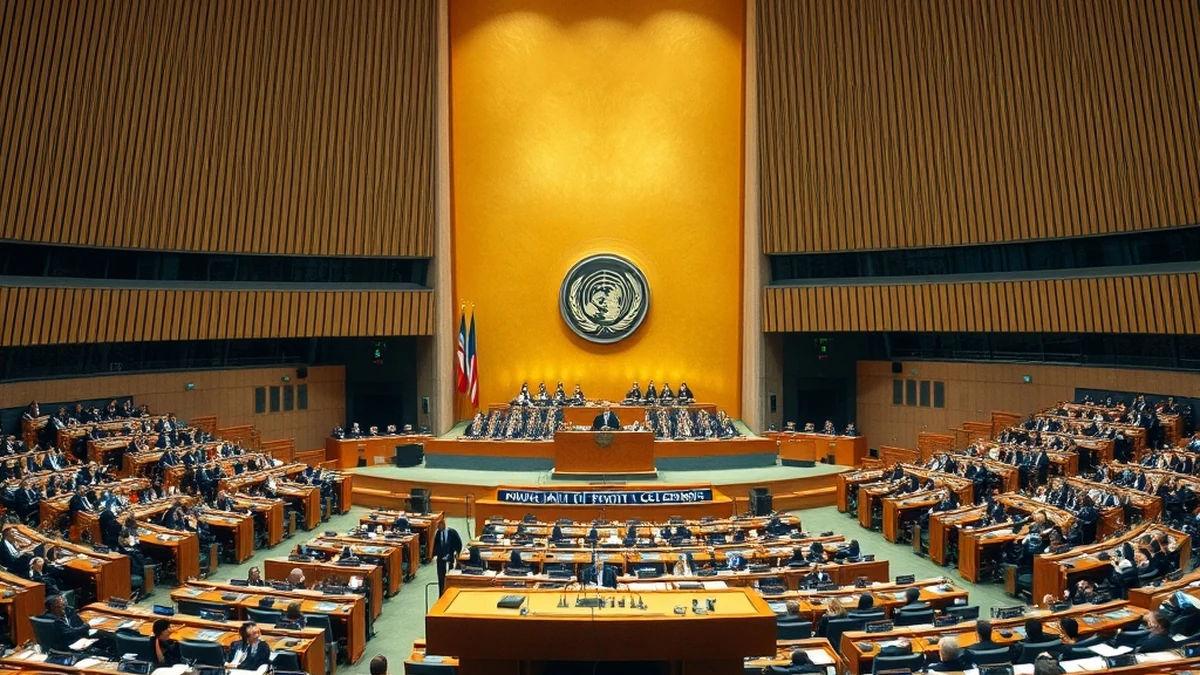
Nepal Prime Minister Balendra Shah has proposed the creation of a Himalayan Climate Resilience Mechanism involving India and China to address the escalating risks of climate-driven disasters in the region. Addressing the 81st session of the United Nations General Assembly in New York on Thursday, Shah argued that the Hindu Kush Himalaya, which supports nearly two billion people, requires a unified approach to monitor glacial hazards and coordinate cross-border emergency responses.
Bilateral cooperation already exists between nations in the region, as China shares data on glacial and barrier lake risks with Nepal. Furthermore, historical water resource pacts include the Sarada Agreement from 1920, the Kosi Agreement from 1954, the Gandak Agreement from 1959, and the Mahakali Treaty from 1996.
Despite these bilateral efforts, the Koshi Basin countries of India, Nepal, and China currently lack any formal trilateral or regional engagement concerning transboundary water or disaster management. Commentators have previously suggested establishing a three-country mechanism and a Himalayan Early Warning Pact under ICIMOD to provide automated warnings within two hours.
A Regional Framework for Climate Cooperation
The proposed mechanism aims to move beyond fragmented information by establishing a shared platform for satellite data and scientific expertise. Shah emphasized that the framework should focus on monitoring dangerous glacial lakes and strengthening joint early-warning systems. By coordinating assistance across borders, he suggested that the Himalayas could serve as a laboratory for international cooperation rather than a site of isolated disaster management.
This proposal follows a catastrophic flash flood on August 26, triggered by an ice-rock avalanche near the Nepal-Tibet border. The disaster resulted in 1,452 confirmed deaths, with thousands still reported missing. The floods caused widespread destruction across northern and central Nepal, with the deluge continuing downstream into India. Rapid assessments by the National Planning Commission and the National Disaster Risk Reduction and Management Authority estimate physical recovery needs at approximately 10 percent of Nepal's GDP, or roughly $4.77 billion.
Addressing Climate Justice and Global Disparities
Shah used his maiden UN address to highlight the disproportionate impact of climate change on nations that contribute minimally to global greenhouse gas emissions. Noting that Nepal contributes less than 0.1 percent of global emissions, he argued that the country is paying a colossal price for a crisis it did not create. He criticized the current state of global cooperation, contrasting the efficiency of international logistics for military supplies with the lack of support for essential food and fuel during climate-induced crises.
He urged the international community to move beyond rhetoric, calling for greater grant-based climate financing and criticizing the inadequacy of existing mechanisms like the Loss and Damage Fund. Shah outlined six principles for the international response: relief, rehabilitation, reconstruction, responsibility, reparation, and resilience. While expressing gratitude for the prompt assistance provided by India, China, and other international partners, he emphasized that the scale of recovery requires a more systemic shift in how the global order manages climate-related disasters.
The Indus Pulse is committed to accuracy and transparency.