
French Government Faces Rising Unrest As School Protests Spread
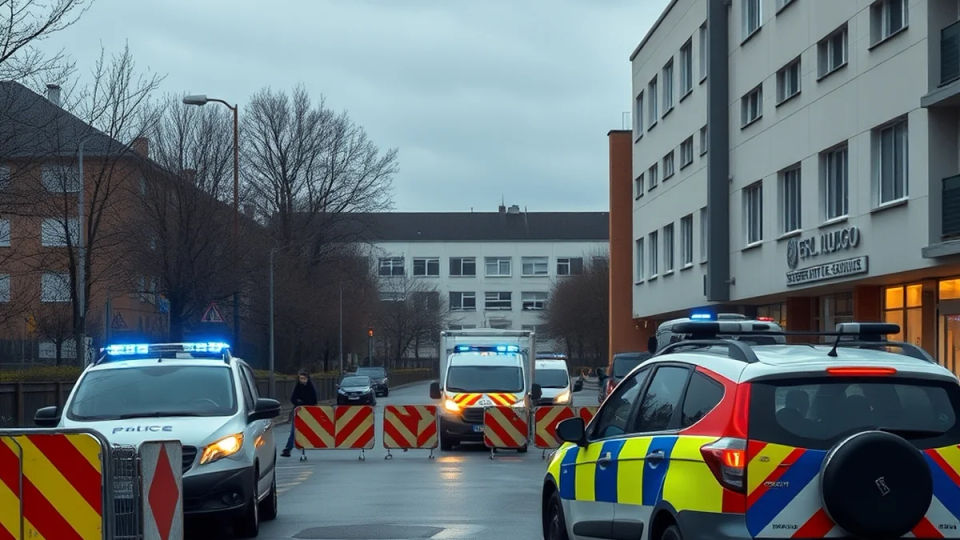
French authorities are confronting mounting civil unrest as student-led demonstrations over educational funding and building conditions escalate into nationwide blockades and violent clashes. The movement, which originated roughly two weeks ago in the Seine-Saint-Denis district of northern Paris, has closed hundreds of secondary schools, known as lycées, and drawn participation from university students.
According to The Guardian, ryad Rani, president of the Union Syndicale Lycéenne, denounced the government's use of riot police (CRS) and anti-criminal brigades against teenage students as institutionalized repression.
According to The Guardian, for Union Syndicale Lycéenne and FSU, Education unions demanded increased funding, an end to teacher shortages, and reductions in overcrowded classrooms that currently hold 32 to 35 students.
According to Agence France-Presse (via Bourse Direct), the French Ministry of National Education confirmed that 564 educational institutions were affected or disrupted nationwide by midday Friday, as protests expanded across France. According to Al Jazeera, for lycées, Protest closures affected roughly 400 out of 3,700 secondary schools nationwide.
According to government figures, approximately 400 lycées were closed on Friday to protect students and staff. The escalation has resulted in widespread property damage, including a major fire that destroyed the main hall of a lycée in Nantes, alongside numerous smaller fires near school entrances that have caused millions of euros in damages.
Clashes, Injuries, and Budget Pressures
Education Minister Édouard Geffray reported that 65 teaching staff members, including 40 school heads, have sustained injuries during the unrest, noting that many staff faced individuals who were not enrolled students. Government tallies also indicate that around 300 police officers and firefighters have required medical treatment, while approximately 2,000 individuals, predominantly minors, have been taken into custody.
Student groups countered with their own accounts of injuries caused by police intervention, citing severe cases including permanent eye damage and lost teeth. While public sympathy typically favors youthful demonstrators demanding better school infrastructure and smaller class sizes, the timing coincides with severe fiscal constraints. Prime Minister Sébastien Lecornu recently unveiled a draft budget aimed at cutting state spending by 54 billion euros, effectively extinguishing expectations of government financial largesse.
Political Polarization and Election Fallout
Beyond immediate budgetary demands, political analysts and leaked police intelligence reports suggest the movement is being co-opted by radical left elements seeking to capitalize on social tensions ahead of upcoming national elections. Government critics and right-wing figures have pointed to the involvement of the France Unbowed party and its presidential candidate, Jean-Luc Mélenchon, whose supporters have maintained visible solidarity with protesters in high-immigration suburbs.
While LFI leadership has denied orchestrating the violence and urged students to avoid clashes, opponents argue that the unrest serves a broader strategy to mobilize young voters who traditionally exhibit high abstention rates. With presidential elections approaching, the intersection of youth dissent, far-left political maneuvering, and severe economic austerity has placed President Emmanuel Macron's administration under intense pressure.