
Edited by Editor-in-Chief, The Indus Pulse 25 Sept 2026, 01:46 PM 3 min readtech
Google to Test AI Chips in Low Earth Orbit Under Project Suncatcher
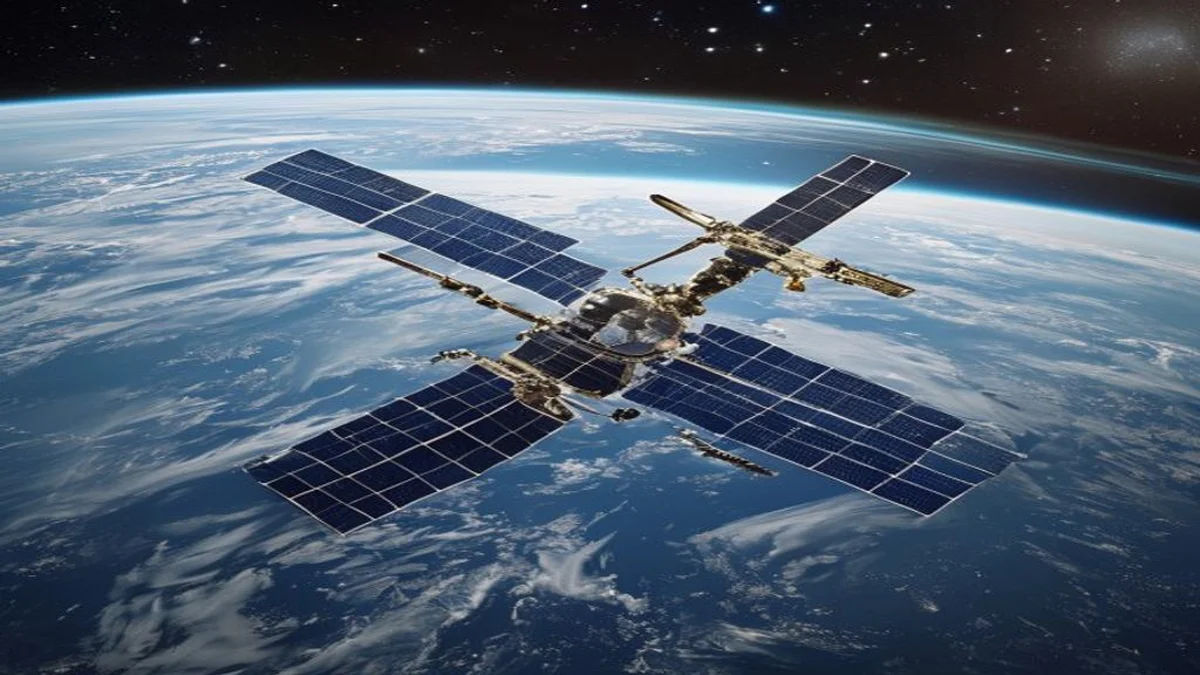
Google is scheduled to launch a prototype satellite into low Earth orbit on October 1 to test whether its custom artificial intelligence hardware can survive the extreme conditions of space. The mission, part of the company's long-term research initiative known as Project Suncatcher, aims to determine if orbital networks could eventually support large-scale AI computing infrastructure.
Prior orbital missions have explored on-board artificial intelligence capabilities, such as cloud screening tools used by European spacecraft. Additionally, regulatory frameworks like the FCC guidelines address operational parameters including post-mission disposal timelines.
Developed in collaboration with Earth-imaging firm Planet, the prototype spacecraft is set to hitch a ride on SpaceX's Transporter-18 rideshare mission. The experiment is designed to evaluate how Google Tensor Processing Units perform when exposed to launch vibrations, vacuum environments, and cosmic radiation without relying on terrestrial cooling or power grids.
Mechanical Stress and Vibration Testing
Before greenlighting the physical launch, engineering teams subjected the satellite hardware to rigorous three-axis vibration testing. These trials simulated the acoustic and kinetic frequencies of an actual rocket ascent, during which a spacecraft experiences sustained accelerations of up to 10 g. Individual components inside the payload, including the TPU chips, were subjected to acceleration peaks ranging between 50 and 100 g.
Google reported that the hardware withstood the mechanical stresses significantly better than engineers initially anticipated. The trials confirmed that the structural integrity of the assembly could endure the violent departure from Earth's atmosphere, clearing a critical threshold for the viability of orbital computing hardware.
Radiation Tolerance and Ground-Based Trials
Beyond launch dynamics, orbital hardware faces constant exposure to cosmic rays and solar activity that can trigger circuit errors, commonly referred to as bitflips. To measure this vulnerability before flight, Google tested its latest-generation Trillium chips at the Crocker Nuclear Laboratory proton beam facility at the University of California, Davis, while the processors actively executed AI workloads.
Preliminary exposure results indicated that the processors survived a cumulative dose of ionizing radiation exceeding what they would typically absorb over a complete five-year space mission. However, company researchers noted that terrestrial proton beams cannot fully replicate the multifaceted variables of actual orbit, making the upcoming spaceflight an essential verification step.
Thermal Management in a Vacuum
Managing heat dissipation presents another major engineering hurdle in outer space. Terrestrial data centres rely heavily on air circulation and fluid cooling systems, neither of which functions in the vacuum of a spacecraft.
To solve this, Google has engineered an experimental cooling architecture that combines specialized heat pipes with external radiators. The system has undergone preliminary trials inside a thermal vacuum chamber designed to mimic orbital conditions, but its true performance will only be established once the prototype is operational in space.
Laser Interconnection and Long-Term Architecture
Looking beyond the immediate prototype mission, Google plans to launch two additional satellites in 2027 specifically to test high-speed optical communications. The long-term architecture envisions constellations where individual orbital units carry dozens of TPUs, linked together via ultra-high-bandwidth laser connections over very short distances.
Travis Beals, Senior Director for Paradigms of Intelligence at Google Research, emphasized that the initiative follows a deliberately incremental methodology. The company compares this phase-by-phase experimentation to the extended development cycles that preceded autonomous driving and quantum computing before those technologies achieved commercial viability.
The Indus Pulse is committed to accuracy and transparency.