
AWS Stops Using Government NDAs Amid Surging Data Center Backlash
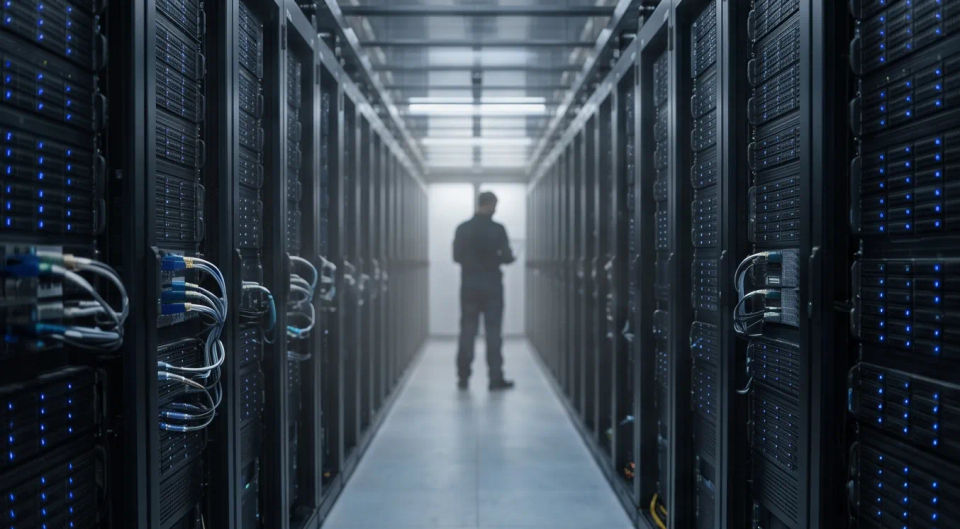
The policy shift was revealed in a corporate blog post addressing mounting public resistance and community skepticism surrounding the rapid expansion of artificial intelligence data centers across the United States.
Secretive preliminary negotiations have long fueled public backlash against large-scale digital infrastructure projects. Environmental activist Erin Brockovich recently highlighted transparency as a primary grievance among local communities, noting a recurring pattern where projects are unveiled only after permits are finalized, local officials are bound by confidentiality clauses, and developers remain unresponsive to public inquiries. By abandoning government NDAs, AWS aims to eliminate a major layer of secrecy that has routinely inflamed local opposition.
Challenging Data Center Infrastructure Myths
Garman's blog post directly challenged four prevalent public criticisms regarding data centers: excessive water consumption, escalating electricity costs, high carbon emissions, and a perceived lack of tangible local economic benefits. Citing internal corporate reporting, AWS stated that direct data center water usage accounts for only 0.5% of total industrial water consumption nationwide. However, independent scientists and critics have pointed out that such figures often omit the substantial indirect water footprint associated with external power generation and microchip manufacturing.
According to Source, uS data centers used 176 TWh of electricity in 2023, accounting for about 4.4% of total US electricity, according to Lawrence Berkeley National Laboratory. According to Amazon, aWS pledged to publish its annual energy use, energy efficiency, water use, water efficiency, and percentage of carbon-free energy for public review.
Regarding electricity rates, AWS argued that price increases are concentrated primarily in specific states experiencing severe grid congestion due to decades of underinvestment rather than data center proliferation alone. Conversely, independent energy watchdogs recently attributed a 76% year-over-year wholesale price surge on America's largest electrical grid directly to surging data center demand. On the environmental front, while permitted carbon output limits remain high, such as a planned Texas facility authorized for 33 million tons of CO2 annually, Garman maintained that backup generators remain idle 99.9% of the time, operating roughly ten hours per year primarily for mandatory maintenance testing.
According to Amazon, amazon's Built Together program targets energy efficiency upgrades for over 300 schools and community buildings and over 30,000 homes, saving households approximately $700 annually. According to Harris Beach Murtha, on June 4, 2026, both houses of the New York State Legislature passed a first-in-the-nation data center moratorium bill.
Community Investments and Industry Pressures
To further counter local skepticism, AWS highlighted a broader financial commitment, noting that the company has invested over $1 billion into host communities over the past three years. This mirrors similar multi-billion-dollar pledges from industry peers such as Meta and Microsoft, though corporate approaches to local tax incentives vary significantly across the sector.
With more than 100 municipal and state data center moratoriums currently under consideration nationwide, including a one-year permit freeze enacted in New York, cloud providers are scrambling to secure real estate faster than ever. Garman warned that failure to build out necessary infrastructure risks leaving the United States at a generational disadvantage in the global artificial intelligence race. Whether increased transparency and the elimination of government NDAs will overcome deep-seated public mistrust remains uncertain as local resistance continues to shape the future of cloud expansion.