
Apple's N50 AI Glasses Reportedly Target June 2027 WWDC Debut
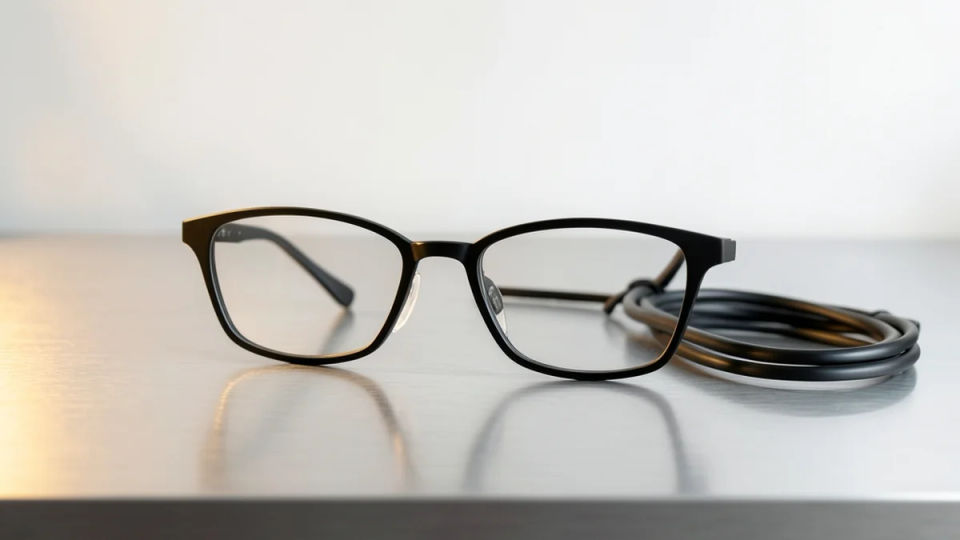
Apple plans to unveil its first AI-powered smart glasses, internally codenamed N50, at its Worldwide Developers Conference (WWDC) in June 2027 and release them before the end of that year, with mass production expected in the second half of 2027, BigGo Finance and Road to VR reported, citing Bloomberg's Mark Gurman. Hardware design has entered its final stage, though BigGo Finance cautioned that lagging software and Siri AI development could still delay the schedule.
Display-Free Design, Hardware, and Siri Integration
Rather than including an augmented reality display, the N50 relies on an upgraded Siri voice interface and built-in cameras for Visual Intelligence tasks such as identifying landmarks, suggesting recipes from refrigerator contents, navigating routes, and translating signs, BigGo Finance and ARYnews.tv reported. Prototypes are slightly thinner than Meta's second-generation Ray-Ban glasses, feature flush-mounted cameras in oval cutouts, directional speakers, a front privacy indicator light, Wi-Fi connectivity, and a Tic Tac-sized three-pin magnetic temple charger that lets users recharge while wearing them, though that charger may not reach mass production, ETV Bharat and BigGo Finance reported. The glasses run a pared-down version of visionOS 28 on a custom low-power chip derived from Apple Watch processors and depend on a paired recent iPhone, excluding Android, for third-party app tasks, with Apple laying groundwork in December's iOS 27.3 update, BigGo Finance and Road to VR reported.
Supply Chain and Smart Glasses Competition
Market watchers cited by BigGo Finance expect Taiwan Semiconductor Manufacturing (TSMC) to fabricate the processor, Foxconn to handle assembly, and Largan Precision and Genius Electronic Optical to supply optical lens modules, while HTC and Megaforce draw attention as AI glasses concept stocks. TrendForce estimated global AR glasses shipments will grow 111.1% from 620,000 units in 2025 to 1.31 million in 2026 and nearly 80% in 2027, while Meta's third-generation Ray-Ban Meta glasses start at $449, its audio-only model at $349, and the entry-level Meta Adventurer at $249, BigGo Finance reported. Google has also partnered with Samsung, Warby Parker, and Gentle Monster to launch Android XR glasses on December 10, 2026, while Snap introduced $2,195 AR Specs this year and Apple simultaneously develops camera-equipped AirPods for late 2027, ETV Bharat and BigGo Finance reported. Internal Apple staff described prototype audio, supporting music playback over Wi-Fi away from an iPhone alongside calls and FaceTime voice, as reaching industry-leading levels, while later versions are expected to add messaging, calendar, and notification features, BigGo Finance and ETV Bharat reported. ETV Bharat also noted that Google previously pulled Google Glass within two years of launch after heavy privacy criticism, underscoring privacy challenges in the sector.
Background
Apple is reportedly targeting a price range of $200 to $500 for the N50 smart glasses, putting it in direct competition with Meta's lineup, according to TweakTown.
Apple plans to release Siri app-control support for its own apps in December, followed by third-party app support in 2027, so developers can prepare integrations before the glasses arrive, according to MacRumors.
According to IDC data, Apple shipped 390,000 Vision Pro units in 2024 and was expected to ship just 45,000 units in the final quarter of 2025, while assembler Luxshare halted production at the start of 2025.
IDC forecasts total smart glasses and XR unit shipments will grow 26.3% in 2026, accelerate to 40.5% growth in 2027, and rise 26.4% in 2028.