
IBM Invests $3B Annually in India, Eyes More State Quantum Deals
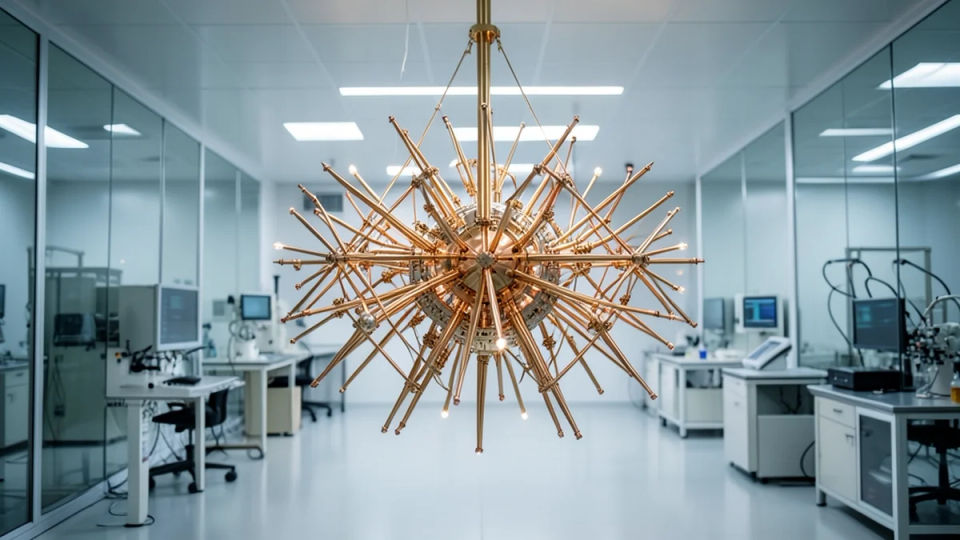
Technology company IBM invests roughly $3 billion each year in India and is in talks with at least two additional state governments for quantum computing partnerships as it looks to expand its presence in the country, Chairman and Chief Executive Officer Arvind Krishna said during a Monday media roundtable in New Delhi, according to Business Standard. "We have at least two other, if not more, similar tie-ups in the works," Krishna told reporters, referring to partnerships patterned after IBM's upcoming quantum computer installation in Amaravati, Andhra Pradesh, Business Standard reported. Krishna said the Amaravati system is scheduled for installation early next year, with components arriving in India this month because assembling the machine takes time, according to Business Standard.
Global Quantum Push and India Track Record
Asked about IBM's investment plans for artificial intelligence and quantum computing in India, Krishna noted that globally the company has committed $10 billion to quantum computing over the next five years, Business Standard reported. While declining to make fresh financial commitments when pressed on whether spending would rise, Krishna pointed to IBM's record of increasing its India investments every year over the past two decades, according to Business Standard. "If I look at India, we invest about $3 billion a year, which is significant compared to what most other people do," Krishna said, Business Standard reported.
Commercial Use Cases and IIT Research
Krishna said quantum computing is starting to show commercial and scientific potential across industries, Business Standard reported. He highlighted four domains where quantum systems hold advantages over conventional technologies: constrained optimisation, materials and quantum chemistry, machine learning, and partial differential equations applied in fluid dynamics and weather modelling, according to Business Standard. Krishna said those capabilities can tackle complex problems that neither conventional computers nor AI systems can solve economically, Business Standard reported. He also expressed optimism regarding quantum computing research underway at Indian Institutes of Technology (IITs), according to Business Standard.
Background
India's National Quantum Mission carries an allocation of approximately ₹6,000 crore and spans 43 institutions across 17 States and 2 Union Territories, according to Press Information Bureau, Government of India.
The Amaravati Quantum Valley ecosystem brings together more than 50 foundational partners, including Larsen & Toubro, C-DAC, and C-DOT, according to Quantum Computing Report.
IBM recruited between 5,000 and 10,000 people in India over the past year, with about 80 percent of hiring in STEM fields spanning chip design, software, testing, site reliability engineering, and AI, according to Communications Today.
The National Quantum Mission targets developing quantum computers with up to 1,000 physical qubits within eight years and inter-city Quantum Key Distribution across 2,000 kilometres, according to Press Information Bureau, Government of India.
Under the Amaravati Quantum Valley partnership, Tata Consultancy Services will develop quantum use cases across life sciences, materials science, supply chain resilience, energy optimization, cryptography, and sustainable manufacturing, according to IBM Newsroom.