
AI Race Governed by Power Infrastructure Access, Says Morgan Stanley
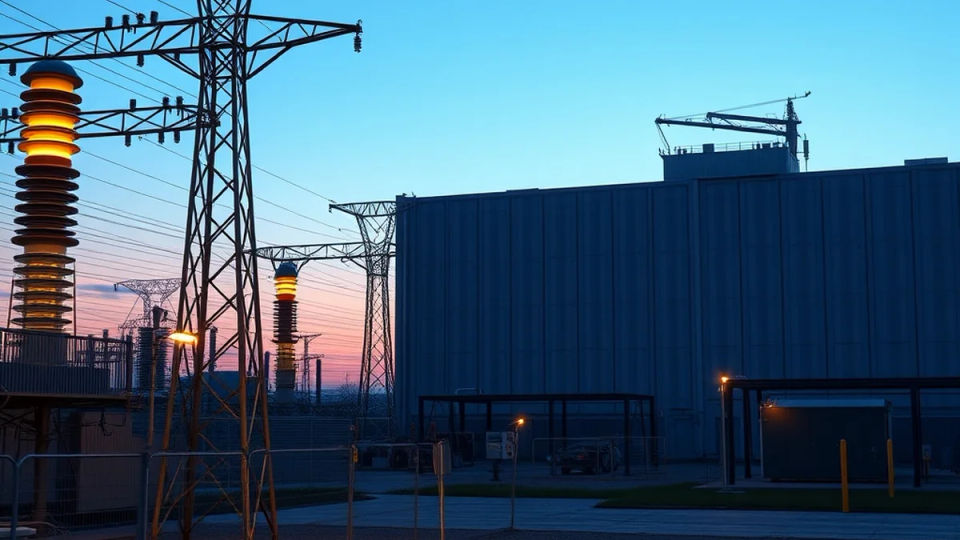
The global race to scale artificial intelligence capabilities will be increasingly decided by access to electrical power and data center infrastructure rather than chip supply, according to an equity research assessment by Morgan Stanley. Investment bank analysts warned that capital expenditure on computational hardware is rapidly outpacing electrical grid capacity across North America. In its research note titled What Does the Power Shortfall Mean for Semis, the investment firm projected that United States data center operators face a 32-gigawatt deficit through 2028. This anticipated electrical deficit represents approximately 34 percent of all projected power requirements for planned computing facilities. The findings suggest that continuing semiconductor production alone cannot sustain the technological expansion unless developers secure electricity and operational land.
Grid Deficit and Semiconductor Installation Imbalance
The report noted that semiconductor manufacturer Nvidia affirmed their thesis that there is not enough power to meet demand. The report stated that there are more semiconductors being built than there are places to put them. Even when developers incorporate bespoke on-site generation solutions such as natural gas turbines, grid interconnection timelines remain heavily backlogged. The resulting bottleneck threatens to leave millions of dollars of sophisticated silicon sitting idle in warehouses awaiting energized racks.
Capital Concentration Favoring Megacap Hyperscalers
Morgan Stanley concluded that tightening electrical access disproportionately benefits a narrow group of well-funded technology corporations. The report stated that data center grid energization is concentrating across a handful of creditworthy enterprise players. Corporate giants possessing multi-billion-dollar balance sheets can offer utility guarantees and fund dedicated substation infrastructure that smaller developers cannot match. Consequently, independent AI startups and academic research institutions risk severe marginalization as primary grid capacity is locked into long-term corporate agreements.
Hyperscaler Domination of Capacity Additions
The equity research model projects that major technology firms will dominate global data center physical expansions over the next three years. Specialist cloud providers and tech titans are expected to capture approximately 94 percent of all worldwide facility additions during 2026. Their share of new energized capacity will normalize to 64 percent in 2027 and 57 percent in 2028 as total industry megawatts expand. Morgan Stanley warned that this concentration could potentially squeeze out or put pressure on other players over time.
Upstream Risks for Chipmakers and Equipment Deliveries
If commercial computing centers cannot secure electricity connections, the downstream impact could reverberate upstream into semiconductor supply chains. The report cautioned that customers unable to energize hardware may delay equipment deliveries or cancel standing orders entirely. Despite these infrastructure bottlenecks, Morgan Stanley analysts maintain confidence that semiconductor leaders like Nvidia and Broadcom will satisfy intermediate earnings guidance. Nevertheless, the report makes clear that physical utility infrastructure, not software innovation, has emerged as the defining barrier to future artificial intelligence scaling.
Why a grid connection can be a competitive advantage
Morgan Stanley's October energy-policy commentary identifies an increasingly familiar problem: construction of data-centre buildings and procurement of accelerators may move faster than utilities can add generation and transmission. A company with secured interconnection capacity could bring usable compute online earlier than a competitor with cheaper chips but no firm supply. However, individual forecasts of power deficits depend on assumptions about model efficiency, equipment utilisation, cooling and the pace of grid investment.
The bottleneck has consequences outside AI. New substations and power lines are paid for through a combination of developers, utilities and sometimes electricity customers, creating disputes over who should bear the costs. The bank's analysis is a research opinion, not a regulatory finding that power has definitively replaced chips as the sole constraint. Investors should distinguish announced gigawatts of projects from permitted, connected and operating capacity, and assess the environmental and local price effects alongside potential commercial returns.