
AdaniConneX Vizag Data Centres Deploy Air Cooling Systems
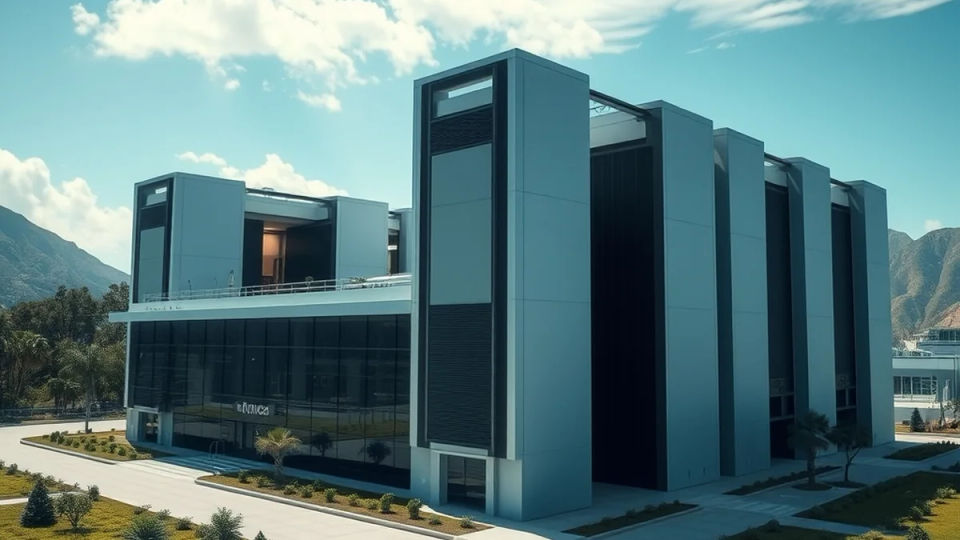
AdaniConneX and technology partner Google will equip upcoming hyperscale data centre campuses in Visakhapatnam with air-cooling systems to eliminate evaporative water loss. Project engineering plans specify that aggregate freshwater consumption across three planned sites will remain lower than the volume of an Olympic swimming pool. The infrastructure installations at Mudasarlova and Tarluvada form key components of a proposed one-gigawatt compute development intended to position the coastal city as a prominent artificial intelligence hub. Unlike conventional facilities that depend heavily on cooling towers and continuous evaporation, the new installations will utilize closed-loop air heat exchangers to conserve local water bodies.
Air cooling saves water in data centre operations but tends to use more electricity compared with liquid cooling architectures.
Air Cooling Architecture and Water Consumption Limits
By adopting direct air-cooling mechanisms, project engineers intend to circumvent the heavy water footprint characteristic of traditional thermal management equipment. Project disclosures indicate that of the minimal freshwater required across the three development campuses, approximately 80 percent will serve worker amenities, commercial kitchens, and grounds landscaping. To eliminate competition with local households for municipal drinking supplies, the facility developers secured dedicated industrial pipelines rather than connecting to urban utility grids.
Wastewater Recycling and Reservoir Environmental Safeguards
The data centre campus designs incorporate a rigorous zero-discharge operational policy for all domestic and grey wastewater generated on-site. Effluent will undergo comprehensive purification inside an on-site sewage treatment plant before being routed for localized irrigation and facility sanitary flushing. Project sources affirmed that zero treated wastewater will enter the Mudasarlova Reservoir, protecting municipal drinking water storage from contamination. These environmental safeguards seek to shield both the Mudasarlova Reservoir and the adjacent Kambalakonda Wildlife Sanctuary from adverse hydrological disruption.
The eco-sensitive zone notification for Kambalakonda Wildlife Sanctuary prohibits commercial mining and specified polluting industries while regulating major commercial construction and land conversion.
Regional AI Digital Infrastructure and Telecommunications Corridor
Visakhapatnam has emerged as a preferred geographical destination for major hyperscale cloud providers and digital infrastructure investments across southern India. Alongside the AdaniConneX developments, Reliance Industries is constructing a hyperscale data facility near Bhogapuram and Polipalli, while Bharti Airtel expands regional optical networks and undersea cable landing points at Rambilli. AdaniConneX, operated as a strategic joint venture between Adani Enterprises and American operator EdgeConneX, is deploying multi-megawatt facilities to accommodate enterprise AI demand.
In 2021, AdaniConneX was established as a joint venture between Adani Enterprises and EdgeConneX to develop data centers across India.
Civil Protests and Government Policy Clarifications
Environmental organization Green Visakha formally requested the Andhra Pradesh government to pause construction activities at proposed facility sites across Tarluvada and Adavivaram. The civil society organization staged public demonstrations on October 14, 2026, marking the one-year anniversary of the state's initial development agreement with Google. The planned digital hub represents an integral element of Google's five-year fifteen-billion-dollar infrastructure commitment in India spanning through 2030. State authorities vigorously defended the projects, with Information Technology Minister Nara Lokesh refuting allegations regarding excessive resource depletion. State infrastructure planners noted that an ultimate 6.5-gigawatt regional data ecosystem could require up to 3 TMC of industrial water annually under long-term expansion plans.