
Renewable Energy Expansion Saved India Over $100 Billion: IEA Report
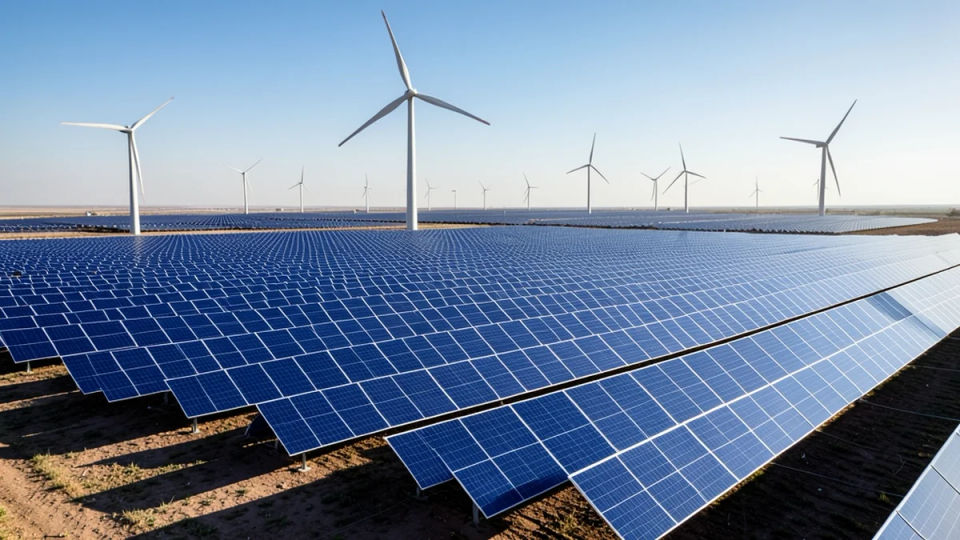
Accelerated deployment of renewable power generation over the past 15 years enabled India to avoid more than $100 billion in coal and natural gas import expenses, according to findings published by the International Energy Agency. Clean power installations saved the national economy the equivalent of Rs 9.4 lakh crore between 2011 and 2025. Surpassing 300 GW of operating clean capacity in 2026, the country has consolidated its standing as the planet's second-fastest-growing renewable energy market. "India's experience shows how consistent policies can help drive down renewable energy costs and attract investment, offering valuable lessons for other emerging economies," IEA Executive Director Fatih Birol said.
Capacity Growth Across Generation Technologies
The IEA said India's renewable power capacity has grown almost fourfold over the past decade. Between March 2014 and September 2026, Indian developers installed 168 GW of solar photovoltaic capacity alongside 38 GW of utility-scale wind capacity. Bioenergy installations recorded parallel development, reaching nearly 12 GW of operational grid capacity by September 2026. The IEA estimated that in the absence of post-2010 renewable additions, India would have required approximately 110 million tonnes of additional imported coal during 2025 alone. The report also recognized the nation as the world's second-largest manufacturer of solar panels.
Cost Competitiveness and Long-Term Fiscal Projections
According to the IEA, competitive bidding has helped India achieve low solar power costs. Tariffs contracted for solar installations commissioned during 2025 settled approximately 40 per cent below the prevailing average generation cost of coal-fired thermal electricity. Looking toward 2030, the IEA projects total renewable capacity to climb to 530 GW, generating cumulative fuel import savings of $240 billion, or roughly Rs 22.6 lakh crore. Annual avoided expenditures are projected to reach $35 billion by 2030, exceeding India's aggregate non-coking coal and gas import bill for financial year 2024-25.
Clean Transition Milestones and Distributed Deployment
India met its national target of securing 50 per cent of total installed power capacity from non-fossil sources in 2025, five years ahead of its original 2030 schedule. The multilateral assessment stressed that growth expanded beyond utility-scale installations through decentralized programs like the PM Surya Ghar Muft Bijli Yojana for household rooftop solar. The IEA also highlighted the PM-KUSUM scheme for supporting solar-powered irrigation pumps and farm feeders. Under the PM Surya Ghar Muft Bijli Yojana, around 53 lakh rooftop solar systems have been installed, benefiting approximately 63 lakh households nationwide, according to Energetica India.