
India Prohibits Export of Lithium-Ion Battery Scrap and Black Mass
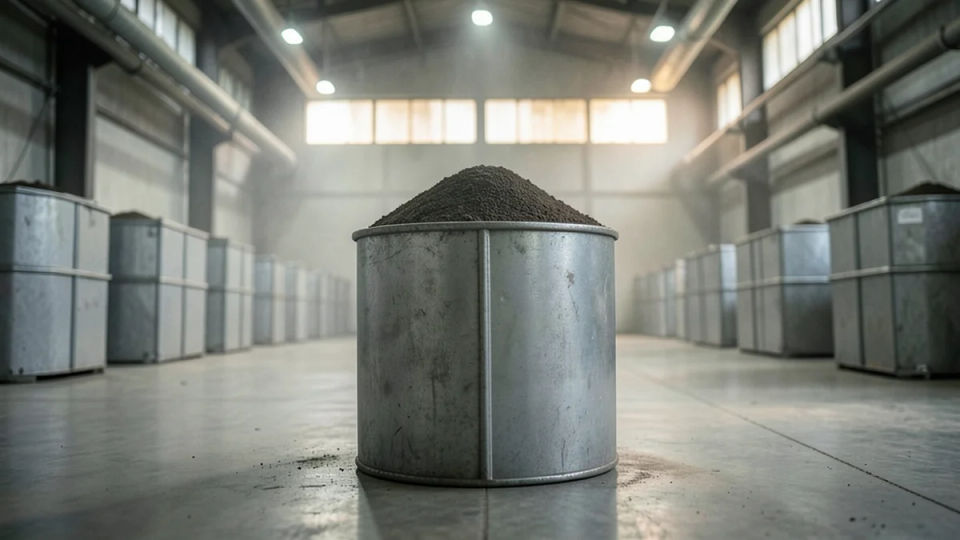
The Directorate General of Foreign Trade has halted outbound shipments of discarded primary cells, spent accumulators and battery scrap holding lithium-ion black mass. The order issued by the Ministry of Commerce and Industry amends the export policy under ITC (HS) Code 85491400 from Free to Prohibited with immediate effect, until further orders. The trade restriction focuses on unsorted discarded battery material lacking mercury, lead or cadmium, identified in government text as lithium-ion battery black mass. Officials stated that transitional arrangements under Paragraph 1.05 of the Foreign Trade Policy 2023 will apply to the revised trade rules.
Regulatory Framework and Scope of Prohibition
The central authorities introduced the regulatory change invoking powers under Sections 3 and 5 of the 1992 Foreign Trade (Development and Regulation) Act alongside the 2023 Foreign Trade Policy. The notification, dated November 10, 2026, alters the classification of battery scrap shipments that previously moved without trade curbs under the Free category. Under the revised trade rules, exporters are prohibited from shipping this category of battery waste abroad. The modified export policy applies strictly to the specified unsorted battery waste and scrap described in the order and does not create a blanket prohibition on every type of battery or battery-related material.
Critical Minerals and Hydrometallurgical Recycling
Black mass refers to a particulate powdered mixture recovered during the recycling of old lithium-ion batteries when units undergo dismantling, crushing and mechanical processing. The recovered dark powder holds valuable minerals including lithium, cobalt, nickel, manganese and graphite. These mineral elements are essential inputs for manufacturing lithium-ion batteries used across electric vehicles, smartphones and renewable energy storage systems. Through chemical processes such as hydrometallurgy, domestic recycling facilities can extract these critical metals and refine them into specialized compounds for fresh battery production. The export curbs aim to keep end-of-life battery materials inside India to feed domestic hydrometallurgical recycling units rather than shipping unprocessed scrap overseas.
Industry Reception and Domestic Supply Dynamics
The Material Recycling Association of India welcomed the amendment and stated that the curbs will give domestic recyclers and critical mineral processors greater access to feedstock. The recycling body described the decision as an important step for bolstering national resource security, fostering domestic processing capacity and establishing a self-sustaining circular economic system. Industry estimates suggest that about 3.2 million tonnes of e-waste, containing approximately 70,000 tonnes of end-of-life batteries, could yield an estimated 30,000 tonnes of black mass annually. An expanding domestic electronics sector and surging electric vehicle adoption produce mounting quantities of spent batteries, a significant portion of which was previously exported in raw or semi-processed black mass form because of limited domestic refining capacity. India has a recycling capacity of around 60,000 tonnes of battery material a year, with Lohum contributing about 20,000 tonnes, Attero about 17,500 tonnes and Rubamin about 10,000 tonnes, according to a BDO India report cited by DIYguru.