
Edited by Editor-in-Chief, The Indus Pulse 25 Sept 2026, 12:08 PM 3 min readindia
Major Landslide Strikes Sikkim's Rimbi Village As Continuous Rains Destroys Homes
Sources & Citations
Continuous heavy rainfall triggered a major landslide late Thursday night in Rimbi village within the Yuksom-Tashiding constituency of Sikkim's Gyalshing district, destroying multiple residential structures and government accommodations. State disaster management officials reported that large volumes of mud, rocks, and debris descended downhill following the late-night geological movement, placing surrounding road connectivity and properties at severe risk. Despite the extensive structural destruction across the residential sector, authorities confirmed that no loss of life or injuries had been recorded in the immediate aftermath.
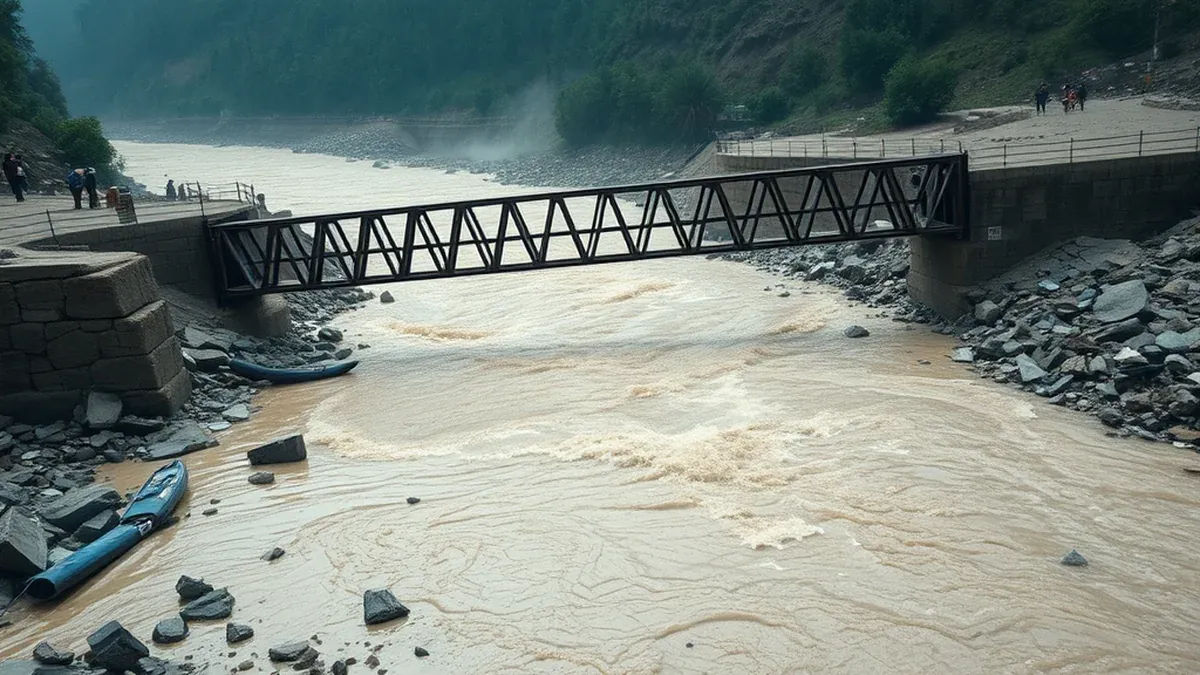
The region has experienced repeated slope movements starting in August, with an official government statement on August 15 noting that thirty households in Rimbi and eight in Singlitam impacted more than 150 residents total. Additionally, rising water and debris swept away the reinforced cement concrete bridge at Rimbi as the main river altered its course.
The overnight incident in West Sikkim formed part of a wider cluster of weather-related disruptions across the Himalayan state. Local disaster management authorities and district administration teams initiated emergency relief and debris clearance operations in Rimbi and Singlitam, while relocating 128 residents from 28 vulnerable homes across hazard-prone zones to safer locations. Concurrently, separate landslide activity struck Tadong in Gangtok late Thursday night, temporarily paralyzing traffic movement near the Lingding Jhora road for several hours and damaging residential rooms and local water supply pipelines.
Official Response And Evacuations
Chief Minister Prem Singh Tamang expressed deep concern over the escalating crisis in Rimbi village, designating the protection and well-being of displaced residents as the administration's primary objective. In an official directive issued following the incident, Mr. Tamang instructed local municipal and district authorities to remain on high alert, maintain constant surveillance of unstable slopes, and deploy all necessary protective measures.
The state government mobilized district administration teams to execute evacuation protocols, moving vulnerable families into temporary shelters while heavy machinery cleared accumulated mud and rock from obstructed passages. State officials noted that relief operations continued uninterrupted as persistent downpours hampered movement throughout the affected hill corridors.
Public Advisories And Ongoing Weather Risks
Following the destruction of government and private accommodations in Gyalshing district, state authorities issued strict public advisories urging residents and travellers to avoid active landslide zones and exercise extreme caution. Mr. Tamang appealed directly to local communities to remain vigilant against ongoing torrential precipitation, adhere strictly to administrative safety guidelines, and extend mutual support during the crisis.
With road networks remaining vulnerable to secondary subsidence and recurring debris flows, engineering teams maintained a state of readiness to clear blockages across arterial routes. The Sikkim state disaster management authority confirmed that monitoring stations would track precipitation levels continuously as weather conditions across the region remain unstable.
Sources & Citations
The Indus Pulse is committed to accuracy and transparency.