
Delhi Overtakes Lahore as World's Most Polluted City
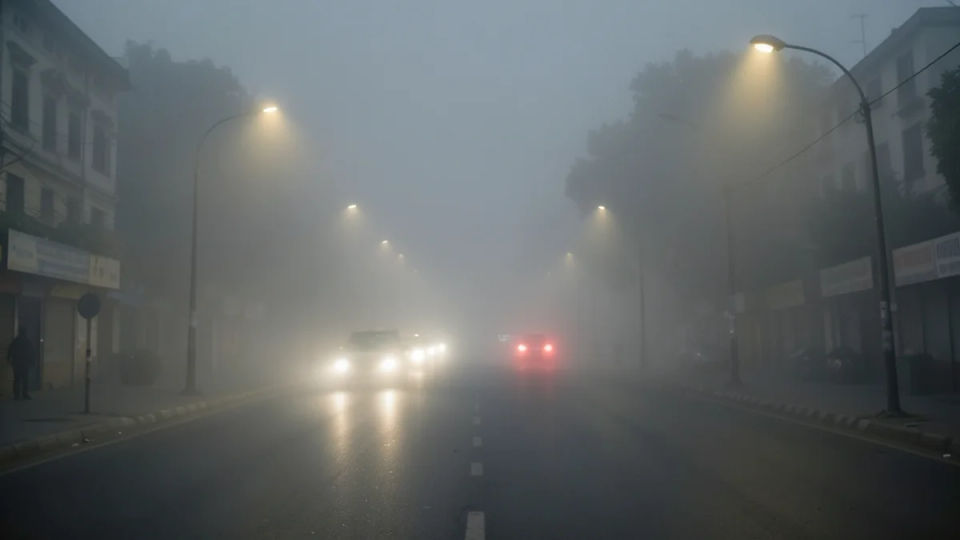
India's capital, Delhi, surpassed Lahore in Pakistan on Friday to rank as the world's most polluted major city as dense smog reduced visibility across the metropolis of 20 million people, Reuters reported. Swiss air monitoring group IQAir recorded Delhi's Air Quality Index (AQI) at 334, placing it in the "hazardous" tier, compared with readings up to 50 considered good with little health risk, according to Reuters. India's Central Pollution Control Board (CPCB) measured a higher AQI of 403 at 9 a.m. local time, classifying the air as "severe," The Independent reported.
Post-Diwali Spike and Monitoring Data
The Hindu noted that the Swiss and Indian figures differ because both systems rely on distinct AQI scales and calculation methods. According to The Independent, the CPCB reading climbed steadily after Diwali on Sunday, November 8, rising from 299 on Tuesday to 313 on Wednesday and 350 at 4 p.m. on Thursday. By Friday, 33 of Delhi's 58 monitoring stations registered "severe" air quality, with several stations exceeding 450, The Independent reported.
India's Supreme Court had permitted only approved "green" firecrackers within restricted hours during Diwali, The Independent noted. The Centre for Science and Environment found that fine PM2.5 particles averaged 236 micrograms per cubic metre in the week leading up to Diwali, nearly double the 120 micrograms recorded during the same week in 2025, The Independent reported.
Seasonal Causes and Health Impact
Footage from news agency ANI showed cars and motorcycles emerging from thick smog that obscured street lights along major city roads, Reuters reported. According to Reuters, winter pollution recurs across northern India and neighbouring Pakistan when cold, heavy air traps vehicle exhaust, construction dust, and smoke from agricultural burning. The Independent reported that India's Ministry of Environment, Forest and Climate Change attributes 23 percent of winter pollution to vehicles and 20 percent to biomass burning, including crop stubble. A July 2024 study in The Lancet Planetary Health linked 7.2 percent of deaths, or roughly 33,000 annually, across 10 Indian cities including Delhi to short-term PM2.5 exposure above the World Health Organization's 24-hour guideline of 15 micrograms per cubic metre, The Independent reported. During winter 2023–24, Delhi recorded 92 days classified as 'very poor and above', including 15 'severe and above' days, according to CEEW.
Background
The CAQM Sub-Committee on GRAP invoked Stage-III of the action plan across the entire NCR with immediate effect, according to Press Information Bureau.
Medical facilities saw a 30 to 40 percent surge in outpatient department consultations for respiratory ailments such as asthma, bronchitis, and chronic obstructive pulmonary disease exacerbations during the initial week of November relative to October, according to Exam Takhti.