
Studies Uncover Pre-Festival Air Toxicity in Delhi and Discrepancies in Diwali Monitoring Data
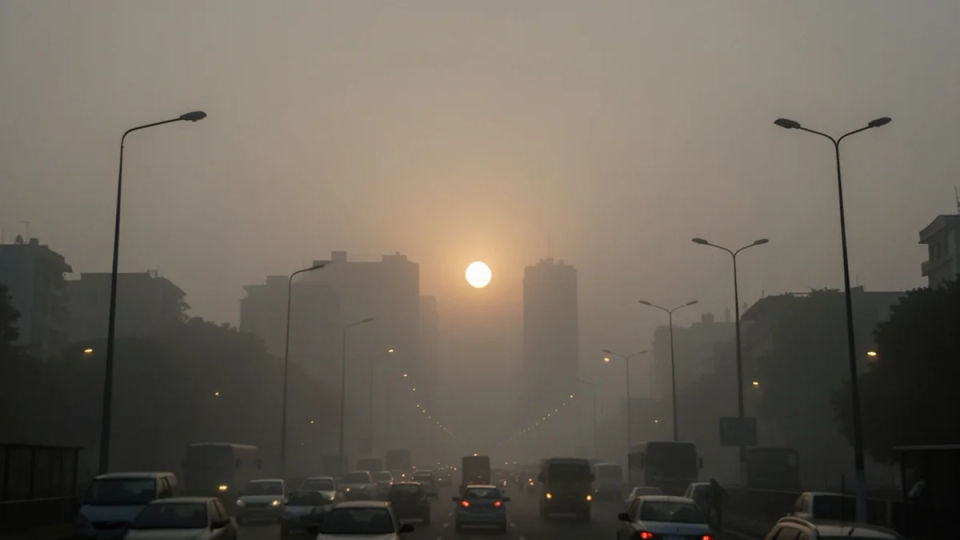
New environmental research reveals that the national capital entered the festival period with its worst pre-festival atmospheric conditions in three years. Severe pollution was already present prior to Deepavali celebrations, driven heavily by local transportation emissions alongside seasonal farm fires. At the same time, an investigative examination by BBC Verify uncovered substantial discrepancies between state and federal monitoring datasets, indicating published figures failed to capture the full extent of the problem.
Sensor Exclusions and Atmospheric Discrepancies
During peak festival celebrations on November 8, three separate monitoring stations recorded hourly PM2.5 concentrations exceeding 3,000 micrograms per cubic metre. Dr Manoj Kumar, a researcher at the Centre for Research on Energy and Clean Air, pointed out that even short-term exposure to extreme particulate concentrations produces adverse health impacts for urban residents. However, hourly measurements surpassing 1,000 micrograms were omitted from the official Air Quality Index published by the Central Pollution Control Board. The CPCB stated that readings beyond 1,000 micrograms fall outside calibrated equipment ranges and are excluded from daily average calculations. Dr Kumar cautioned that discarding high readings risks misrepresenting pollution severity and eroding public trust.
Network Data Gaps and Average Divergence
Between 21:00 on November 8 and 07:00 on November 9, monitoring logs registered 217 missing hourly observations across 59 CPCB stations in Delhi. Among specific locations, the RK Puram monitoring facility in south Delhi recorded particulate concentrations peaking near 2,500 micrograms before logging missing data gaps. Because stations require at least 16 valid hourly measurements to compute daily metrics, intermittent readings disqualified multiple facilities from contributing to official totals. A comparison of 30 common monitoring stations across a 24-hour Diwali window found CPCB figures averaged 240 micrograms per cubic metre, which stood at less than half of the 551 micrograms recorded in DPCC records.
Index Calculations and Health Implications
Data omissions directly influenced public indices, resulting in the CPCB reporting Delhi's overall AQI at 344 on the afternoon of November 9, down from 376 recorded the previous day. Festival firecrackers worsened air quality already burdened by vehicle emissions, construction dust, agricultural burning, and atmospheric stagnation, according to BBC. The suppressed figures contrast with World Health Organization guidelines, which establish that annual average PM2.5 concentrations should not exceed 5 micrograms per cubic metre. Environmental epidemiologist Dr Sierra Clark of City St George's, University of London, warned that classifying extreme spikes as missing data obscures intervals that drive acute health crises like asthma attacks. Dr Clark suggested that environmental regulators publish parallel reporting scenarios to present typical baseline exposures alongside extreme festival peaks. According to IITM DSS data for November 1-8, 2026, regional stubble burning accounted for 14.29% of Delhi's PM2.5, while vehicular transport accounted for 52% of local source pollution.