
Delhi Air Quality Plunges to Very Poor as CAQM Invokes Stage 2 of GRAP
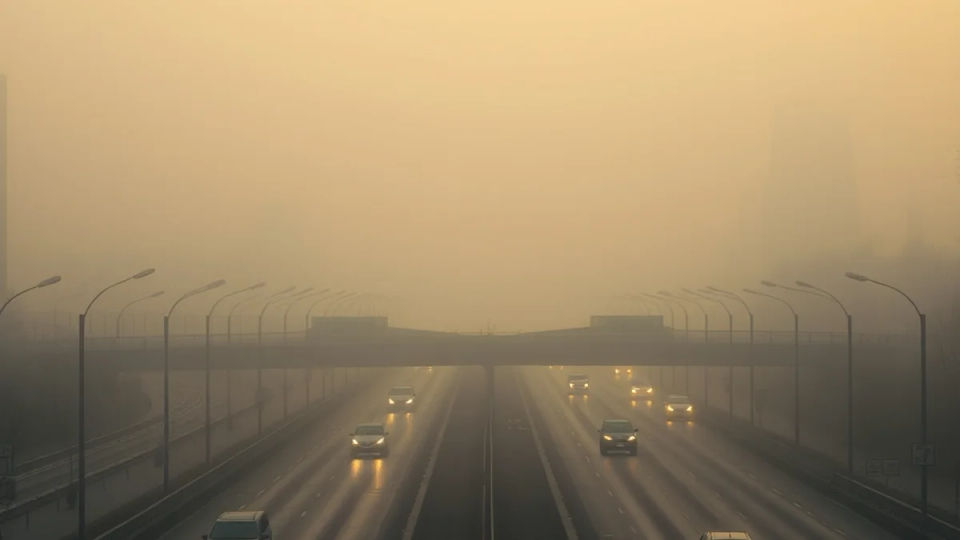
Air quality across Delhi deteriorated into the very poor classification for the first time this winter season, The Hindu reported. The city's overall Air Quality Index settled at 324 on Monday afternoon, prompting statutory intervention, NDTV reported. To counter the sudden spike in atmospheric particulate concentrations, the Commission for Air Quality Management invoked Stage-II of the Graded Response Action Plan across the National Capital Region, Hindustan Times reported. Under regulatory benchmarks established by the Central Pollution Control Board, an index score between 301 and 400 designates very poor air quality, while a reading spanning 401 to 500 enters the severe threshold, The Hindu noted.
Rapid Pollution Spike and Monitoring Station Telemetry
The sudden decline reflects sharp pollution increases over the weekend, climbing from an index score of 117 on October 31 to 261 on November 1 before touching 324, The Hindu reported. Atmospheric tracking data from the India Meteorological Department and the Indian Institute of Tropical Meteorology indicated that unfavorable meteorological patterns will keep air quality depressed across upcoming cycles, The Hindu stated. Of the 58 operational air monitoring stations providing telemetry across the national capital, 37 recorded very poor air quality, while three monitoring facilities logged severe contamination, NDTV noted. Monitoring posts in Jahangirpuri registered an extreme index value of 436, followed by Rohini at 415 and Punjabi Bagh at 413, NDTV stated.
In October 2025, the CAQM Sub-Committee on GRAP invoked the 12-point action plan under Stage-II across the entire NCR after Delhi's hourly average AQI rose to 300 at 6 PM and 302 at 7 PM in the 'Very Poor' category.
The Decision Support System for Delhi estimated that the transport sector contributed 19.2% to the city's pollution, while stubble burning accounted for 8.4%.
Mandatory Stage-II Emission Controls and Office Timings
Under Stage-II operational mandates, regional administrative bodies have been directed to intensify dust suppression and vehicular emissions controls, Hindustan Times reported. Authorities across Delhi and surrounding districts are mandated to enhance vehicle parking fees to discourage the reliance on private motor vehicles, The Hindu noted. Municipal agencies and state administrations have been directed to stagger operating schedules for public administrative offices and local government bodies across Gurugram, Faridabad, Ghaziabad, and Gautam Buddha Nagar. Field enforcement teams are expanding mechanical and vacuum road sweeping alongside continuous water sprinkling and anti-smog gun deployments to curb road dust.
Under GRAP Stage II, the use of diesel generator sets for regular and commercial purposes is prohibited across Delhi-NCR, except for specified emergency and essential services including hospitals and healthcare facilities, according to The Statesman.
Enforcing border curbs under winter pollution measures, the Northern Range of Delhi Traffic Police checked 7,657 vehicles between midnight on November 1 and noon on November 2, turning back 609 non-compliant vehicles, according to The Times of India.
Public Transit Expansion and Industrial Fuel Enforcements
To facilitate public transit adoption during the curbs, transit authorities are augmenting the operational frequency of metro train lines and deploying additional CNG and electric bus fleets, Hindustan Times reported. Enforcement teams have intensified physical inspections across industrial complexes, brick kilns, and construction sites to prohibit the burning of biomass or unauthorized fuels, Hindustan Times noted. Restaurant kitchens and roadside eateries are prohibited from utilizing coal or firewood in cooking tandoors, requiring rapid conversion to electric or natural gas equipment. Environmental officials urged citizens to minimize private vehicle journeys, maintain valid pollution-under-control credentials, and log neighborhood violations through designated mobile monitoring applications.
DMRC will run 20 extra train trips on weekdays from Tuesday, bringing total extra services to 40 after GRAP-II, according to ABP Live.