
Supreme Court Permits Certified Green Firecrackers for Deepavali in Delhi-NCR
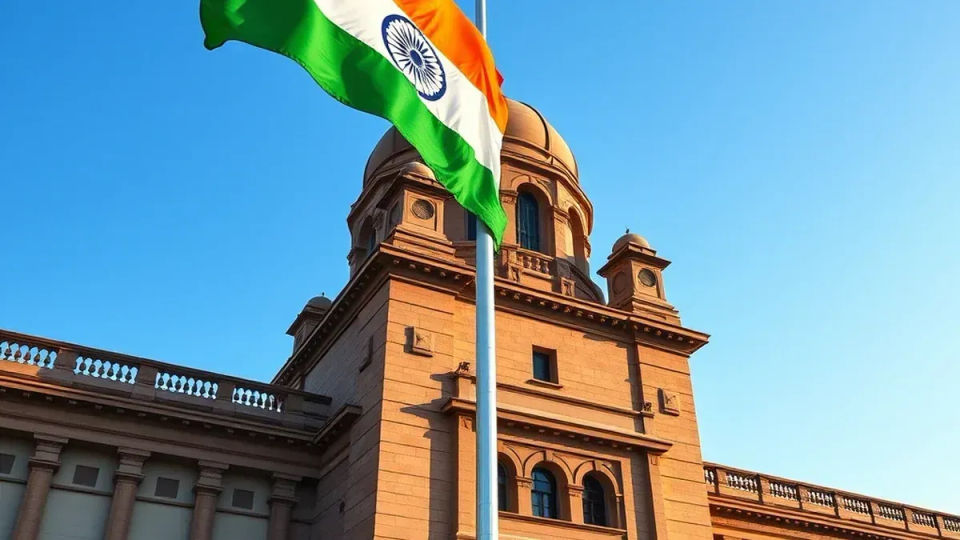
The Supreme Court on Monday permitted the regulated sale and bursting of certified green firecrackers across Delhi-NCR for Deepavali, NDTV reported. A judicial bench comprising Justices M.M. Sundresh and Prasanna B. Varale established a two-day operational window covering November 7 and November 8, The Times of India reported. Under the judicial order, residents may burst certified green firecrackers between 6:00 AM and 7:00 AM in the morning and from 8:00 PM to 10:00 PM in the evening, Hindustan Times reported. The top court mandated that an unconditional complete ban on all firecrackers will be restored throughout the National Capital Region beginning November 9.
Judicial Rationale and Enforcement Observations
The bench explained that it chose a calibrated regulatory approach over a blanket prohibition due to persistent enforcement shortcomings, Hindustan Times reported. The judges observed that earlier total bans failed to produce measurable environmental improvements or halt the illicit distribution of conventional pyrotechnics. The court noted that conventional firecrackers were frequently marketed deceptively under the pretense of environmentally friendly products. The bench highlighted that the judiciary currently lacks sufficient empirical data to determine whether a complete ban represents the most effective mechanism to address seasonal pollution.
Chemical Restrictions and 300-Metre Silence Zones
The judicial directions restrict permissible fireworks exclusively to formulations certified by CSIR-NEERI and PESO, NDTV reported. According to research formulations developed by CSIR-NEERI, certified green firecrackers produce approximately 30 per cent less pollution than conventional pyrotechnic alternatives. The bench reiterated strict prohibitions against fireworks containing toxic barium salts or unauthorized chemical formulations, The Times of India noted. Furthermore, the court ordered that no fireworks may be discharged within a 300-metre radius of hospitals, nursing homes, clinics, elderly care facilities, and notified silence zones. Municipal and police authorities were directed to identify, signpost, and publicize these protected areas alongside schools and colleges as designated No-Cracker Zones.
Police authorities in coordination with district administrations were directed to form patrolling teams to monitor designated locations, verify QR codes, according to LiveLaw.
The Supreme Court directed authorities to require firecracker manufacturers and traders in Delhi-NCR to deposit a substantial monetary security, which will immediately be forfeited upon any violation of the court's directions or regulations, according to LiveLaw.
According to CSIR-NEERI criteria, green crackers must reduce particulate matter by at least 30% compared with conventional formulations, or achieve at least 20% reduction in particulate matter along with at least 10% in gaseous emissions.
Constitutional Considerations and Air Quality Monitoring
The bench issued the interim directions while adjudicating broader petitions concerning air quality degradation across the National Capital Region, The Times of India reported. The court observed that religious freedom under Article 25 remains subject to public health considerations and the right to life under Article 21, Hindustan Times reported. The bench noted that the latest ruling follows earlier temporary relaxations granted between October 18 and October 20 during the preceding festive cycle. To gauge pollution impacts, environmental authorities will assess daily air monitoring records compiled across November 2 through November 6, November 7 and 8, and the post-Diwali window from November 9 through November 30.