
13 Sept 2026, 07:21 PM 3 min readhealth
Telangana Proposes Mandatory Robotic Surgery Training for Postgraduate Medical Students
Sources & Citations
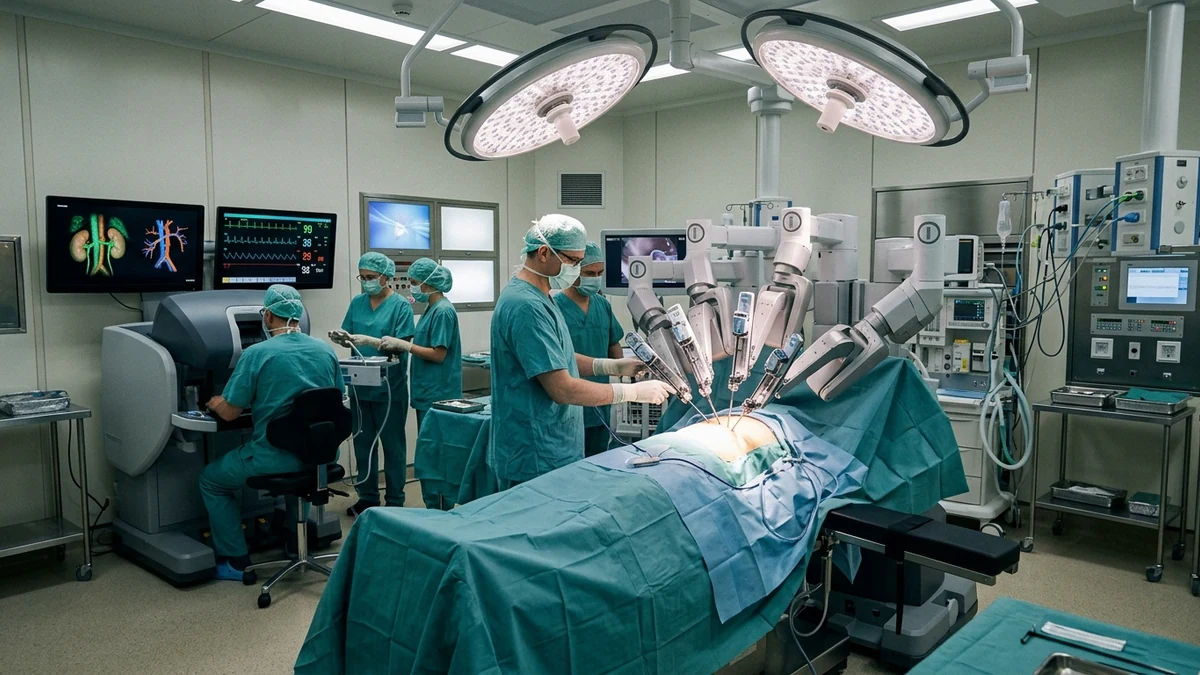
Telangana is exploring a proposal to make six months of robotic surgery training mandatory for postgraduate medical students as part of an aggressive push to build a specialized clinical workforce across government medical facilities. Health Minister C. Damodar Raja Narasimha announced that the state administration intends to approach the National Medical Commission for official approval to integrate the dedicated rotation into the standard three-year postgraduate curriculum.
The initiative was unveiled during the State-Level Multi-Specialty Robotic Surgery Workshop hosted at the Marri Chenna Reddy Telangana Institute of Medical Sciences in Hyderabad. State officials emphasized that expanding advanced surgical infrastructure requires a parallel investment in human capital to ensure that high-end procedures are not restricted to premier urban centers.
Integrating Robotic Surgery Into Medical Curricula
The proposed mandate aims to bridge a critical training gap by embedding robotic assistance directly into foundational surgical education. Under the current framework, advanced clinical exposure is often limited post-qualification or restricted to elite private institutions. By incorporating a structured six-month module, the state hopes to produce a steady stream of clinicians fluent in console-based operations.
Director of Medical Education Dr. N. Vani noted at the workshop that public medical institutions carry a dual mandate of delivering patient care while preparing upcoming specialists for modern clinical environments. Exposing resident physicians to advanced technologies early in their careers can create a transformative multiplier effect throughout the state-run healthcare ecosystem, though she cautioned that technological tools must always remain secondary to core clinical judgment and patient empathy.
Decentralizing Advanced Care Across Regional Facilities
State health planners are designing deployment models to take robotic procedures beyond major metropolitan hospitals. MCR TIMS Director Dr. A. Narendra Kumar reported that surgical teams from 35 medical colleges and 47 secondary hospitals are already rotating through specialized training programs currently active at the Nizam Institute of Medical Sciences and the MNJ Cancer Institute.
Robotic surgery expert Dr. Sudhir Srivastava underscored the equity implications of decentralization, pointing out that rural and smaller communities face severe financial and emotional hardships when forced to travel long distances for specialized interventions. A robust hub-and-spoke deployment model could bridge this geographical divide, bringing complex minimally invasive procedures closer to district-level populations.
Financial Mechanisms and Institutional Workloads
State-backed financial architecture is supporting the current rollout of robotic procedures for eligible patients. Former NIMS Director Dr. N. Bheerappa noted that the institution recently crossed the milestone of completing nearly 1,000 robotic surgeries, with procedural expenses fully absorbed by the state government via the Rajiv Aarogyasri health protection scheme.
Despite this momentum, medical administrators warned against viewing infrastructure acquisition as a standalone solution. Dean of Government Medical College Nagpur Dr. Raj Gajbhiye cautioned gathering professionals that purchasing hardware is only the initial step in a complex operational chain that requires rigorous institutional support, multidisciplinary teamwork, and standardized clinical protocols.
Establishing Sustainable Clinical Protocols
Speakers at the Hyderabad workshop stressed that long-term success depends heavily on structured oversight rather than raw machine capacity. Integrating robotics safely into government hospitals necessitates comprehensive faculty training and formalized safety audits to handle high-volume surgical demands effectively.
As the state formalizes its submission to the National Medical Commission, educational authorities are working to finalize the exact modular structure of the proposed curriculum to ensure it meets national accreditation standards without compromising core surgical competencies.
Next steps involve submitting the formal curriculum framework to the National Medical Commission for regulatory review, while state institutions continue ongoing training rotations for surgeons across regional medical colleges.
Sources & Citations
The Indus Pulse is committed to accuracy and transparency.