
15 Sept 2026, 09:49 AM 4 min readhealth
Congo Health Officials Use Mobile Data to Track Ebola Spread
Sources & Citations
Reporting basis: one publisher; no matching primary record was attached.
Health officials battling the Ebola outbreak in the eastern Democratic Republic of Congo are utilizing anonymised mobile-phone data to track population movements and anticipate where the virus could spread next. According to the World Health Organization and researchers working on the response, this digital approach marks the first time mobility data has been deployed in an active Ebola epidemic. The intervention comes as authorities struggle to manage what the WHO has classified as the fastest-growing Ebola outbreak on record, with infections confirmed across six provinces.
Government figures indicate that more than 6,250 people have been infected and 3,039 have died since the current epidemic was officially declared on May 15. The outbreak represents Congo's 17th brush with the virus and is driven by the Bundibugyo species of Ebola, a strain for which there are currently no approved vaccines or specific treatments available. With response resources stretched thin, health authorities are forced to look beyond conventional surveillance methods to direct limited tracking teams effectively.
Mobility Tracking and Network Antennas
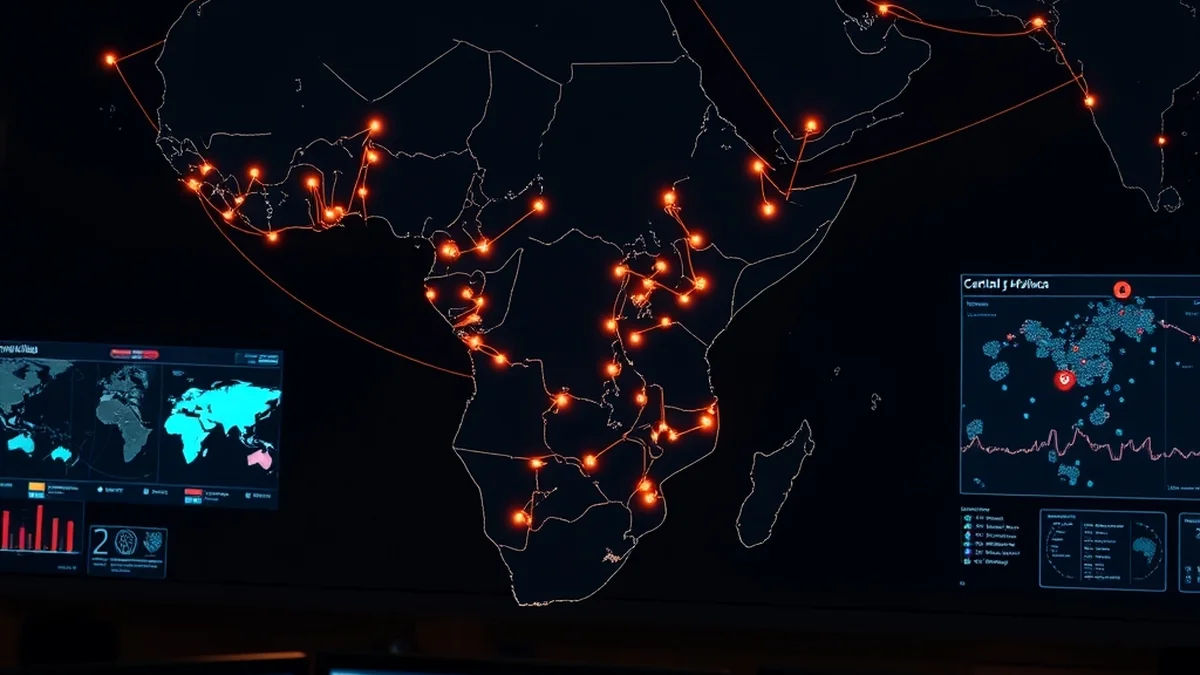
The analytical approach relies on records generated when mobile phone users connect to local telecommunications networks as they travel across the country. Swedish non-profit organisation Flowminder processes these aggregated records, tracking how devices switch between network antennas to estimate human travel patterns between different regions. The mobility data itself is provided free of charge by Vodacom, the largest telecommunications operator in the Democratic Republic of Congo, though the company did not respond to requests for comment regarding the initiative.
Flowminder representatives confirmed that the organisation receives only aggregated and anonymised datasets, ensuring that individual subscriber identities remain entirely inaccessible. Linus Bengtsson, founder of Flowminder, stated that the initiative aims to provide estimates of human travel as a direct predictor of how infectious individuals move across regions. Traditional risk assessments have typically focused strictly on immediate outbreak hotspots under the assumption that transmission radiates primarily into surrounding districts, leaving distant economic corridors vulnerable.
Epidemiological Risk and Regional Movement
Olivier Le Polain, head of epidemiology and analytics for response at the WHO Health Emergencies Programme, emphasized the critical role that travel plays in the current epidemic. Analyzing mobility data allows responders to identify biological risks in areas that may be geographically isolated from initial epicenters but remain closely connected through commercial and transit routes. Le Polain pointed specifically to Ituri province in the northeast, where the outbreak is believed to have originated, noting that significant population movements tied to local mining activities and regional trade heavily influence viral dissemination.
This method allows public health teams to anticipate risks in distant communities before local transmission chains are officially detected by clinical surveillance. By mapping travel corridors, epidemiologists gain a more granular and nuanced understanding of exposure risks that standard geographic proximity models fail to capture.
Predictive Validation and Target Destinations
The utility of the mobile data tracking approach was demonstrated through Flowminder's initial analysis published in early June, which concentrated on the primary outbreak epicenters of Bunia, Mongbwalu, and Rwampara. Researchers analyzed travel histories for individuals who spent time in those three locations between April 3 and April 23, mapping their subsequent destinations across the country. The findings revealed that the largest volume of travelers flowed into neighboring areas within Ituri province and the adjacent North Kivu province.
Validation of the tracking model arrived by the end of June, when all 10 of the primary destination areas identified by Flowminder as receiving the largest traveler flows from the original epicenters reported confirmed Ebola cases. Public health authorities are now relying on these predictive movement metrics to deploy surveillance teams and response resources ahead of confirmed transmission peaks.
Sources & Citations
Reporting basis: one publisher; no matching primary record was attached.
The Indus Pulse is committed to accuracy and transparency.