
14 Sept 2026, 08:51 AM 3 min readauto
Two-Wheelers Dominate India's EV Charging As Family Scooters Reshape Market
Sources & Citations
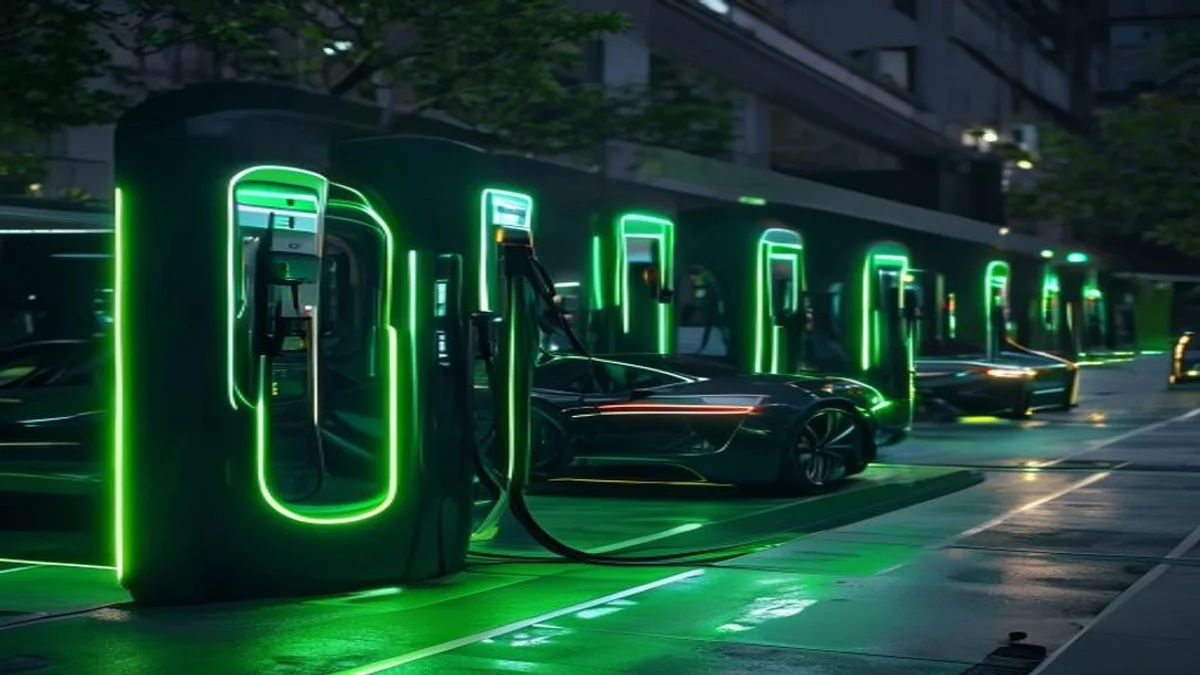
India's electric vehicle charging landscape is bifurcating into two distinct operational tracks, with two-wheelers accounting for the vast majority of charging sessions while four-wheelers drive the bulk of energy demand. According to the Bolt.Earth State of Charge 2026 report, two-wheelers represented 78.1 per cent of all charging sessions in the year-to-date period of FY26-27, a significant increase from 71.6 per cent in FY24-25. Conversely, four-wheelers, despite representing only 16 per cent of total sessions, were responsible for 67.3 per cent of the total energy consumed across the six metro markets studied.
Charging Infrastructure and Usage Patterns
The data, which covers Bengaluru, Hyderabad, Chennai, Delhi-NCR, Mumbai, and Kochi, reveals a misalignment between session volume and energy load. While charging activity peaks at 6 PM, driven primarily by two-wheeler users, the peak for energy demand occurs later at 9 PM. This discrepancy presents a challenge for grid planning and tariff design. The report also notes that while DC fast charging significantly reduces session duration for four-wheelers to 26.5 minutes compared to 194.3 minutes for AC charging, AC users demonstrate higher loyalty, returning to the same network within 90 days at a greater frequency. This suggests that fast charging functions more as a convenience layer than a primary driver of long-term user retention.
The Rise of the Family Scooter
Parallel to these infrastructure trends, the Indian two-wheeler market is undergoing a fundamental shift in product strategy. Manufacturers are pivoting away from the high-performance, gadget-heavy models that defined the early EV era toward practical, family-oriented scooters. These vehicles, characterized by flat floorboards, increased under-seat storage, and seating configurations designed for two adults and a child, are now the primary battleground for market share. The success of models like the Ather Rizta, which contributed approximately 75 per cent of the company's sales volume in FY26, has validated this shift toward utility over raw speed.
Market Dynamics and Future Growth
Affordability and changing consumer demographics are accelerating this transition. The implementation of GST 2.0 in September 2025 has narrowed the price gap between internal combustion engine vehicles and electric alternatives, removing a significant barrier for household buyers. Furthermore, demand is no longer confined to urban tech hubs; Tier-2 and Tier-3 cities, including Vijayawada, Rajamahendravaram, and Thiruvananthapuram, are now seeing the fastest growth in charging demand. As manufacturers prepare for the festive season, the competitive focus has shifted to convincing traditional petrol-scooter users that electric models offer a more practical and economical alternative, rather than marketing them as premium tech products.
Sources & Citations
The Indus Pulse is committed to accuracy and transparency.