
13 Sept 2026, 06:20 PM 4 min readauto
Tata Motors Hikes Punch Prices As EV Charging Network Hits Milestone
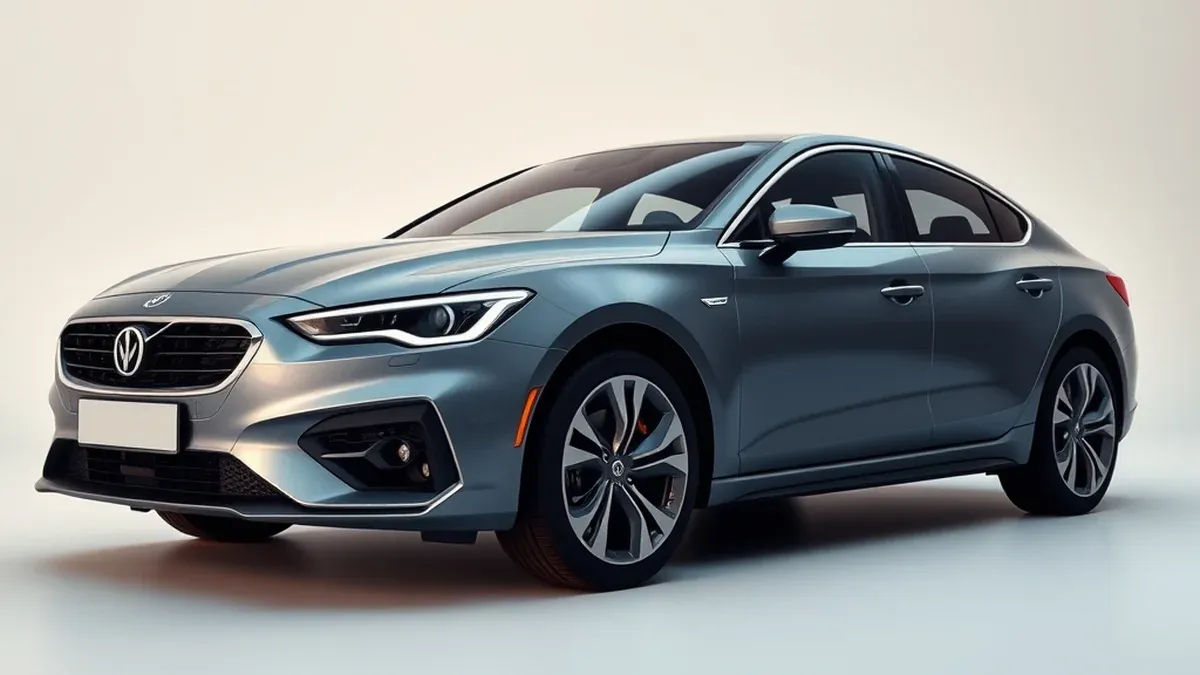
Tata Motors has implemented a strategic price revision across its popular Punch lineup, affecting both internal combustion engine and electric variants. The adjustment, effective immediately as of September 2026, sees price increases ranging from Rs 5,000 to Rs 20,000 depending on the specific model and battery configuration. This move follows a broader company-wide price hike announced earlier in the month, reflecting ongoing adjustments in the competitive Indian automotive market.
Simultaneously, Tata Power and TATA.ev have reported significant operational milestones for their shared electric vehicle infrastructure. The collaborative network of 10 dedicated Mega Charger hubs has now surpassed 70,000 charging sessions, facilitating over 85,000 hours of charging time. These hubs, strategically positioned along key national highway corridors and urban centers, have supported more than 7.5 million electric kilometers, contributing to a verified reduction of 6,690 tonnes of carbon dioxide emissions.
Punch EV Price Adjustments and Market Positioning
The latest price revision for the Punch EV is structured around battery capacity, with the 30 kWh and 40 kWh variants receiving different increments. The entry-level Smart and Smart+ variants, equipped with the 30 kWh battery, have seen a price increase of Rs 10,000. Meanwhile, the more powerful 40 kWh variants, including the Smart+, Adventure, Empowered, and Empowered+ S, have been subjected to a higher hike of Rs 20,000. Following these changes, the ex-showroom price range for the Punch EV now spans from Rs 9.79 lakh to Rs 12.99 lakh.
Despite the price hike, the Punch EV remains a cornerstone of Tata Motors' electric vehicle strategy. The model has been instrumental in maintaining the company's dominant position in the mainstream EV segment, with Tata Motors registering 13,158 electric vehicle sales in August 2026 alone. This performance secured an estimated 43 percent market share for the brand, even as competition intensifies from domestic and international players like Mahindra and JSW MG Motor.
Expansion of the Mega Charger Network
The 10 co-branded Tata Power and TATA.ev Mega Charger hubs represent a specialized infrastructure effort designed to support high-frequency users, including private owners, taxi fleets, and ride-hailing services. These hubs are equipped with 25 fast chargers and 56 charging guns, providing a cumulative capacity of 2.7 MW. Individual site capacities range from 180 kW to 600 kW, allowing for simultaneous charging of multiple vehicles, which is critical for reducing wait times on high-traffic routes.
Geographically, the network is focused on critical transit arteries. Four hubs are located along the Yamuna Expressway connecting Greater Noida and Agra, while three serve the Hyderabad-Vijayawada corridor. Other installations anchor the Bengaluru-Tirupati and Pune-Bengaluru routes, alongside urban hubs in Mumbai and Hyderabad. The Mumbai facility, located near Terminal 2 of the Chhatrapati Shivaji Maharaj International Airport, serves as a flagship site with 600 kW of capacity and 16 charging guns, catering to the high demand from airport-bound traffic.
Infrastructure Strategy and Future Targets
Beyond the 10 specialized Mega Charger hubs, Tata Power continues to scale its broader charging ecosystem. The company currently operates over 6,700 public and captive charging points, supported by more than 250,000 home chargers and 1,200 bus charging points across 690 cities and towns. This infrastructure is accessible to users through the Tata Power EZ Charge application, which serves as the primary interface for locating and managing charging sessions.
Looking toward 2030, the company has set ambitious targets to expand its footprint to 10,000 public charging points and 750,000 home chargers. This long-term strategy is intended to accelerate the transition to green mobility by addressing range anxiety and providing reliable, high-speed charging destinations. The current network of Mega Charger hubs serves as a proof-of-concept for the commercial viability of high-capacity charging stations in India's evolving EV landscape.
Competitive Landscape and Upcoming Models
The Indian electric vehicle market is experiencing rapid growth, with retail registrations reaching 30,686 units in August 2026, a 52 percent year-on-year increase. While Tata Motors leads the segment, the entry of new models is expected to reshape the market over the next 12 to 24 months. Upcoming launches include compact electric SUVs from Hyundai, such as the codenamed HE1i, and dedicated electric MPVs from Maruti Suzuki, which are expected to challenge the current market hierarchy.
international entrants like VinFast are preparing to introduce micro-urban and compact crossover EVs, targeting the sub-20 lakh segment. These new models, often built on born-electric architectures, are expected to offer advanced features such as Level 2 ADAS and flexible cabin configurations. As these new entrants arrive, the focus for established players like Tata Motors will likely remain on balancing price competitiveness with the continued expansion of their charging infrastructure to maintain market leadership.
The Indus Pulse is committed to accuracy and transparency.