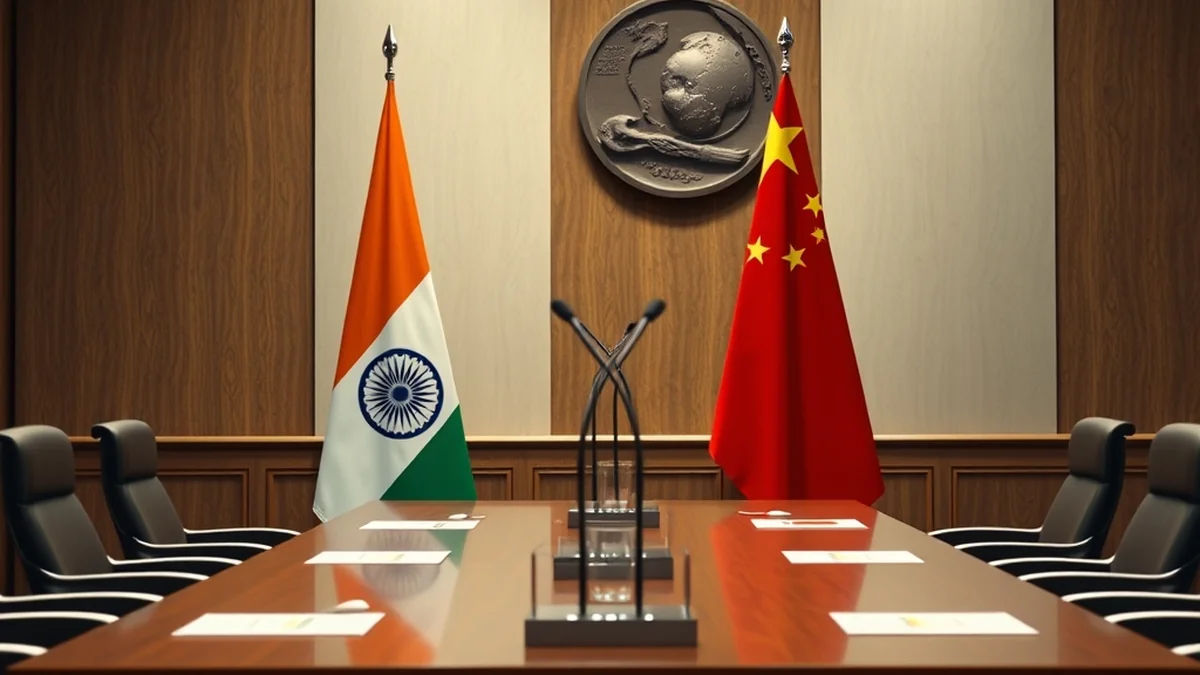
China announced on September 10, 2026, that President Xi Jinping will travel to New Delhi to attend the upcoming BRICS Summit on September 12, 2026. This high-profile visit marks the Chinese leader's first trip to India in nearly seven years, signaling a major moment in the diplomatic relations between the two nuclear-armed neighbors. The announcement, made by Beijing officials, sets the stage for direct engagement between the top leadership of both nations during the multilateral gathering.
The upcoming visit is expected to facilitate crucial bilateral talks on the sidelines of the summit between President Xi and Indian Prime Minister Narendra Modi. The two leaders last met formally on the sidelines of the BRICS Summit in Kazan, Russia, on October 23, 2024, which initiated a gradual easing of bilateral tensions. This New Delhi meeting represents the most direct opportunity in years to address long-standing border, trade, and political disputes that have frozen high-level exchanges.
Seven Years of Diplomatic Distance
The nearly seven-year gap in presidential visits highlights the deep freeze that has characterized relations between Beijing and New Delhi. President Xi last traveled to India in October 2019 for an informal, highly publicized summit with Prime Minister Modi in the coastal town of Mamallapuram, near Chennai. Following that meeting, diplomatic channels severely contracted as geopolitical friction and border standoffs led to a prolonged period of military and political disengagement.
While diplomatic communication has slowly resumed, the physical absence of top-level Chinese leadership in India has lingered as a symbol of unresolved tensions. The decision by Beijing to confirm President Xi's attendance at the New Delhi summit indicates a mutual willingness to transition from cold deterrence to active diplomatic engagement. Analysts observe that while the Kazan meeting in late 2024 broke the ice, the upcoming New Delhi summit will test whether the two countries can move beyond basic conflict management toward a more stable bilateral framework.
Parallel Ministerial Trade Dialogues
The diplomatic agenda in New Delhi will be heavily accompanied by economic negotiations. Alongside the main presidential meetings, Chinese Commerce Minister Wang Wentao and Indian Commerce Minister Piyush Goyal are scheduled to hold bilateral discussions on the sidelines of the BRICS event. These ministerial talks will focus directly on trade normalisation, addressing the massive trade imbalance and the restrictive economic policies implemented by both sides over the last several years.
The inclusion of the commerce ministers in the official summit itinerary underscores the high priority both governments are placing on economic normalisation. Trade between the two Asian giants has remained resilient in terms of volume, but it has been heavily skewed, with India running a massive trade deficit with China. The discussions between Wang and Goyal represent the first structured attempt in years to address these commercial imbalances at a ministerial level, offering a potential pathway to ease trade barriers.
The Persistent Friction in Business Relations
Despite the clear signs of a diplomatic thaw, business communities in both India and China remain highly skeptical about a rapid turnaround in economic relations. Corporate leaders and economic analysts point out that commercial ties remain tightly bound by mutual suspicion, with little immediate prospect of a return to the pre-2020 business environment. The gap between high-level diplomatic handshakes and the practical realities of doing business on the ground remains substantial.
Indian industries rely heavily on Chinese inputs, yet security concerns continue to dictate economic policy in New Delhi. Analysts argue that while political leaders may agree to de-escalate border tensions, the deep-seated mistrust within the security and regulatory establishments of both nations will not easily dissipate. Consequently, businesses are preparing for a slow, highly scrutinized process of economic re-engagement rather than a sudden opening of floodgates for capital and goods.
Regulatory Barriers and Industrial Restrictions
The primary obstacles preventing a full economic recovery are concrete regulatory hurdles that have accumulated over the past six years. Foreign direct investment from China into India remains heavily restricted, with numerous investment proposals stalled in lengthy regulatory approval pipelines. These stringent screening mechanisms, introduced to protect national security, have effectively frozen major joint ventures and capital inflows from Chinese firms into Indian manufacturing and technology sectors.
In addition to investment blocks, businesses continue to grapple with severe visa delays for Chinese technicians and engineers, which has hampered the installation and maintenance of industrial machinery in Indian factories. Restrictions on the import of specialized Chinese industrial equipment have further complicated operations for Indian manufacturers who depend on Chinese supply chains. These operational bottlenecks highlight how administrative and security policies continue to override the diplomatic desire for normalisation.
Upcoming Milestones at the New Delhi Summit
The BRICS Summit, commencing on September 12, 2026, will serve as the immediate testing ground for these diplomatic and economic ambitions. The scheduled bilateral meeting between President Xi and Prime Minister Modi is expected to yield initial indicators of whether both nations are ready to ease visa restrictions for business travelers and technical experts. Any concrete agreement on visa processing times will be viewed as a primary indicator of progress.
Following the summit, the implementation of any agreements reached between Commerce Ministers Wang Wentao and Piyush Goyal will be monitored closely by industrial groups. The next major milestone will be the potential clearance of long-pending Chinese investment applications by Indian regulatory bodies, which would signal a genuine shift from diplomatic rhetoric to economic cooperation.