
Two Supertankers Catch Fire After Striking Mines in Strait of Hormuz
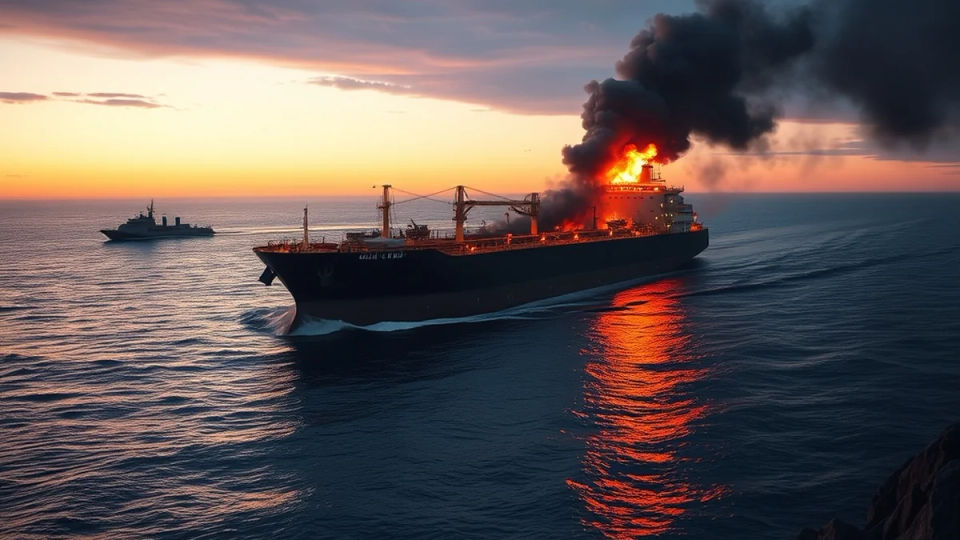
Two commercial supertankers carrying an estimated four million barrels of crude oil caught fire in the Strait of Hormuz after striking submerged naval mines on Saturday, according to Iranian military authorities. The first commercial tanker detonated a naval mine that ignited a fierce blaze on board, while a second supertanker was subsequently engulfed in flames following a separate detonation. Iranian military spokespersons claimed that one of the damaged vessels attempted to cross the waterway with United States naval support, leaving the second vessel disabled.
In June 2019, two oil tankers, the MT Front Altair and MV Kokuka Courageous, were attacked near the Gulf of Oman.
In July 1987, the United States initiated naval convoys under Operation Earnest Will.
Geopolitical Control and Maritime Chokepoint Restrictions
Tehran established unilateral operational control over the Strait of Hormuz following the outbreak of broader military conflict in late February. Since assuming administrative dominance over the passage, Iranian authorities have demanded that all international commercial traffic obtain official transit permits before proceeding. Flanked by Iranian coastline to the north and Oman to the south, the strategic channel measures roughly 30 kilometers wide at its narrowest maritime bottleneck. The critical waterway historically facilitates the daily transit of approximately one-fifth of global petroleum consumption, making any navigational disruption a severe shock to international energy markets.
Operational Warnings Against Transponder Deactivation
Prior to the explosions, Iranian naval commanders warned commercial merchant fleets against attempting to disguise their voyages through electronic counter-measures. IRGC naval commander Rear Admiral Ali Azmaei warned that any vessel that deactivated its automatic identification and tracking systems would be designated as a hostile combatant target.
Interdiction Actions and Nighttime Maritime Surveillance
Iranian state broadcasts released nighttime video recordings displaying an oil tanker engulfed in flames, asserting that the ship attempted clandestine passage without maritime transponders.
Escalating Regional Mine Warfare and Shipping Collateral
The mine strikes represent a dangerous escalation in regional naval hostilities following earlier reports of maritime explosions across neighboring waters. Iranian military forces separately reported that two other commercial tankers caught fire inside Tehran's designated prohibited maritime zone across the Gulf of Oman. Independent maritime intelligence monitoring agencies noted that escalating vessel attacks have sharply curtailed daily crude tanker movements through the Persian Gulf corridor.