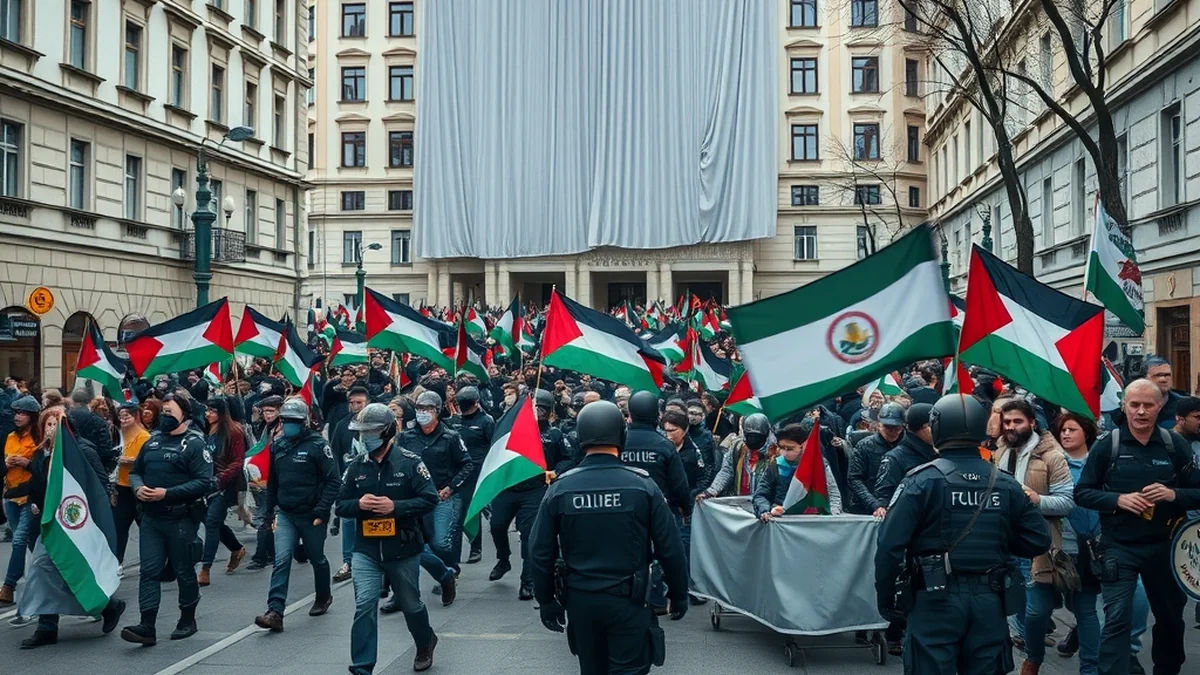
Thousands of demonstrators rallied in the streets of Ljubljana on Wednesday to protest the official opening of Israel's first resident embassy in Slovenia. The high-profile diplomatic inauguration took place amid a sweeping foreign policy realignment spearheaded by nationalist Prime Minister Janez Jansa, who assumed office in July following March elections. Jansa's center-right administration has abruptly dismantled the positions held by former Prime Minister Robert Golob, whose government previously categorized the Israeli military campaign in Gaza as genocide, recognized a Palestinian state, and instituted arms and import embargoes against Israel.
The demonstration drew massive crowds past the hotel hosting the inauguration ceremony, with protesters carrying banners bearing slogans such as "We stand together for peace and Palestine" and "Genocide is not self-defence." Public sentiment heavily opposes the diplomatic pivot, reflecting deep domestic friction over the sudden normalization of bilateral ties. Opposition parties moved quickly in parliament to challenge the administration's actions, while legal organizations pursued formal complaints against visiting Israeli officials over ongoing Middle East hostilities.
Diplomatic Reset and Embassy Inauguration
The opening of the Israeli diplomatic mission in Ljubljana marks a formal milestone for bilateral relations between Jerusalem and the European Union member state. Israeli Foreign Minister Gideon Saar traveled to Slovenia for the ceremony, characterizing the event during a joint press conference with Slovenian Foreign Minister Tone Kajzer as a historic day that demonstrates deep friendship between the two nations. Kajzer stated that the embassy should mark the beginning of a period of greater dialogue and stronger cooperation for the mutual benefit of both populations.
The establishment of the diplomatic post follows a rapid sequence of policy reversals executed by Jansa upon taking power in July. The new administration immediately dismantled measures implemented under the prior government, which had banned imports from illegal Israeli settlements in the occupied West Bank, instituted an arms embargo, and barred the entry of top Israeli officials, including Prime Minister Benjamin Netanyahu. Jansa also removed the Palestinian flag from the Slovenian government building, where it had previously flown alongside national, European Union, and Ukrainian flags.
Domestic Opposition and Impeachment Push
The rapid diplomatic pivot has triggered intense political fallout within the nation of approximately two million people. The liberal Freedom Movement, led by former Prime Minister Golob, joined forces with the Left party on Wednesday to submit a formal proposal to parliament to impeach Jansa. Opposition leaders argued that the administration's foreign policy serves exclusive foreign interests and described the embassy inauguration as a return of favor for alleged Israeli support during the March parliamentary elections.
Public opinion polling illustrates a wide chasm between government policy and public sentiment. A survey conducted in June by the daily newspaper Delo indicated that 56 percent of Slovenians opposed closer ties with Israel, while only 14 percent expressed support. Political analyst Andraz Zorko noted that the government's aggressive realignment does not align with prevailing public opinion, stating that the majority of citizens maintain either critical or neutral stances regarding the conflict.
Legal Challenges and International Context
Beyond domestic political maneuvers, the embassy opening faced immediate legal opposition from human rights advocates. The Hind Rajab Foundation announced it filed a criminal complaint on Tuesday with the Ljubljana District Prosecutor's Office and local police against Israeli Foreign Minister Gideon Saar regarding military policies in Gaza, warning that diplomatic ceremonies must not become events of impunity. Legal challenges running parallel to the diplomatic proceedings highlight the deep polarization surrounding the normalization effort.
The diplomatic breakthrough in Ljubljana occurred against a turbulent backdrop across Western capitals regarding West Bank settlements. One day prior to the embassy opening, the United Kingdom banned trade with illegal Israeli settlements in the occupied West Bank, while France and Canada announced comparable punitive measures. The European moves prompted swift retaliation from Israel, which announced the closure of the British consulate in Jerusalem as Western allies split sharply over Middle East policy.
Government Stance on Regional Displacement
During his visit to Ljubljana, Israeli Foreign Minister Gideon Saar addressed regional displacement concerns during exchanges with reporters. Saar stated that Israel was not planning to expel or deport anyone from the Gaza Strip, adding that if residents chose to leave the territory of their own accord to nations willing to receive them, the Israeli government would not raise objections. The remarks formed part of broader discussions between Israeli and Slovenian delegations aimed at bolstering bilateral commercial and cultural cooperation.
Slovenian officials emphasized that the new framework is designed to generate tangible economic results, with Saar leading a delegation of Israeli business figures to foster commercial ties. However, former Slovenian President Danilo Turk criticized the direction of the administration, telling reporters that the country has become an instrument of foreign policy. The unfolding diplomatic alignment continues to draw intense scrutiny from international observers monitoring shifting alliances within Europe.
Unresolved Procedural Milestones and Next Steps
The formal impeachment proceedings initiated by the Freedom Movement and Left party now await parliamentary scheduling, setting up a contentious legislative battle over executive foreign policy powers. Meanwhile, Foreign Minister Tone Kajzer and his Israeli counterpart are slated to finalize a series of bilateral memoranda covering cultural exchanges and economic frameworks as the newly established embassy begins formal operations in Ljubljana.