
13 Sept 2026, 06:19 AM 4 min readworld
Swedes Vote in High-Stakes Election Balancing Far-Right Coalition and Liberal Tradition
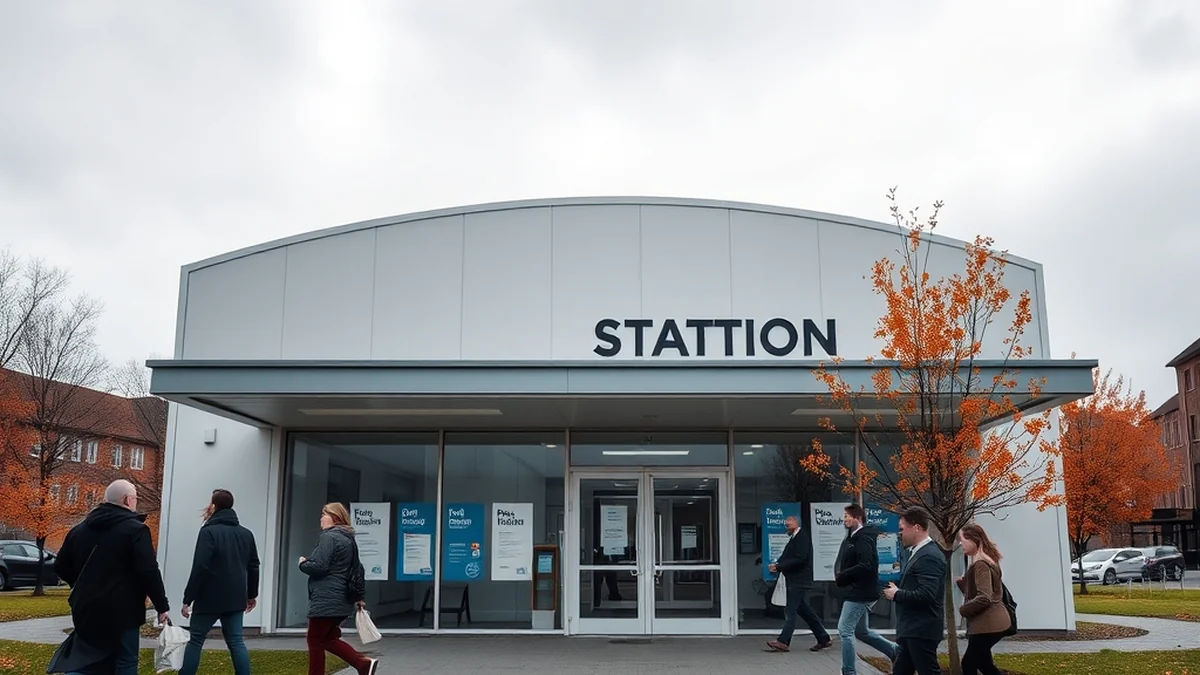
Swedes went to the polls on Sunday in a general election that stands to either integrate a far-right party directly into government for the first time or swing the Nordic nation back toward its traditional liberal path. Recent polling indicated a narrow lead for the centre-left opposition, though Prime Minister Ulf Kristersson mounted a late surge in the final weeks of campaigning after trailing throughout his four-year tenure.
The parliamentary election in the nation of 10 million people opened polling stations at 8 a.m. local time, with exit polls anticipated immediately following their 1800 GMT close. The outcome hinges heavily on a four-party conservative bloc that includes the nationalist Sweden Democrats, alongside a fragmented centre-left alliance led by Social Democrat challenger Magdalena Andersson.
Electoral Dynamics and the Final Campaign Surge
Prime Minister Ulf Kristersson has spent the final weeks of the campaign narrowing the gap against his primary rival, Magdalena Andersson, whose Social Democrats have experienced a slide in support. Kristersson has actively pledged to formalise a governing coalition that includes the Sweden Democrats if his right-wing bloc secures a majority in parliament. Supporters of the incumbent bloc argue that their four years of policy implementation have successfully curtailed gang violence and driven down immigration rates.
Kristersson defended the cooperative approach of the right-wing parties during a parliamentary media briefing, stating, "We can unify parties, voters and issues into joint action. That's why we get things done." Political analysts note that the right has already agreed upon a four-party administrative structure should they triumph at the ballot box, contrasting with a more convoluted pathway to power for the opposition.
Economic Friction and Social Policy Debates
Opposition leader Magdalena Andersson has leveraged public anxieties regarding economic stagnation and cost-of-living pressures to challenge the incumbent administration. Campaigning on a platform of increased welfare spending and public investment, Andersson criticized the ruling bloc's socioeconomic record during interactions with international media.
"We've become a harder society, a quieter society, but also a poorer society as we've had growth far below our potential and where households see their pay checks buy less and less," Andersson told Reuters. She added, "Our country has based its strength on sharing in each other's achievements and that we stick together when things are hard." Beyond fiscal policy, the political camps remain deeply divided over nuclear energy expansion, billionaire taxation models, and immigration strictness.
The Far-Right Factor and European Parallels
A potential electoral breakthrough for the Sweden Democrats, led by veteran politician Jimmie Akesson, would carry profound symbolic resonance across the European political landscape. The nationalist party has spent the past four years quietly propping up Kristersson's minority government from the parliamentary benches, thereby establishing operational credibility and mainstream political leverage.
An official victory for the bloc would mirror broader continental shifts, coming on the heels of notable anti-immigrant electoral gains in Germany, such as the Alternative for Germany party's recent regional success. While critics argue that the conservative platform degrades civil liberties and enforces restrictive cultural conformity on foreign-born residents, proponents maintain that the public is endorsing decisive measures on security.
Parliamentary Thresholds and Coalition Arithmetic
The ultimate balance of power in the Riksdag could be determined by smaller factions, most notably the Liberals, whose ability to clear the crucial four per cent electoral threshold will dictate whether the right-wing bloc commands a working majority. The conservative alliance encompasses the Moderates, Christian Democrats, and Sweden Democrats, alongside the contested status of the Liberal party.
On the opposing side, Magdalena Andersson faces severe structural hurdles in assembling a viable administration due to deep-seated animosities among potential allies. The Centre Party has consistently refused to support any government arrangement that includes the Left Party, while overtures to peel the Christian Democrats away from the right-wing bloc have yielded no traction.
Shared Priorities Amid Deep Political Divides
Despite sharp polarization over domestic governance, taxation, and migration, both political blocs have demonstrated consensus on critical foreign policy and national security imperatives. In the wake of Russia's full-scale invasion of Ukraine, Sweden completed its historic accession to NATO, uniting all major parties behind robust military rearmament and sustained diplomatic and material backing for Kyiv.
Both factions have also converged around the necessity of delivering direct financial relief to households battered by persistent inflationary pressures and energy market volatility. These overlapping priorities reflect a shared institutional response to geopolitical insecurity, even as voters prepare to choose between fundamentally divergent domestic visions.
Polling stations close at 1800 GMT on Sunday, with official exit polls set to clarify whether Sweden will embrace a nationalist-backed administration or return to a centre-left coalition.
The Indus Pulse is committed to accuracy and transparency.