
South Africa's ANC Plunges to Record Low 30.76% in Municipal Elections
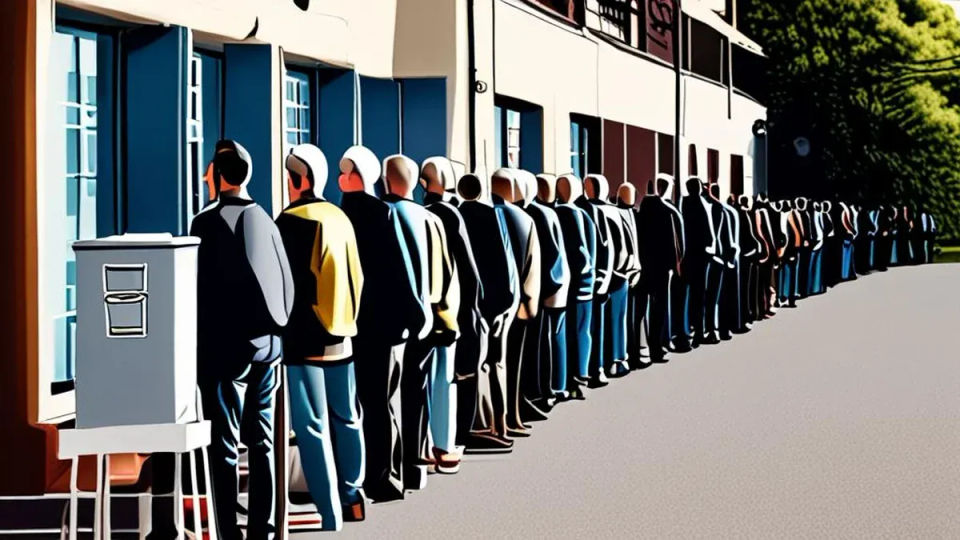
South Africa's governing African National Congress recorded its lowest electoral vote share on record in nationwide municipal elections held on November 4, 2026. Official election tallies showed that the ANC secured 30.76% of the national vote with 99% of ballots counted, marking a drop of about 15 percentage points for the former liberation movement founded by Nelson Mandela. The main opposition Democratic Alliance achieved second place after securing 24.64% of ballots cast across urban and rural councils. Former President Jacob Zuma's breakaway uMkhonto weSizwe Party placed third nationally with 9.76% of voter support. The remaining vote was contested by more than 500 parties across South Africa's fractured electoral landscape.
Steady Electoral Erosion and Service Delivery Failures
The outcome marks a further setback from the 2021 municipal elections, when the ANC secured 45.59% of ballots and dropped below 50% for the first time. Persistent voter frustration over frequent electricity blackouts, chronic water shortages, deteriorating road networks, and municipal corruption drove the electoral decline. In official post-election remarks, ANC Secretary-General Fikile Mbalula described the outcome as catastrophic for the governing party. Mbalula stated that the movement must acknowledge community grievances regarding uncollected refuse and failing local infrastructure rather than disputing the verdict. National voter turnout reached 52% across the country, representing an increase of six percentage points compared to the 2021 pandemic-affected local elections. Independent candidates collectively won 22.9% of the national municipal vote in South Africa's 2026 local elections, according to Mail & Guardian.
Urban Council Reshuffling and Metropolitan Results
The municipal elections selected local government councilors tasked with administering eight major metropolitan cities, alongside 44 district and 205 local municipalities. The Democratic Alliance maintained its governing majority in the coastal metropolis of Cape Town while advancing across Gauteng urban hubs. The opposition party led polling tallies across the commercial hub of Johannesburg, the administrative capital of Pretoria, and the industrial municipality of Ekurhuleni. Democratic Alliance leader Geordin Hill-Lewis stated that his party, which trailed by around 20 percentage points in the 2024 national election, took a big step forward in its long-term ambition. In Johannesburg, the DA fielded its 75-year-old former leader Helen Zille as its mayoral candidate following a campaign highlighting neglected municipal infrastructure. The Democratic Alliance led tallies across all three Gauteng metropolitan municipalities: Johannesburg, Tshwane, and Ekurhuleni in the 2026 local elections, according to Mail & Guardian.
Hung Municipalities and Coalition Governance
More than 120 municipal councils concluded without an outright majority winner, leaving local administrations dependent on negotiated coalitions. Political parties will have a statutory window of 14 days to negotiate power-sharing arrangements before inaugural council sittings take place. President Cyril Ramaphosa commended the multi-party character of South African democracy and urged negotiating parties to approach coalition discussions with humility. Ramaphosa emphasized that citizen interests and municipal service delivery must not be compromised by partisan score-settling or political disputes. Analysts anticipate complex governance negotiations as parties explore formal alliances to stabilize hung administrations across more than half of South Africa's 213 councils. Hung councils requiring coalitions increased to 142 of South Africa's 213 municipalities in 2026, according to Mail & Guardian.