
Shopping Mall Ceiling Collapses in South Korea's Daegu City
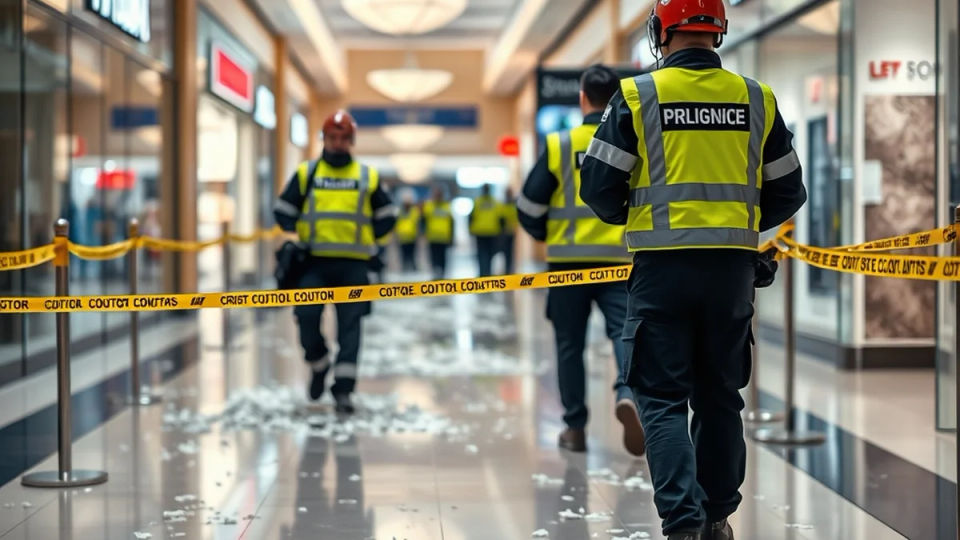
At least 38 people were reported injured as of October 12, 2026 after sections of a plaster ceiling collapsed inside a shopping mall in Daegu, according to fire officials. The structural failure occurred during morning trading hours on Saturday, prompting emergency response teams and fire personnel to deploy across the commercial complex. Emergency responders confirmed that the incident took place on the second floor of the four-storey retail establishment. The office of South Korean President Lee Jae Myung confirmed that executive directives were issued to coordinate comprehensive rescue and site response operations.
Immediate Structural Collapse And Facility Evacuation
The emergency call reporting the interior ceiling failure was logged at 10:16 a.m., according to municipal emergency records. Approximately 70 shoppers and retail workers evacuated the commercial complex as structural plaster fell into retail aisles. Panic spread through the second floor shopping corridors as plaster fragments and suspended ceiling fixtures crashed onto floors below. Store employees assisted patrons in reaching exterior building exits while airborne dust and debris filled the retail concourse.
Emergency Search Operations And Debris Clearance
Fire rescue units from the Daegu Fire Department arrived on the scene to secure the collapsed retail zone. Search and rescue teams conducted physical inspections through fallen plasterboard and metallic framing to confirm no visitors remained trapped. Rescuers in protective gear sifted through piles of shattered plaster and metallic suspension wires to verify that no patrons were trapped beneath the fallen ceiling. Rescuers cordoned off the entire second floor retail quadrant to prevent further hazards from unstable overhead fixtures. Safety specialists conducted structural assessments of adjacent ceiling spans throughout the four-storey commercial property.
Casualty Triage And Hospitalization Details
At least nine injured individuals were transported to regional hospitals for specialized medical examinations and wound treatment. Emergency medical personnel treated walk-in patients on the scene while hospital emergency departments prepared additional triage capacity. Emergency authorities reported that the vast majority of the injured people suffered minor abrasions and impact contusions. Medical professionals confirmed that no critical or life-threatening injuries were identified during initial triage evaluations. Public safety administrators noted that the aggregate casualty count could expand as additional shoppers seek medical assessments.
Presidential Directives And Investigation Mandate
President Lee Jae Myung instructed emergency agencies to dedicate full administrative resources toward assisting affected citizens. The presidential office underscored the necessity of a thorough institutional response to prevent secondary hazards in public venues. The precise engineering failure or environmental factor that triggered the ceiling collapse remains unverified. Municipal building safety inspectors and fire investigators initiated forensic structural assessments to establish why the plaster ceiling detached.
Reconciling the injury reports
A Seoul Economic Daily account dated October 12 put the number injured in the Daegu commercial-building ceiling collapse at 38. That figure differs from some earlier or later summaries in circulation, so the article should not present an incompatible total as final without a dated authority. Its reporting described a lightweight steel-frame ceiling assembly failing on an upper floor, with police conducting a joint inspection. The failure mechanism and responsibility remain questions for the investigation, not findings established by the injury count.
Ceiling collapses raise questions about suspended loads, fixing points, modifications and periodic inspections. They cannot be explained responsibly by assuming a whole building's structural frame failed. Those distinctions matter to visitors and tenants considering whether adjacent areas are safe to reopen. Authorities' written inspection conclusions and hospital updates should guide any subsequent article.