The Eiffel Tower was forced to close on Monday, September 7, 2026, as staff staged a protest over allegations that female employees were instructed to step out of sight during a private visit by a Hindu religious delegation. The incident, which occurred on Saturday, involved a group of approximately 100 individuals associated with the Bochasanwasi Akshar Purushottam Swaminarayan Sanstha (BAPS) who were in France for the inauguration of a new temple in the Paris suburbs. Union representatives reported that female staff were asked to vacate their workstations to accommodate the delegation, allowing male colleagues to take their places during the visit.
This development has triggered a formal investigation by Paris city authorities and sparked a sharp backlash from French political figures. The operator of the monument, SETE, acknowledged that the delegation had requested the visit be organized to limit interactions with women, admitting that such conditions should not have been accepted. The closure of the landmark, marked by signs citing "operational reasons," highlights a growing tension between the management of public spaces and the enforcement of French secular and egalitarian values.
Union Allegations and Workplace Protest
According to Diane Davoine, a union representative who spoke with Reuters, the instructions given to staff were clear and deeply offensive to the workforce. "As the delegation passed through, women were asked to leave their workstations so that men could take their places," Davoine stated. The CGT trade union, representing the employees, issued a formal condemnation of the instructions, describing them as a mandate that led to female staff being "sidelined, replaced and rendered invisible on the basis of their gender."
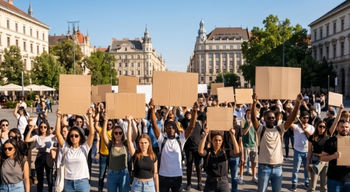
By Monday morning, the frustration among the staff had reached a breaking point. Employees gathered for a meeting to demand accountability from management and to ensure that such discriminatory practices would not be repeated. The meeting resulted in the temporary closure of the Eiffel Tower, with signs posted at the base of the monument informing visitors that operations were delayed. Davoine noted that management had since apologized to the staff for the incident, though the move did little to quell the broader public and political outcry.
Official Investigation and Political Backlash
Paris Mayor Emmanuel Grégoire responded swiftly to the reports, declaring that an investigation would be launched "as soon as possible." In a statement posted on the social media platform X, Grégoire expressed his support for the protesting employees, labeling their anger as legitimate. "It is urgent that all light be shed on the facts that led to this protest," he wrote, emphasizing that the exclusion of female workers contradicts the core values that the Eiffel Tower represents.
This sentiment was echoed by Yael Braun-Pivet, the president of the French National Assembly. In a public rebuke of the incident, she stated, "Welcoming others never means giving up our values. In France, women are fully present in public life. No one tells them to become invisible." The political response underscores the sensitivity of the issue in France, where the integration of diverse cultural practices must be balanced against the nation's commitment to gender equality in the public sphere.
BAPS Delegation Response and Context
BAPS, the organization behind the delegation, issued a statement addressing the controversy. The group explained that the visit to the Eiffel Tower was scheduled at the start of opening hours specifically to avoid disrupting other visitors, given the size of their group. Regarding the allegations of gender-based exclusion, the statement noted, "To the best of our knowledge, at no point was anyone prevented access to the Eiffel Tower. Nevertheless, we sincerely apologise for any pain or inconvenience caused."
The delegation's presence in France was tied to the inauguration of a major Hindu temple near Paris, an event attended by Indian Prime Minister Narendra Modi. During the ceremony, the Prime Minister spoke of the temple as a bridge for India's ancient values and human ideals to reach France, aiming to strengthen cultural ties between the two nations. The incident at the Eiffel Tower, however, has complicated the narrative of this cultural exchange, forcing a public reckoning over the limits of accommodating religious requests within French public institutions.
Management Accountability and Future Implications
SETE, the operator of the Eiffel Tower, faces significant scrutiny regarding its decision-making process. Ariel Weil, the president of the company, confirmed that an internal investigation is underway to determine how the request to limit interactions with women was approved. "We are going to shed light on what happened, and we will draw the necessary conclusions," Weil told Agence France-Presse. The company's admission that the conditions "should not have been accepted" serves as a critical acknowledgment of a failure in operational oversight.
As the investigation proceeds, the incident remains a focal point for debates regarding the intersection of religious accommodation and workplace rights. The staff's insistence on a dialogue with management suggests that the resolution will likely involve new, strictly enforced protocols to prevent any future requests that conflict with French labor and equality laws. The Eiffel Tower, as a global symbol of France, remains at the center of this discourse, with stakeholders waiting to see what specific policy changes will emerge from the ongoing probe.