
Edited by Editor-in-Chief, The Indus Pulse 18 Sept 2026, 02:34 PM 3 min readworld
Nepal Flood Death Toll Reaches 1,410 as Climate Study Links Disaster to Warming Slopes
Sources & Citations
The death toll from devastating flash floods and mudslides in Nepal has climbed to 1,410, with disaster management authorities reporting that more than 6,100 people remain missing across the affected northern and central regions. At least 13,756 individuals have been rescued from inundated zones since the disaster struck, according to official figures released on Thursday.
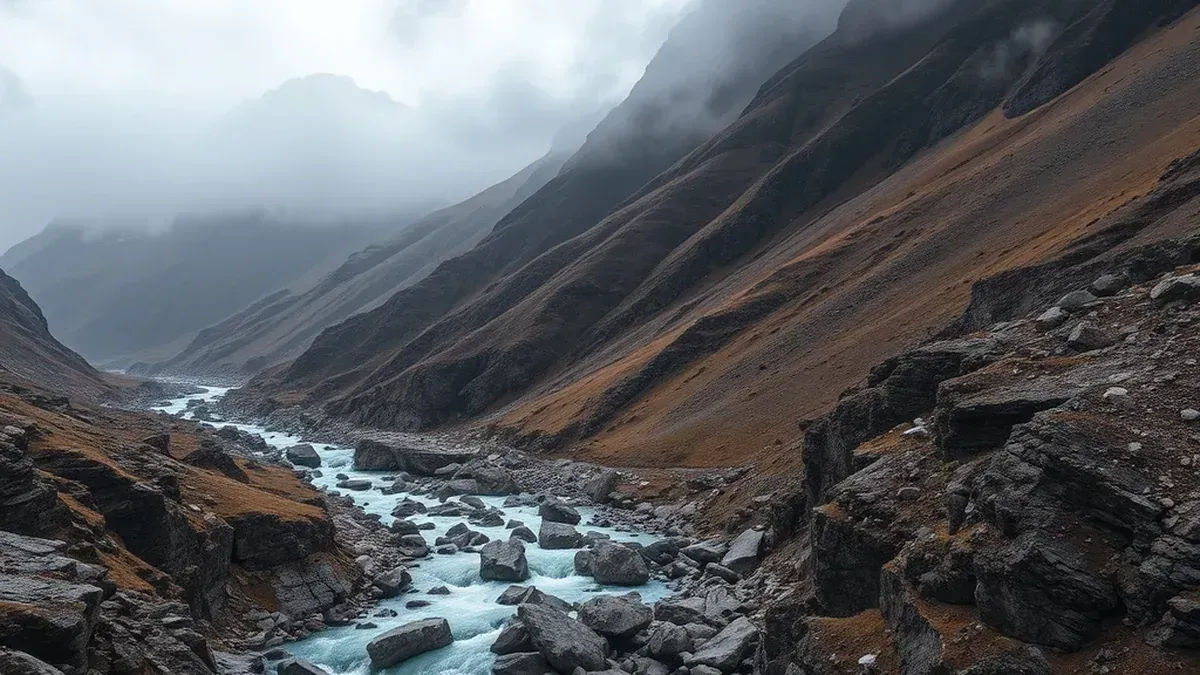
The catastrophe was triggered by an ice-rock avalanche near the Nepal-Tibet border on August 26, which swept down valleys and destroyed downstream settlements. Humanitarian agencies have described the continuing emergency operations as exceptionally difficult, ranking the disaster among the most severe logistical challenges faced in the region.
Scientific Attribution and Slope Destabilization
A scientific assessment released on Thursday by the World Weather Attribution initiative concluded that human-caused climate change played a critical role in preconditioning the disaster. Researchers reported that decades of global warming contributed to the thinning of glaciers, thawing of permafrost, and an increase in rainfall over snowfall, which together destabilized the steep mountain slopes.
Climatologist Friederike Otto of Imperial College London, a co-author of the study, stated that human-induced climate change contributed directly through permafrost thawing and glacier thinning. Researchers noted that July and August experienced exceptionally warm weather, with human-induced warming adding approximately 1.5 degrees Celsius to regional temperatures, while heavy snowfall late last year provided additional meltwater.
Cascading Mechanics and Flash Impact
Investigators described the event as a cascading disaster rather than a conventional river overflow. Approximately two square miles of rock wall and glacier ice collapsed from Langtang Lirung at an altitude of about 5,150 meters, plunging roughly 1,400 meters before transforming into a destructive debris flood.
The resulting mixture of water, rock, ice, and sediment traveled approximately 22 kilometers to Rasuwagadhi in just seven minutes, leaving downstream communities with virtually no advance warning. Independent climate adaptation specialist Priyanka Vadrevu noted that Himalayan disaster preparedness must extend beyond conventional rainfall monitoring to incorporate integrated observation of glaciers, permafrost, and slope stability.
Humanitarian Relief and International Funding
Relief operations have tested international agencies operating in the Himalayan terrain. Riaz Lodhi, head of the World Food Programme in Nepal, stated that the aftermath of the August 26 flash floods ranked among the top three most challenging disasters the agency had ever encountered.
In response to the widespread destruction, the government in Kathmandu is preparing to seek approximately $20 million from the United Nations Fund for Responding to Loss and Damage. Officials hope the newly released attribution study will substantiate claims linking the slope failure directly to long-term climate change, thereby strengthening Nepal's application for international financial assistance.
Sources & Citations
The Indus Pulse is committed to accuracy and transparency.