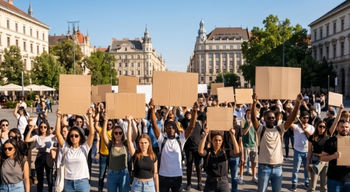
A group of masked protesters blocked the entrance to the Port of Dover on Saturday, September 5, 2026, bringing operations at Britain’s busiest ferry terminal to a temporary standstill. The demonstration, which involved dozens of individuals dressed in black and wearing balaclavas, caused significant disruption to cross-Channel travel, resulting in a 6.4-kilometre traffic jam and delays of up to 45 minutes for freight and passenger vehicles. Local police confirmed they were on the scene to manage the public order incident, which was eventually dispersed by midday.
The protest occurred against a backdrop of heightened political sensitivity regarding small-boat crossings across the English Channel. While the Port of Dover resumed normal operations by noon, the incident underscored the ongoing tensions surrounding immigration policy in the United Kingdom. The disruption drew immediate condemnation from government officials, even as the event was framed by some as a symbolic act of protest against current border management strategies.
Disruption at Britain’s Primary Trade Gateway
The Port of Dover serves as a critical artery for the British economy, handling more than 10,000 freight vehicles and 15,000 passenger vehicles daily during the peak summer months. It is responsible for approximately one-third of the United Kingdom’s goods trade with the European Union. The blockade, which effectively halted all traffic in and out of the terminal for several hours, highlighted the vulnerability of this essential infrastructure to localized public order disturbances.
National Highways reported that the congestion extended for 6.4 kilometres, forcing travelers and hauliers to endure significant delays. One affected passenger, speaking to Sky News, described being stranded on a ferry in Dunkirk for over 90 minutes due to the gridlock. The incident forced a rapid response from local law enforcement, who engaged with the protesters to clear the access routes and restore the flow of traffic between southern England and northern France.
Tensions Over Channel Migrant Crossings
The protest was explicitly targeted at the issue of migrant crossings across the English Channel, a subject that has remained a central and contentious feature of British political discourse. Footage shared on social media showed the masked participants chanting "stop the boats" while facing a police line. The demonstration reflects a broader, persistent frustration among certain segments of the population regarding the arrival of thousands of migrants and asylum seekers on the south-east coast of England each year.
While the current centre-left Labour government has reported that the number of small-boat crossings this summer reached its lowest level since 2019—citing improved cooperation deals with the French government—the issue remains a potent rallying point for hard-right political factions. The protest in Dover serves as a tangible manifestation of this ongoing friction, illustrating how national immigration debates can directly impact the daily operations of vital national infrastructure.
Political Reactions and Public Order Concerns
The government issued a formal condemnation of the protest, emphasizing the importance of maintaining public order and the free movement of trade. Conversely, the disruption was praised by figures such as the anti-Islam activist Tommy Robinson, who characterized the blockade as "British patriots send(ing) a warning shot to the establishment." This divergence in framing highlights the polarized nature of the immigration debate in the United Kingdom.
Local politicians and observers expressed concern over the intimidating nature of the protest, particularly noting the use of masks and balaclavas by the participants. Despite the intensity of the standoff, police reported that no arrests were made during the dispersal of the crowd. The incident has reignited discussions about the balance between the right to protest and the necessity of protecting critical national infrastructure from disruption.
Future Implications for Border Security
The events at Dover raise questions regarding the security of major transport hubs in the face of politically motivated demonstrations. As the government continues to navigate the complexities of its immigration strategy, the potential for further disruption at key entry points remains a concern for both policymakers and the logistics industry. The ability of authorities to manage such incidents without significant economic impact will likely remain a focal point for future security planning.
As of the afternoon of September 5, the port had returned to normal operations, but the incident serves as a reminder of the volatility surrounding the immigration issue. With the government under pressure to demonstrate control over its borders, the intersection of public protest and critical infrastructure will continue to be a sensitive area for law enforcement and political leaders alike. The long-term impact of such protests on public sentiment and policy remains to be seen.