
13 Sept 2026, 06:19 AM 5 min readworld
Kremlin Rejects Zelenskyy’s Offer for Face-to-Face G20 Meeting in Miami
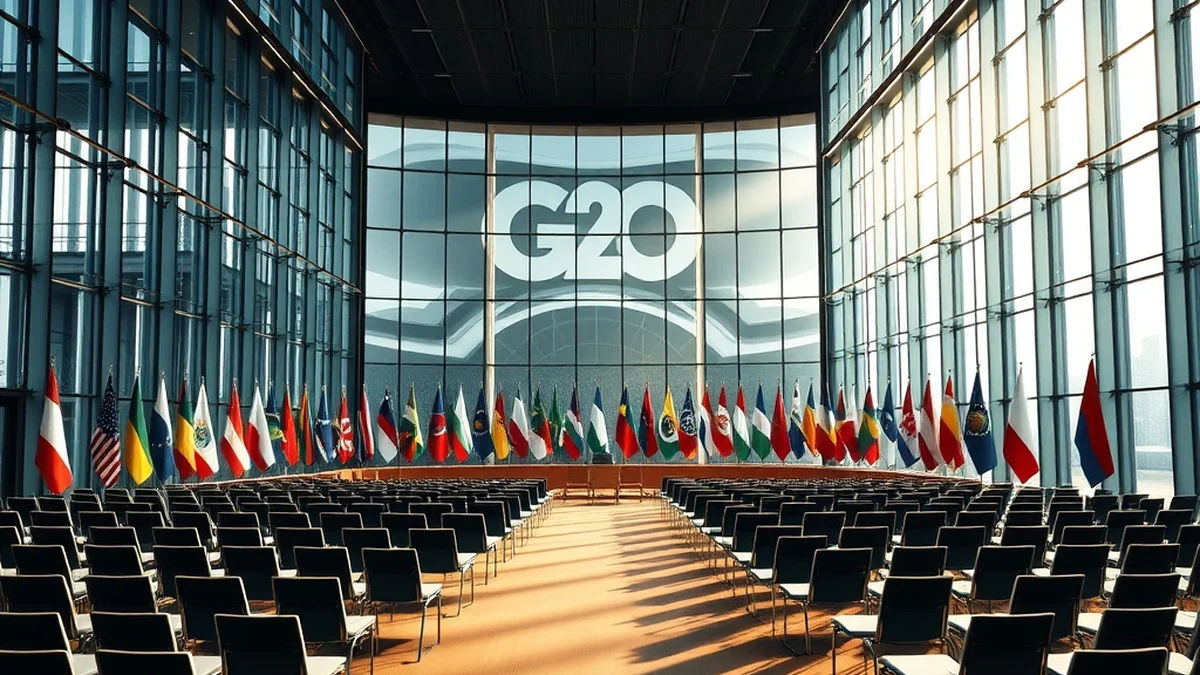
Ukrainian President Volodymyr Zelenskyy has publicly expressed his willingness to meet Russian leader Vladimir Putin at the upcoming G20 summit in Miami this December to discuss potential pathways to end the ongoing conflict. In an interview with German broadcaster Deutsche Welle released on Saturday, Zelenskyy emphasized that the focus of any such encounter should be on achieving concrete results rather than mere rhetoric. The proposal marks a significant, albeit rejected, attempt to break the diplomatic impasse that has persisted since the full-scale Russian invasion began in February 2022.
However, the Kremlin immediately dismissed the suggestion of a meeting in the United States. Kremlin spokesman Dmitry Peskov, speaking to reporters in New Delhi, stated that such a meeting in Miami was impossible, reiterating Moscow's long-standing demand that any direct talks between the two leaders must occur within the Russian capital. The rejection underscores the deep-seated diplomatic friction and the lack of consensus on the terms and venues for potential peace negotiations as the war enters its fourth year.
Diplomatic Maneuvering and US Mediation
The proposal for a G20 summit meeting coincides with a renewed push by the United States to facilitate dialogue between Kyiv and Moscow. Recent diplomatic efforts have seen US special envoys Steve Witkoff and Jared Kushner travel to both capitals to engage with leadership on both sides. Zelenskyy characterized the visit of the American representatives to Kyiv as a positive signal, noting that Ukraine currently occupies a stronger position for potential negotiations than it did a year ago.
Despite the diplomatic activity, the logistical reality of the G20 summit remains uncertain. Russian presidential aide Yuri Ushakov confirmed that Moscow has not yet discussed the possibility of President Putin attending the December event in Miami. Putin has notably avoided personal attendance at G20 summits since 2019, and the Kremlin has maintained a rigid stance regarding the location of any potential summit with the Ukrainian leadership, insisting that the invitation to Moscow remains the only viable path for a face-to-face meeting.
The Search for Tangible Results
During his interview with Deutsche Welle, Zelenskyy downplayed the importance of the specific words exchanged in a potential meeting, focusing instead on the necessity of outcomes. He stated that the primary objective must be to speak and make decisions that lead to a resolution of the conflict. This pragmatic approach reflects the urgency felt in Kyiv as the country faces a difficult winter and the economic strain of prolonged hostilities, with officials projecting a potential 1.5-point slump in GDP this year due to intensified strikes on energy infrastructure.
Zelenskyy's willingness to engage in direct talks is not a new development, though previous attempts have failed to gain traction. He noted that he had previously proposed a meeting with Putin during a call with US President Donald Trump and had also extended an invitation for a meeting at a G7 summit in France earlier this year, both of which did not result in a face-to-face encounter. The current proposal serves as a test of whether the recent US-led diplomatic pressure can overcome the entrenched positions of both nations.
Escalating Military and Economic Pressures
The diplomatic impasse persists against a backdrop of intensified military activity. Both Russia and Ukraine have escalated long-range strikes in recent months, resulting in significant civilian casualties and damage to critical infrastructure. Recent overnight strikes in Ukraine, including attacks in Zaporizhzhia and at an ArcelorMittal plant in Kryvyi Rih, have further complicated the environment for potential negotiations. These strikes have contributed to the highest civilian death toll since the early stages of the war.
Beyond the immediate military situation, Ukraine continues to face critical shortages in its defense capabilities. Zelenskyy highlighted the urgent need for more interceptor missiles for US-made Patriot air defense systems. While he acknowledged the political will of the United States to assist, he noted that production constraints have limited the availability of these essential supplies. He also called upon European allies to increase their support, asserting that those who back Ukraine possess the necessary resources to bolster its defense.
The Path Forward for Negotiations
While Kyiv has suggested that negotiations could potentially commence as early as this month, the Kremlin has maintained that it is too early to discuss specific dates or venues. The lack of trust between the two sides remains a primary obstacle, with no clear indication that either Moscow or Kyiv is prepared to shift their fundamental positions. The failure of previous rounds of negotiations continues to loom over current diplomatic efforts, casting doubt on the likelihood of a breakthrough in the near term.
As the December G20 summit approaches, the international community remains focused on whether the US-led diplomatic push will yield a change in posture from either side. Jared Kushner, speaking via videolink to a security forum in Kyiv, expressed hope that the next steps in the peace process could be announced within a couple of weeks. For now, the prospect of a meeting between Zelenskyy and Putin remains stalled by the Kremlin's insistence on a Moscow-based venue, leaving the diplomatic process in a state of uncertainty as the conflict continues to exact a heavy toll.
The Indus Pulse is committed to accuracy and transparency.