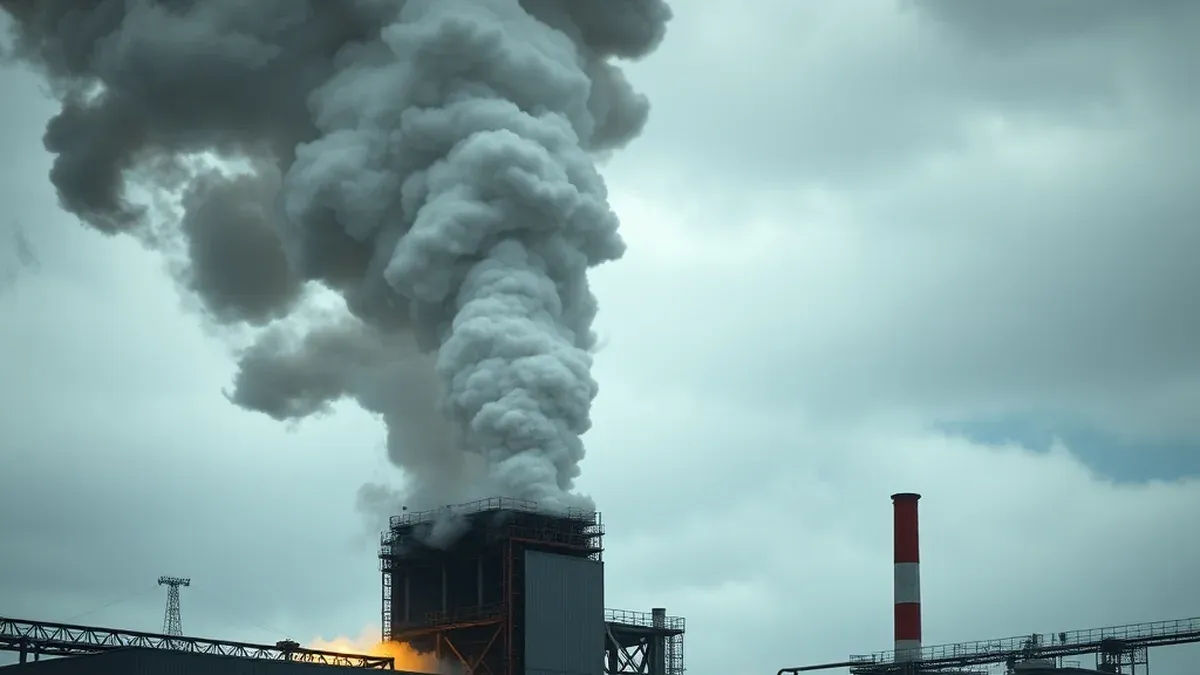
An Iranian missile attack on the Muwaffaq Salti Air Base in Jordan damaged multiple U.S. military aircraft overnight, according to American officials and sources familiar with the matter. The operation targeted a key regional hub for U.S. aerial operations and triggered the deployment of dozens of air defense interceptors as regional hostilities expanded.
The attack came in direct retaliation for recent U.S. strikes against Iranian maritime assets and underscores the growing operational toll on American forces in the Middle East. While military personnel on the ground sustained no fatalities during the barrage, the hardware losses add to a rising count of damaged equipment and depleted defensive munitions since major conflict began in February 2026.
Air Base Strike and Extent of Aircraft Damage
The bombardment against Muwaffaq Salti Air Base, which is operated by the Royal Jordanian Air Force alongside U.S. detachments, hit several flight lines and aircraft structures. Officials speaking on the condition of anonymity confirmed that one Fairchild A-10C Thunderbolt II, a heavily armored close-air-support aircraft colloquially nicknamed the Warthog for its rugged frame and nose-mounted rotary cannon, suffered severe structural damage that severed a wing.
In addition to the strike on the A-10, roughly eight Boeing F-15 strike fighters sustained lighter structural and surface damage from blast debris and shrapnel. Military maintenance crews evaluated the airframes immediately following the strike and returned the eight F-15s to operational service shortly thereafter. No U.S. deaths were reported during the overnight raid on the facility.
The incident adds to an accumulating tally of material losses incurred by American military aviation throughout the ongoing conflict. A Congressional Research Service report released in May documented that 42 U.S. military aircraft had already been destroyed or damaged in the war prior to this week, encompassing combat engagements, enemy strikes on forward facilities, and operational accidents. Human casualties since February have also continued to mount, with 18 U.S. service members killed and more than 800 injured.
White House Denial and Political Framing
President Donald Trump explicitly rejected reports of hardware damage at the air base when questioned about the incident. Speaking during a telephone interview with NewsNation reporter Robert Sherman, Trump contradicted military sources and accounts from senior officials.
When asked directly whether there was any truth to reports that U.S. warplanes had been damaged in Jordan, Trump responded, "Nope. None whatsoever. No damage. No nothing." The flat denial contrasts with details supplied by defense officials and reported by multiple news outlets regarding the damaged A-10 and F-15 aircraft.
Addressing reporters at Joint Base Andrews and prior to departing for Texas, Trump framed the broader conflict through the lens of domestic political timelines and regional pressure. Trump asserted that Tehran was seeking to influence the upcoming U.S. midterm elections, stating, "I think the war will end immediately after the election, because they can't hold out any longer." He added that administration officials were not actively seeking diplomatic negotiations with Iranian representatives before November, remarking, "We're not looking for it, to be honest... Yes, a negotiation could possibly happen, but it's not something we're looking at."
Escalation Cycle Across Air and Maritime Domains
The strike against Muwaffaq Salti Air Base was part of a rapidly escalating exchange of strikes between U.S. and Iranian forces across land and sea. U.S. military command confirmed that prior to the air base attack, American forces destroyed five Iranian crude oil tankers in regional waters.
That U.S. naval action was carried out in direct response to repeated missile strikes by Iran's Islamic Revolutionary Guard Corps (IRGC). According to U.S. officials, IRGC forces targeted a U.S. Navy warship with ballistic missiles twice over a 48-hour period, prompting retaliatory strikes against Iranian commercial oil infrastructure.
Following the destruction of the five tankers, the IRGC claimed it launched coordinated retaliatory attacks targeting eight commercial tankers, two U.S. warships, and the Jordanian air base. The expanding scope of targets highlights how maritime interdictions in critical waterways are converting quickly into land-based strikes against fortified military installations.
Air Defense Munitions and Stockpile Strain
Defending the Jordanian facility against the incoming barrage required an immense expenditure of advanced defensive hardware. U.S. forces stationed at the base fired approximately 30 MIM-104 Patriot interceptor missiles to engage and destroy incoming Iranian ballistic missiles.
The heavy reliance on Patriot batteries has intensified concern among military strategists regarding the depletion of critical American precision munitions. Defense analysts at the Center for Strategic and International Studies reported that approximately 65 percent of the U.S. inventory of Patriot interceptors was expended between February and July.
Prior to the outbreak of major hostilities in February, the U.S. military maintained an estimated 2,330 Patriot interceptors on hand. Current estimates place that stockpile at fewer than 850 units. Similar inventory pressures affect other high-tier defense assets, with analysis indicating that more than half of the Pentagon's stock of Terminal High Altitude Area Defense (THAAD) interceptors has already been consumed.
Unresolved Readiness and Pending Operational Steps
With air base infrastructure under persistent threat, U.S. military commanders face immediate decisions regarding force posture, air defense conservation, and aircraft maintenance in the Middle East. Specialized repair teams continue to evaluate whether the wing-damaged A-10 Thunderbolt II can be reconstructed in the field or must be written off entirely.
At the same time, military logisticians are assessing how to ration Patriot and THAAD interceptors without compromising base defense capabilities across key installations in Jordan and neighboring countries. With hostilities persisting and official negotiations stalled ahead of the U.S. midterm elections, military commanders expect high-intensity operational friction to continue across both aerial and maritime operational theaters.