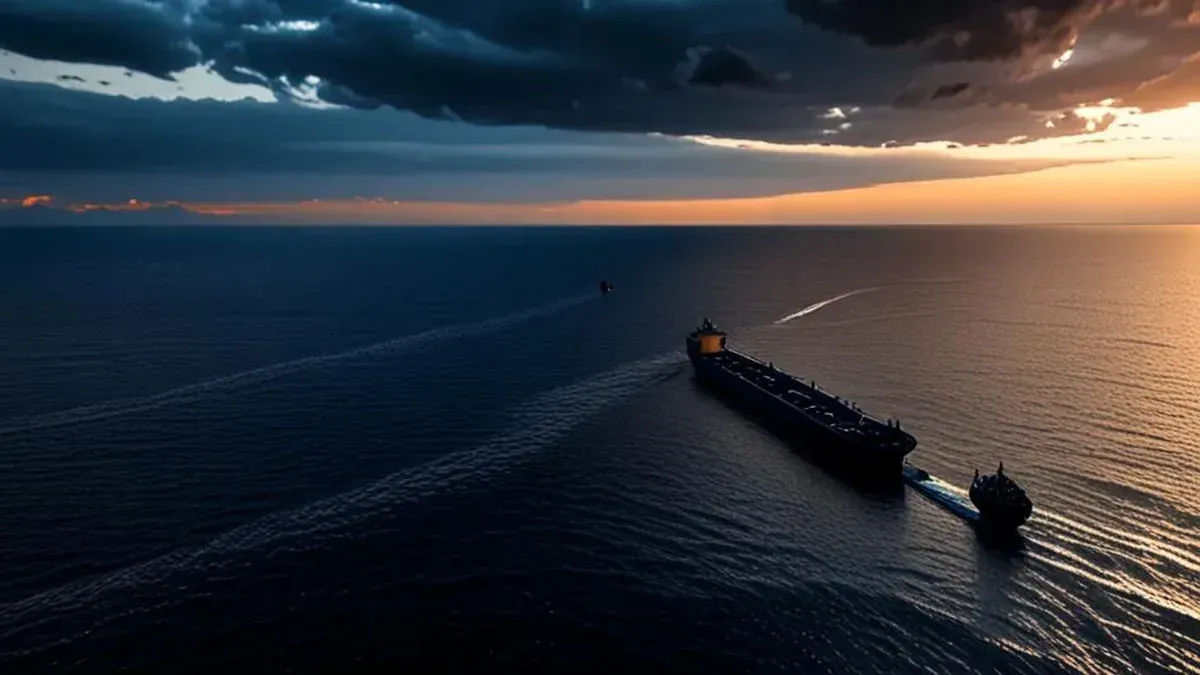
The conflict between Washington and Tehran escalated sharply on September 8 and 9, 2026, as U.S. forces conducted missile strikes against multiple Iranian oil tankers near Kharg Island in the Persian Gulf. The Islamic Revolutionary Guard Corps (IRGC) responded by issuing a direct threat to target commercial vessels docked at or anchored near ports in Kuwait and Bahrain, citing the presence of American military personnel in those nations. The IRGC Navy has publicly urged all crews aboard tankers in the vicinity of these ports to evacuate immediately, warning that their vessels will be targeted as a retaliatory measure for the U.S. strikes.
These developments mark a significant intensification of the ongoing six-month-old military and economic confrontation between the two nations. U.S. officials confirmed that the targeted tankers were linked to the IRGC and were struck in response to attempted missile attacks on a U.S. Navy warship. As tensions mount, the U.S. military continues to maintain a naval blockade of Iranian ports and provides escort services for commercial vessels navigating the strategic Strait of Hormuz, a critical chokepoint for global energy supplies.
Escalation at Kharg Island Anchorage
The military engagement near Kharg Island, a primary hub for Iran’s oil exports, involved multiple strikes by U.S. forces. According to the Iranian semi-official Tasnim news agency, one tanker was hit by a projectile approximately four miles from the island on Tuesday, September 8. Iranian state media, including IRIB, reported that a second vessel was struck off the coast of Jask, with crews from both ships forced to abandon their vessels and seek safety in lifeboats. There were no immediate reports of casualties from these engagements.
These strikes follow a weekend incident in which U.S. forces attacked an Iranian tanker about six miles from Kharg Island. The U.S. military has been increasingly active in the region, with reports indicating that Iran attempted to attack U.S. warships on Monday, September 7. While the U.S. military has not publicly acknowledged the Monday incident, officials cited by the Wall Street Journal noted that Iran had fired ballistic missiles at a U.S. aircraft carrier and a guided-missile destroyer over the weekend, though no American ships were reported hit.
The Strategic Strait of Hormuz Standoff
Beyond the direct missile exchanges, the Strait of Hormuz has become a focal point for asymmetric warfare. On Tuesday, September 8, Iranian state television claimed that its navy had captured a U.S. military underwater drone at the entrance to the strait, describing the unmanned vessel as a "prize." The U.S. Central Command, however, provided a different account of the incident. Spokesperson Captain Tim Hawkins stated that an Anduril Dive-LD drone had "malfunctioned" more than a day prior while surveying regional waters.
Captain Hawkins downplayed the significance of the capture, characterizing the device as an older, defective model. "It was in a commercially available configuration so we aren’t concerned," Hawkins said, noting that the drone neither collected sensitive data nor carried classified sonar or radar equipment. Despite the U.S. dismissal, the incident underscores the high-stakes environment in the strait, where both nations are utilizing advanced surveillance and naval assets to monitor and challenge the other's presence.
Operation Economic Outcast and Financial Sanctions
Parallel to the military strikes, the Trump administration has intensified its economic pressure campaign, known as Operation Economic Outcast. On September 4, the U.S. Treasury Department designated the Istanbul-based Golden Global Yatirim Bankasi Anonim Sirketi, along with two subsidiaries, for their alleged role in moving Iranian oil revenue. The Treasury accused the bank of facilitating tens of millions of dollars in transactions for the IRGC-Quds Force and providing correspondent-banking access that allowed Iranian funds to bypass international restrictions.
Treasury Secretary Scott Bessent warned that financial institutions would continue to "find out the hard way" that Washington is serious about cutting off Iran's revenue streams. The sanctions effectively sever the bank's access to the U.S. financial system. While Golden Global rejected the allegations, stating it has complied with all banking requirements, the move signals a broader U.S. strategy to target the financial intermediaries that enable Iran to convert oil proceeds into cash and gold.
Deterrence and the Risks of De-risking
Sanctions experts suggest that the U.S. strategy is primarily one of deterrence, aimed at making the cost of servicing Iranian business prohibitively high for international banks. Andrew Sobotka, a former senior sanctions coordinator at the Treasury Department's Office of Foreign Assets Control (OFAC), noted that the designation of Golden Global serves as a clear warning to third-country financial institutions. "Treasury’s designation... should signal to third-country financial institutions that this administration is serious about using multiple tools in its economic security toolbox to go after Iranian financial flows," Sobotka stated.
However, analysts remain skeptical about the long-term impact of these measures on the Iranian economy. Brett Erickson, a managing principal at Obsidian Risk Advisors, cautioned that while "de-risking" at the margins puts pressure on Tehran, it is a significant step away from fundamentally breaking the Iranian economy. The challenge for Washington remains that Turkey, a NATO member and major regional commercial hub, maintains substantial economic ties with Iran, complicating the enforcement of these financial restrictions.
Unresolved Military and Diplomatic Milestones
The immediate situation remains volatile, with the IRGC’s threat to target ships in Kuwait and Bahrain creating significant uncertainty for regional shipping and energy markets. The U.S. military has not yet issued a formal response to the specific threat against ports in these two nations, though the ongoing naval presence in the Gulf suggests a high state of alert. The international community is closely monitoring whether the IRGC will follow through on its warning to target vessels in third-country ports, a move that would represent a major expansion of the conflict.
Pending developments include the potential for further U.S. sanctions against additional financial intermediaries and the ongoing assessment of Iran's missile capabilities. With the U.S. military maintaining its blockade and Iran continuing to challenge American naval assets, the risk of miscalculation remains high. There is no current indication of a diplomatic breakthrough, and both sides appear committed to their respective military and economic strategies as the conflict enters its seventh month.