
Edited by Editor-in-Chief, The Indus Pulse 16 Sept 2026, 02:15 PM 3 min readworld
India Summons Pakistani Envoy After Naval Vessels Collide in Arabian Sea
Sources & Citations
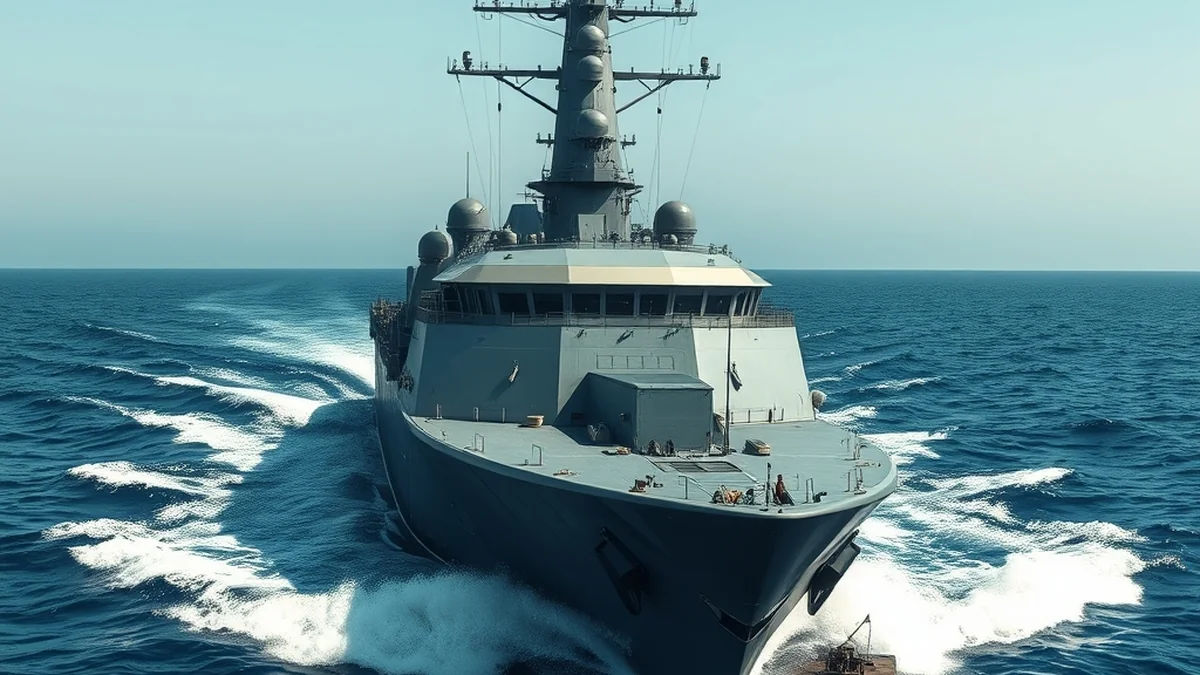
India summoned Pakistan's Charge d'Affaires Saad Ahmad Warraich to the Ministry of External Affairs in New Delhi to lodge a formal protest following a collision between naval vessels from both nations in the North Arabian Sea. The diplomatic summons followed an incident on the evening of September 15, 2026, involving a Pakistani naval corvette and a frontline Indian Navy warship that was conducting a routine surveillance mission.
The collision occurred in international waters approximately 220 kilometers east of Oman. According to official sources, no major damage or casualties were reported, and both warships were successfully maneuvered away from each other following the impact. New Delhi characterized the actions of the Pakistani naval unit as unacceptable and unprofessional, stating that the vessel approached at high speed and maneuvered unsafely.
Diplomatic Demarche and Bilateral Protests
During the meeting at the Ministry of External Affairs, the Pakistani diplomat was formally advised to communicate New Delhi's concerns to Islamabad. Indian authorities stressed the necessity for all military units to exercise due care and strictly adhere to established bilateral frameworks governing maritime and naval operations. Reporting by regional outlets indicated that the Pakistani naval vessel involved in the encounter was PNS Hunain, a Yarmook-class corvette, while the exact class of the Indian Navy warship has not been publicly disclosed by authorities.
In a coordinated diplomatic response, New Delhi also instructed the Indian Charge d'Affaires in Islamabad to lodge an equivalent formal protest directly with Pakistan's Ministry of Foreign Affairs. The dual-channel demarche underscores the seriousness with which Indian authorities view the breach of maritime protocol during routine international patrols.
Violation of 1991 Advance Notice Agreement
New Delhi's protest explicitly cited a breach of bilateral legal mechanisms governing military movements between the two neighboring nations. The Ministry of External Affairs stated that the conduct of the Pakistani naval ship directly contravened Article 10 of the 1991 Agreement between India and Pakistan on Advance Notice on Military Exercises, Manoeuvres and Troops Movements.
The framework is designed to prevent unintended escalations and accidental friction at sea and along land borders by mandating transparent communication regarding military deployments and maneuvers. Under Article 10, naval ships and submarines of both countries are required to maintain a distance of at least three nautical miles from each other in international waters to prevent accidents. The latest encounter marks a rare recurrence of direct maritime friction between the two navies, echoing a similar high-sea incident in June 2011 involving the Pakistani Naval Ship Babur and the Indian Naval Ship Godavari.
Next Procedural Steps
The Indian Navy's frontline warship has resumed standard surveillance protocols in the North Arabian Sea while diplomatic channels in New Delhi and Islamabad await formal responses from Pakistan's Ministry of Foreign Affairs regarding the observance of the 1991 bilateral notification agreement.
Sources & Citations
The Indus Pulse is committed to accuracy and transparency.