
India and Israel Oppose UN Draft on Regional Conventional Arms
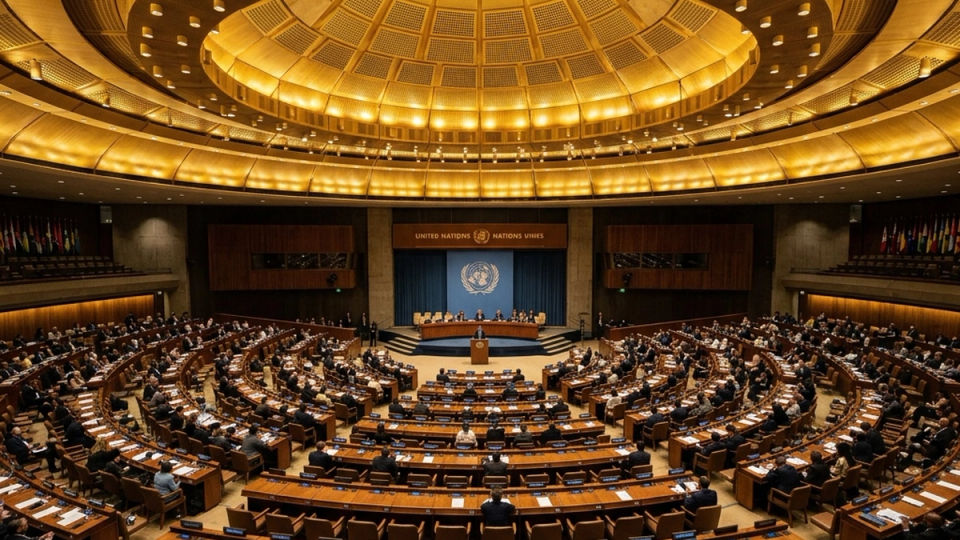
India and Israel stood as the sole nations to vote against a United Nations draft resolution seeking conventional arms control at regional levels. The draft resolution, sponsored by Pakistan and Belarus, was adopted by the UN General Assembly First Committee on Monday, November 2, 2026, receiving 180 votes in favour, two against, and zero abstentions.
Among the 193 member states of the United Nations, New Delhi and Tel Aviv were the only governments to oppose the measure. Presenting India's explanation of vote before the First Committee, Anmol Sher Bedi, first secretary at India's permanent mission, affirmed that conventional disarmament represents a global concern that cannot be confined to narrow geographical boundaries.
Critique of Regional Frameworks and Border Realities
Bedi stated that New Delhi remains unconvinced that conventional disarmament efforts should be pursued primarily within regional and subregional frameworks. He argued that the initiative relies on an unrealistic premise that national security concerns politely stop at regional borders, emphasizing that strategic defense requirements extend well beyond immediate neighbourhoods.
The Pakistan-backed resolution argued that conventional arms control should be centered on regional mechanisms because most security threats in the post-Cold War era have arisen between neighbouring states.
India has maintained a consistent record of voting against the Pakistan-backed regional conventional arms control resolution every year across successive UNGA sessions, according to Open Magazine.
Bedi emphasized that New Delhi's vote aligned strictly with its longstanding diplomatic position against localized arms parity mandates.
Consensus Precedents and Disarmament Machinery
India also raised formal procedural questions regarding the resolution's directive requesting the UN Disarmament Commission to draft fresh principles for regional arms agreements. Bedi remarked that New Delhi viewed the request with curiosity, pointing out that the commission had previously established three separate consensus outcomes on the exact subject.
These past consensus outcomes comprise regional disarmament guidelines adopted in 1993, conventional arms control guidelines finalized in 1999, and practical confidence-building measures agreed upon in 2017. Bedi questioned why an issue that had undergone thorough multilateral deliberation was being returned to start from scratch, unless the goal was merely to keep the UN disarmament machinery busy.
Rejection of South Asia Provisions
During the voting session, India also cast a separate negative vote against a specific operative paragraph referencing arms control initiatives in South Asia. The contested paragraph acknowledged regional consultations, noting consultative mechanisms in Latin America alongside specific proposals for conventional arms control in South Asia.
Indian delegates rejected the paragraph to prevent regional arms initiatives from being leveraged to impose localized restrictions on India's national defense capabilities. The First Committee adopted the broader resolution, sending the Pakistan-sponsored text forward to the plenary session of the UN General Assembly, according to The Times of India.