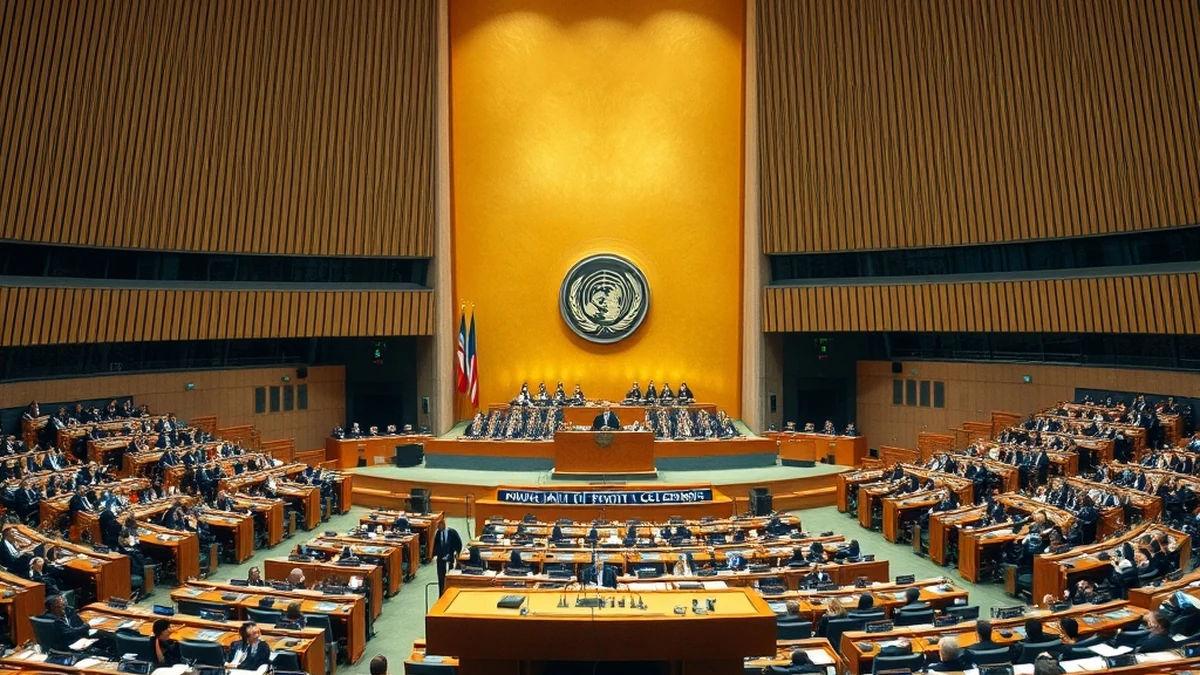
The International Atomic Energy Agency (IAEA) Board of Governors has formally referred Iran to the United Nations Security Council for failing to meet its non-proliferation obligations. The resolution, passed on Wednesday in Vienna, marks the first time in two decades that the nuclear watchdog has taken such a step against Tehran. The decision follows a period of intense diplomatic friction and a breakdown in verification protocols between the agency and the Iranian government.
This referral comes amid a broader, ongoing conflict that has seen significant military strikes on Iranian nuclear infrastructure. Western powers, led by the United States, Britain, France, and Germany, pushed for the resolution, citing grave concerns over Iran's lack of transparency regarding its nuclear material and the continued denial of access to key facilities for international inspectors.
Escalation in Diplomatic Standoff
The resolution was approved by 23 of the 35 member countries on the IAEA Board of Governors. While the move represents a significant diplomatic escalation, its immediate practical impact remains uncertain. Russia, China, and Niger voted against the measure, and because both Russia and China hold veto power within the UN Security Council, analysts expect that any punitive action or new sanctions at that level will face substantial hurdles.
Western diplomats have framed the referral as a necessary response to Iran's persistent refusal to provide updated, verifiable declarations about its nuclear activities. The European Union, in a statement released alongside the vote, emphasized that it is critical for Iran to resume cooperation with the IAEA immediately. The bloc noted that the current lack of information regarding the quantity and location of nuclear materials constitutes a serious proliferation concern that cannot be ignored by the international community.
Impact of Military Strikes on Verification
A central point of contention in the current crisis is the status of Iran's nuclear facilities, which were heavily damaged during military strikes conducted by the United States and Israel. These operations, which occurred during a 12-day conflict in June 2025 and again in late February 2026, targeted critical infrastructure including uranium enrichment plants at Natanz and Fordo. Since these attacks, Iran has barred IAEA inspectors from entering the sites, citing the damage and the ongoing security situation as justification for the restricted access.
Tehran has consistently maintained that its nuclear program is strictly for peaceful purposes and has characterized the IAEA's resolution as a politically motivated act. Iranian officials have argued that the disruption of verification processes is a direct consequence of the military aggression it has faced. Deputy Foreign Minister Kazem Gharibabadi stated on social media that the agency is using the very disruption caused by these strikes as a pretext to issue a resolution, labeling the move a delusional attempt to force the nation into surrender.
Concerns Over Enriched Uranium Stocks
The IAEA has expressed urgent concern regarding the status of Iran's enriched uranium stockpile. Before the military strikes in 2025, the agency estimated that Iran held approximately 440 kilograms of uranium enriched to 60 percent purity. This level of enrichment is considered a short technical step away from the 90 percent threshold required for weapons-grade material. IAEA Director General Rafael Grossi warned the board on Monday that the agency's inability to verify the current status of these stocks is a matter of serious proliferation concern.
While the IAEA believes that more than 200 kilograms of this material may remain at one of the sites, the lack of comprehensive data makes it impossible to confirm the total amount or its current state. The resolution specifically demands that Iran declare its remaining stocks and allow inspectors to verify them. Tehran, however, has linked any potential return of inspectors to a wider settlement with the United States and Israel, effectively conditioning transparency on the cessation of hostilities.
Historical Context and Treaty Obligations
Iran has been a signatory to the Nuclear Non-Proliferation Treaty (NPT) since 1970, an agreement designed to prevent the spread of nuclear weapons while guaranteeing the right of members to develop nuclear energy for peaceful purposes. The current referral is the latest in a series of resolutions that have strained this relationship. A previous resolution passed in June 2025 found Iran in non-compliance regarding its failure to explain uranium traces detected at undeclared sites, an issue that had been under investigation for years.
Despite the severity of the current referral, the path forward remains fraught with diplomatic complexity. The NPT includes an escape clause that allows a state to withdraw if it determines that extraordinary events have jeopardized its supreme interests, provided it gives three months' notice. While Iran has not invoked this clause, its rhetoric suggests a hardening stance against international oversight. The agency's board has now requested that Director General Grossi report the resolution to the UN Security Council and the General Assembly, setting the stage for a high-stakes debate in New York.
Next Steps in the Security Council
The formal referral now moves to the UN Security Council, where the resolution and previous findings of non-compliance will be presented to member states. While the IAEA has fulfilled its procedural mandate by reporting the breach, the Security Council's response is subject to the political dynamics of its permanent members. Given the opposition from Russia and China during the IAEA board vote, the likelihood of a unified Security Council resolution imposing new sanctions remains low. The international community now faces a period of uncertainty as the IAEA continues to seek access to the damaged facilities, while Tehran maintains its refusal to cooperate until broader security demands are met.