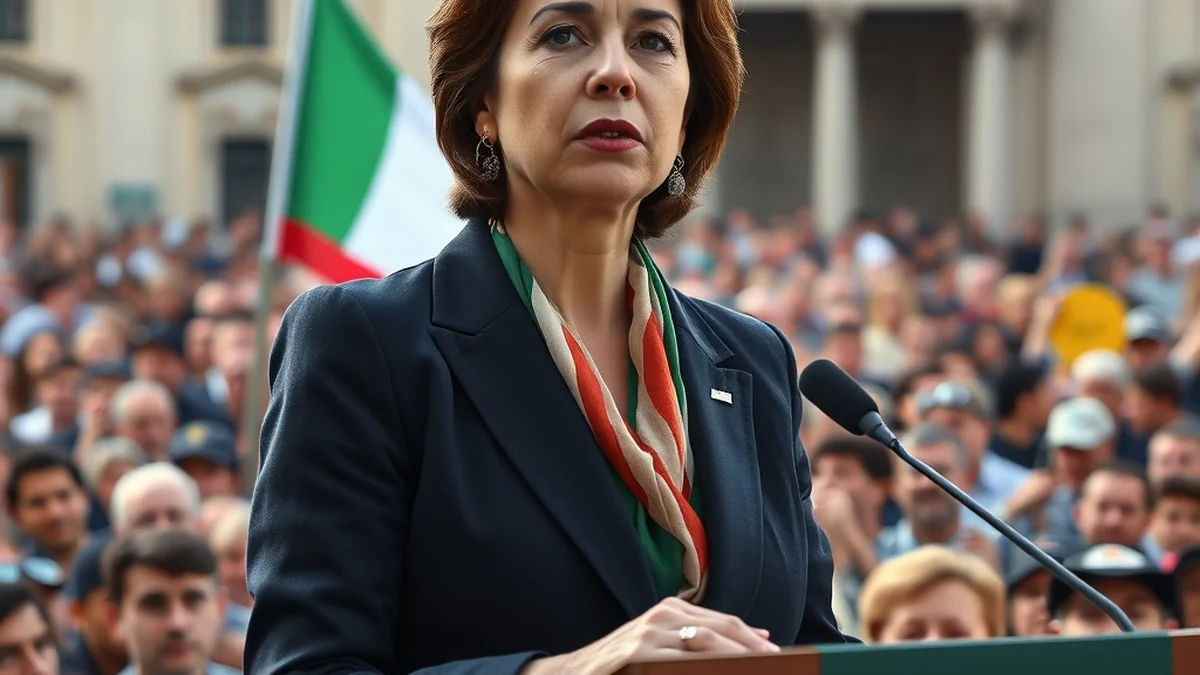
Italian Prime Minister Giorgia Meloni reached a historic milestone on Friday, September 4, 2026, as her administration became the longest-serving government in Italy’s postwar history. Marking 1,413 days in office, Meloni surpassed the previous record held by the late media tycoon Silvio Berlusconi. The achievement highlights a period of relative stability for a nation historically characterized by frequent government collapses, cabinet reshuffles, and political volatility.
To commemorate the milestone, Meloni scheduled a major rally in the southern city of Bari. The event was expected to draw thousands of supporters, serving as a public display of her administration's endurance. However, the celebration was not without opposition, as protesters gathered in the vicinity to demonstrate against her government’s policies, underscoring the persistent political polarization that has defined her tenure.
A Departure from Italian Political Volatility
Italy’s political landscape has long been defined by fragility, with governments frequently toppled by internal coalition crises, parliamentary defections, and sudden shifts in party alliances. Meloni’s ability to maintain a consistent administration for over 1,400 days represents a significant departure from this historical norm. Her tenure has been marked by a disciplined approach to managing the diverse interests within her right-wing governing coalition.
While previous administrations often succumbed to the pressures of coalition infighting, Meloni has managed to navigate these internal tensions. Analysts point to her firm grip on the Brothers of Italy party and her strategic management of coalition partners as key factors in her longevity. By avoiding the common pitfalls of cabinet instability, she has provided a level of continuity that has been rare in the Italian executive branch since the end of the Second World War.
The Legacy of Silvio Berlusconi
For decades, Silvio Berlusconi stood as the benchmark for political longevity in modern Italy. His influence on the nation’s political and media landscape was profound, and his ability to hold power through various administrations made him a dominant figure in European politics. Surpassing his record is a symbolic victory for Meloni, who has sought to consolidate her position as the primary leader of Italy’s right-wing movement.
This transition in records reflects a broader shift in the Italian right. While Berlusconi’s era was defined by his unique blend of media influence and populist appeal, Meloni’s tenure has been characterized by a more structured, party-centric approach to governance. The milestone serves as a testament to her success in institutionalizing her political platform and maintaining a cohesive front despite the inherent challenges of leading a multi-party coalition.
Public Response and Political Polarization
Despite the celebration in Bari, the milestone has drawn sharp criticism from opposition groups. The presence of protesters near the rally site serves as a reminder that Meloni’s government remains a subject of intense debate. Critics have frequently challenged her administration on issues ranging from social policy to economic management, and the record-breaking duration of her government has not silenced these dissenting voices.
The contrast between the thousands of supporters at the rally and the nearby protesters illustrates the deep divisions within Italian society. Meloni’s supporters view her longevity as a sign of strength and effective leadership, while her detractors argue that her policies have exacerbated social tensions. This ongoing friction suggests that while she has achieved stability in the halls of power, the broader political struggle for the direction of the country continues unabated.
Future Challenges for the Meloni Administration
As Meloni looks beyond this milestone, her government faces a complex set of domestic and international challenges. Maintaining coalition unity will remain a primary concern, particularly as the political climate becomes increasingly competitive. The ability to deliver on long-term policy goals will be critical to sustaining the support she has cultivated over the past four years.
the government must navigate an evolving economic environment and shifting geopolitical dynamics. Whether Meloni can continue to avoid the crises that have historically plagued Italian prime ministers remains an open question. For now, however, she has secured her place in the history books, setting a new standard for executive endurance in a nation that has long struggled to find it.