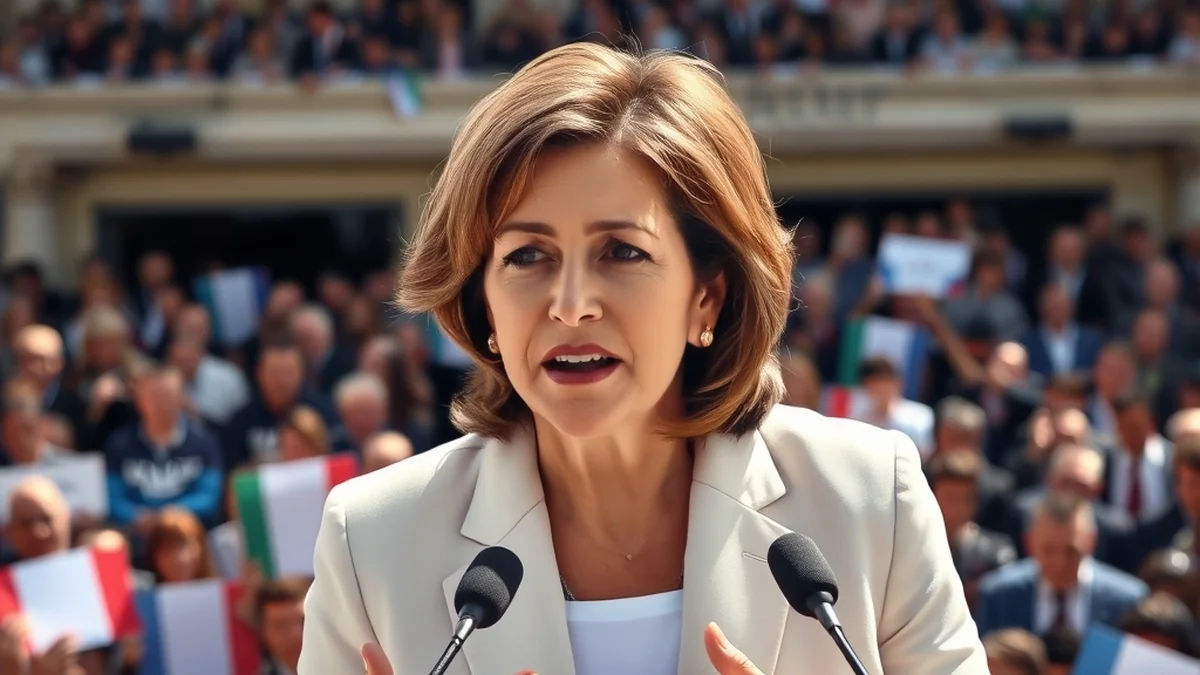
Italian Prime Minister Giorgia Meloni marked a historic milestone on Friday, September 4, 2026, as her administration officially became the longest-serving government in Italy’s postwar history. Having held power for 1,413 days, Meloni surpassed the previous record held by the late media tycoon and former Prime Minister Silvio Berlusconi. The achievement highlights a period of relative executive stability in a nation historically characterized by frequent government collapses, cabinet reshuffles, and shifting political alliances.
To commemorate the occasion, the Prime Minister scheduled a major rally in the city of Bari, expected to draw thousands of supporters. While the event serves as a celebration of her political longevity, the atmosphere in the city remains divided, with protesters organizing demonstrations nearby to voice their opposition to her administration’s policies. The milestone underscores the unique political trajectory of Meloni’s government, which has managed to maintain its coalition despite internal pressures and external challenges.
A Departure from Italian Political Volatility
Italy’s political landscape has long been defined by its fragility, with governments frequently toppling due to internal crises, legislative deadlocks, and the withdrawal of support from coalition partners. Meloni’s ability to sustain her administration for over 1,400 days stands in stark contrast to the typical lifespan of Italian cabinets. By navigating the complexities of her governing coalition, she has avoided the fate of many predecessors who were forced out of office by defections or sudden shifts in parliamentary support.
Observers note that this stability has been a central pillar of her tenure, allowing for a level of policy continuity that has been rare in recent decades. While previous administrations often struggled to survive beyond the two-year mark, Meloni’s government has successfully managed the competing interests within her right-wing coalition. This endurance has provided a sense of predictability in the executive branch, even as the broader political environment remains highly polarized and subject to intense public scrutiny.
The Legacy of Silvio Berlusconi
For years, the record for the longest-serving postwar government was held by Silvio Berlusconi, a dominant figure in Italian politics who led multiple administrations over several decades. Surpassing Berlusconi’s record is a symbolic victory for Meloni, who has sought to consolidate her influence within the right-wing spectrum. The comparison between the two leaders is frequently drawn by political analysts, given their shared roots in conservative politics and their ability to command significant public support.
However, the nature of their respective tenures differs significantly in terms of the political mechanisms used to maintain power. While Berlusconi’s time in office was often marked by high-profile legal battles and personal controversies, Meloni’s approach has focused on maintaining strict discipline within her party and coalition. By reaching this 1,413-day threshold, she has effectively redefined the expectations for executive longevity in the modern Italian republic, setting a new benchmark for future leaders.
Challenges and Public Opposition
Despite the celebration in Bari, the government’s longevity has not been without significant friction. The presence of protesters near the rally site serves as a reminder of the deep-seated opposition to Meloni’s hard-right agenda. Throughout her time in office, her administration has faced criticism from various sectors, including labor unions, civil rights groups, and political opponents who argue that her policies have marginalized vulnerable populations and eroded democratic norms.
These demonstrations reflect a broader societal divide that has persisted throughout her term. While her supporters credit her with providing stability and a clear ideological direction, critics point to the social costs of her governance. The tension between the government’s electoral mandate and the vocal opposition on the streets remains a defining feature of the current political climate, suggesting that while the government may be stable, it is far from universally accepted.
Future Outlook and Political Sustainability
As Meloni looks beyond this record-breaking milestone, the question of how long her coalition can remain intact becomes increasingly relevant. Maintaining such discipline over an extended period requires constant negotiation and the management of internal dissent, which could intensify as the government approaches future electoral cycles. The ability to sustain this momentum will depend on her capacity to address ongoing economic concerns and maintain the loyalty of her coalition partners.
Unresolved questions remain regarding the long-term impact of her policies on Italy’s institutional framework and its standing within the European Union. While the current administration has achieved a level of durability that few thought possible, the political landscape remains dynamic. Whether this record will be extended further or if the government will eventually succumb to the same pressures that have historically plagued Italian politics remains to be seen in the coming months.