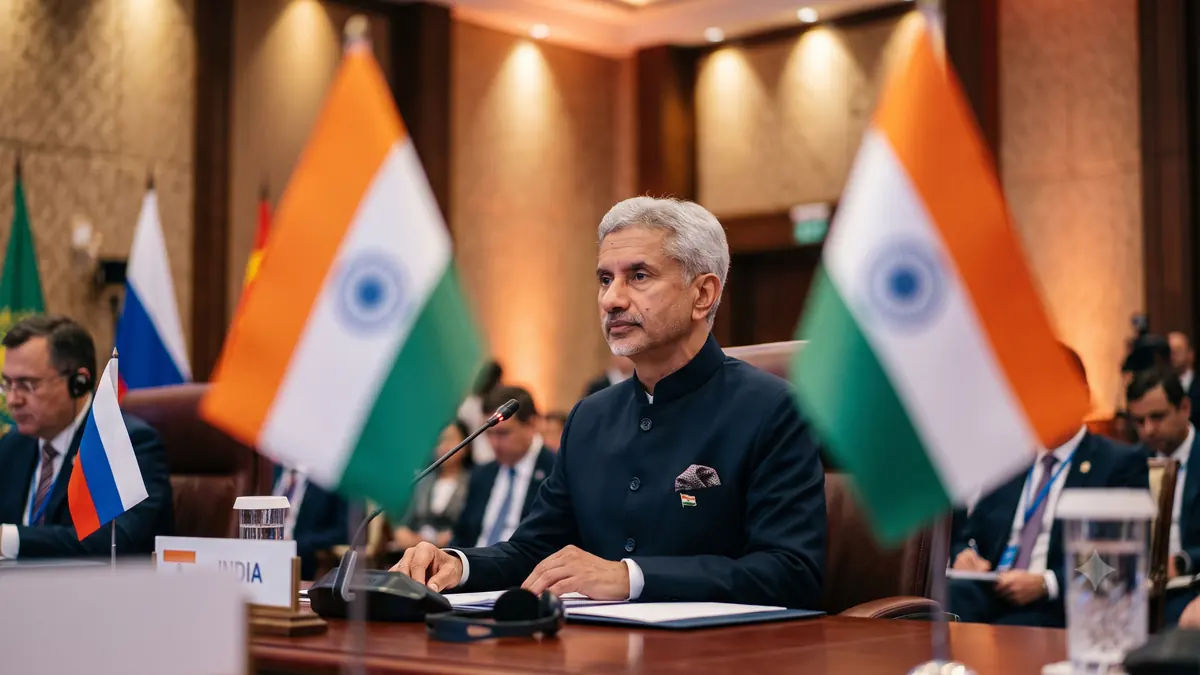
External Affairs Minister S. Jaishankar will embark on a three-day official visit to Ukraine and the Republic of Poland from September 3 to September 5, 2026, according to an official statement released by the Ministry of External Affairs (MEA). During the leg in Kyiv, Jaishankar is scheduled to hold bilateral consultations with his Ukrainian counterpart, Foreign Minister Andrii Sybiha. Following his meetings in Ukraine, Jaishankar will travel to Warsaw to meet with Polish Deputy Prime Minister and Foreign Minister Radoslaw Sikorski.
MEA Outlines Bilateral Agenda Amid Ongoing Escalation
The Ministry of External Affairs (MEA) stated, "External Affairs Minister S. Jaishankar will undertake an official visit to Ukraine and the Republic of Poland from September 3 to 5." The ministry added that the visit aims to enhance bilateral relations and provide an opportunity to exchange views on regional developments and issues of mutual interest. Specific agenda items for the bilateral consultations beyond general discussions on enhancing relations and regional developments are not detailed in official briefs.
The visit to Ukraine takes place against the backdrop of an escalation of hostilities between Kyiv and Moscow. On September 1, 2026, Ukrainian President Volodymyr Zelenskyy reported that Russia has altered its tactics, launching large-scale attacks on Ukrainian cities and infrastructure, including energy facilities. The UN Human Rights Monitoring Mission in Ukraine recorded 437 civilians killed and 2,610 injured in July 2026, marking it as the deadliest month for civilians since May 2022. According to the same UN monitoring figures, long-range weapons accounted for 38% of these civilian casualties.
Diplomatic Engagements in Kyiv
Ahead of Jaishankar's arrival, Sergiy Kyslytsya, the Ukrainian First Deputy Head of the Office of the President, met with India's Ambassador to Ukraine, Anjani Kumar, on September 1, 2026. The meeting focused on bilateral relations and New Delhi's potential role in ending the conflict. Kyslytsya noted that they also exchanged views on Prime Minister Narendra Modi's recent message to Russian President Vladimir Putin regarding the cessation of the war. However, the precise nature of India's potential role in efforts to end Russia's war remains unspecified.
Prime Minister Modi recently urged Russian President Vladimir Putin on August 31, 2026, to transition from an endless war to an end of war during the Shanghai Cooperation Organization (SCO) summit in Bishkek, Kyrgyzstan. This diplomatic push aligns with Modi's consistent advocacy for peace and dialogue since the war began in 2022, when he notably stated that this is not an era of war during a meeting in September 2022. Historically, India has also facilitated the safe return of approximately 22,500 citizens from Ukraine in February 2022 by lifting air-bubble restrictions and issuing advisories.
Geopolitical Realities and Energy Trade Dynamics
While India advocates for diplomatic resolution, its continued deepening economic ties with Russia present a complex geopolitical dynamic. Russia remains India's second-largest supplier of fossil fuels, positioned behind China. This economic relationship has drawn scrutiny from Western allies. The United States is reportedly set to approve a bill imposing up to 100% tariffs on top buyers of Russian oil, including India, with the stated aim of curbing Russian oil revenues.
For Ukraine, Jaishankar's visit signifies continued diplomatic engagement and potential support from a major global power, especially as Russian attacks intensify and air defense remains a central requirement. For India, the visit allows New Delhi to balance its longstanding strategic partnership with Russia, deepen ties with Kyiv and European partners, and navigate international pressures regarding its energy imports from Russia.