
Dozens Killed After High-Speed Trains Collide South of Madrid in Spain
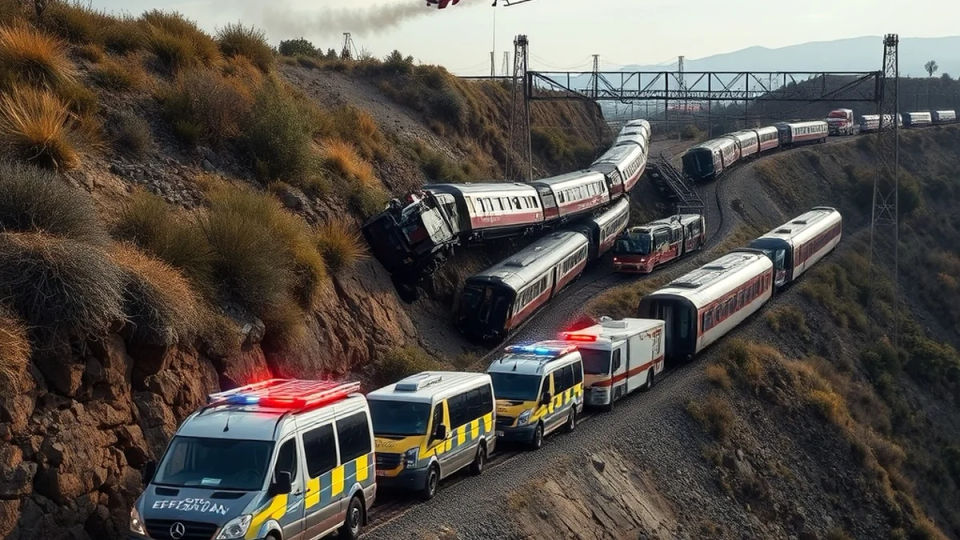
Two high-speed trains collided south of Madrid on Wednesday morning, resulting in the deaths of at least 68 people and leaving eighty others injured. The crash occurred shortly after 09:00 local time between the municipalities of Mora and Orgaz in Toledo province, roughly 140 kilometres or 100 miles south of the Spanish capital. According to national infrastructure administrator Adif, a train operated by state carrier Renfe crashed into the rear of an Iryo high-speed convoy that had stopped on the tracks along the high-speed corridor connecting Madrid to Seville.
The impact caused at least two passenger carriages to derail and tumble down an embankment, prompting emergency response efforts involving regional fire brigades and rescue helicopters. Authorities calculated that more than 500 people were travelling across both trains at the time of the collision. Regional government spokesperson Esther Padilla reported that the Iryo convoy carried 146 passengers alongside one infant, while the following Renfe train carried 397 passengers on board.
Signaling Failure and Control Centre Directives
Transport Minister Oscar Puente explained that an initial computer malfunction had caused six moving passenger trains to halt automatically along the route. In the event of system failures, management of train movements shifts directly to the railway control centre. Puente stated that operators at the control centre subsequently permitted halted convoys to resume motion without imposing speed restrictions, calling the directive an action taken under inexplicable circumstances that culminated in the rear-end crash.
At 8:30 a.m., the security system along a stretch of 63 kilometers failed due to a computer malfunction, halting all trains on that line before the collision occurred at 8:53 a.m, according to CBS News.
Private operator Iryo reported that its convoy was struck from behind by the Renfe train due to causes that remain subject to official examination. Eighty individuals were receiving medical care for injuries, according to authorities, with 50 passengers in serious condition and 15 casualties listed in critical care. Regional hospitals across Toledo, Ciudad Real and Alcazar de San Juan postponed scheduled surgeries to accommodate the influx of wounded travelers, while the blood transfusion centre in Madrid issued appeals for urgent donations.
National Mourning and Official Inquiry
Spanish Prime Minister Pedro Sanchez travelled directly to the disaster location, declaring that the country was in deep grief as families dealt with profound personal losses. Sanchez committed that governmental investigators would uncover the exact causes of the catastrophe, emphasizing that any administrative negligence or security system shortcomings would face firm institutional accountability. Political organizations across Spain suspended public appearances and campaigning activities ahead of upcoming parliamentary elections.
Spanish Prime Minister Pedro Sánchez announced from the crash site that his government would declare three days of national mourning, according to CBS News.
Spain's King Felipe characterized the crash as a terrible tragedy, with the Spanish royal household conveying condolences to grieving relatives on social media. A spokesperson for the European Union stated that the bloc stood ready to assist Spain if needed as recovery teams continued clearing wreckage from the track bed.