
Democrats Win 258 US House Seats for Largest Majority Since 1992
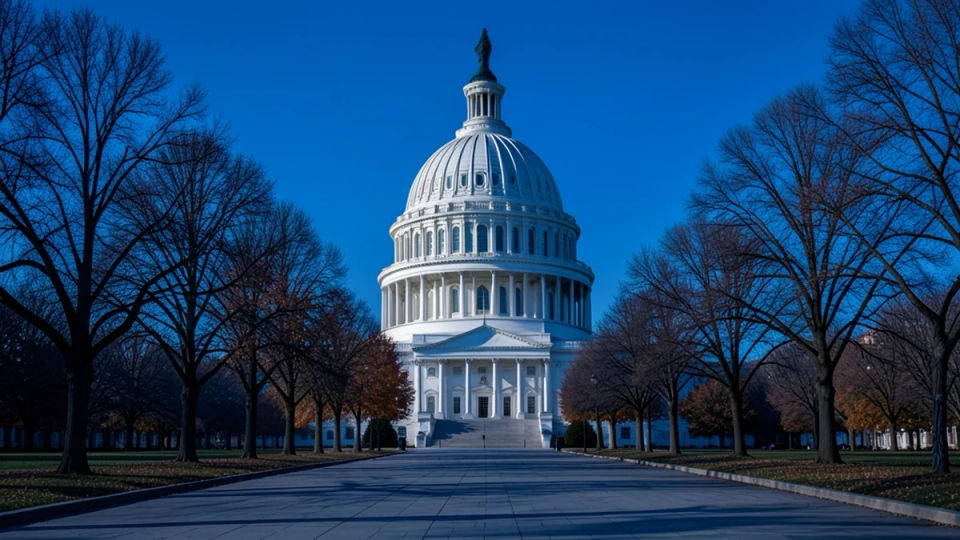
The Democratic Party has won at least 258 seats in the US House of Representatives, its largest House majority since 1992, after Democrat Chuck Hubbard unseated Republican Representative Virginia Foxx in North Carolina's 5th Congressional District, the BBC and Al Jazeera reported.
Hubbard defeated Foxx by 330 votes with 99% counted following a recount permitted under state law for margins below 1%, avenging a nine-percentage-point loss to Foxx in 2024, BBC and Al Jazeera reported. Four House contests remain undecided, with Democrat Victoria Broderick leading by fewer than 300 votes in Tennessee's fourth district, Democrat Jake Johnson ahead by fewer than 500 votes in Minnesota's first district, and two Louisiana races heading to December runoffs.
Seat Tallies, Voter Drivers, and Divided Government
Republicans hold at least 173 seats, while NDTV and India Today put Democratic gains so far at 44 seats compared with 40 in 2018, and Al Jazeera reported Democrats picked up about 47 seats from their 214 in the outgoing Congress. The 258-seat total matches Democrats' 1992 haul under Bill Clinton and tops the 257 seats won in 2008 under Barack Obama, while Democrats also won 56 seats in the 100-member Senate ahead of the 120th Congress swearing-in on January 3, 2027. Under the Constitution's Presentment Clause, overriding a presidential veto requires a two-thirds vote of both the House and Senate, at least 290 House members and 67 senators in full chambers, according to Constitution Annotated (Congress.gov) and Peterson Institute for International Economics. House Democrats plan to move very early in the new 120th Congress to ban Members of Congress from trading stocks, according to Office of the House Democratic Leader. Without a veto-proof majority, Congress retains leverage over must-pass appropriations bills, while the Senate exercises confirmation authority over most senior administration positions and federal judicial appointments, according to Peterson Institute for International Economics.
BBC and Al Jazeera reported that voter anger over the cost of living, inflation linked to the US-Israel war with Iran, corruption, and immigration raids drove Republican losses, with President Donald Trump (at 32% approval in a November Reuters/Ipsos poll) and Vice President JD Vance suggesting war-related inflation hurt their party. New York Representative Alexandria Ocasio-Cortez called the victory a "mandate for change", while Foxx conceded gracefully on Sunday and Hubbard praised her commitment to a smooth transition.
100-Day Agenda, Oversight, and Leadership
NDTV and India Today reported that House Democrats are preparing a 100-day agenda to reverse Republican Medicaid cuts and restore expired Affordable Care Act tax credits, alongside subpoena probes into Trump and his family's finances.
Democratic leader Hakeem Jeffries, poised to become the first Black Speaker of the House on January 3, 2027 with a far wider margin than outgoing Speaker Mike Johnson's 218-214 split, has not ruled out a third impeachment of Trump, though Trump retains veto power over legislation, BBC and NDTV reported. House Republican minority leader Jim Jordan vowed that GOP lawmakers will fight for American families over the next two years.
Background
House and Senate rules delegate subpoena authority directly to every standing committee, empowering almost all House committee chairs unilaterally and requiring ranking-member consent in most Senate committees, according to Congressional Research Service.
The election featured the second-most number of flipped seats this century, behind 2010 when Republicans flipped 66 seats and netted 64 in a backlash to the passage of the Affordable Care Act, according to OPB.
Sources & Citations
- BBC
- Al Jazeera
- NDTV
- India Today
- PBS News
- Office of the House Democratic LeaderPrimary / official
- Council on Foreign Relations
- OPB
- Constitution Annotated (Congress.gov)Primary / official
- Peterson Institute for International Economics
- Congressional Research Service
- Office of the Minnesota Secretary of StatePrimary / official
- Tnfirefly
- ACLU of Tennessee
- The Hill