
UN COP31 Climate Talks in Turkiye Collapse Without Agreement
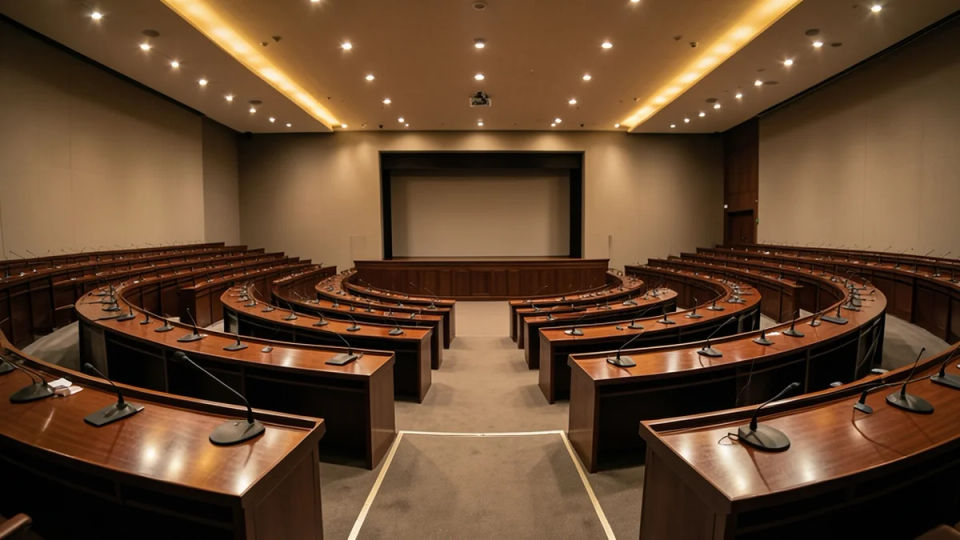
United Nations COP31 climate talks in Antalya, Turkiye, collapsed without an overarching agreement on Sunday, November 22, 2026, after running past Friday's deadline to become the longest UN climate summit in history. It is the first time the annual conference has failed to reach a main political deal since the 2009 Copenhagen summit.
Negotiations broke down over omitted references to fossil fuels and the absence of clear adaptation finance commitments for poorer nations. A first draft on Monday had mentioned "fossil fuel" or "fossil fuels" six times, but a revised early-Sunday draft presented by COP31 hosts Turkiye and negotiation leaders Australia removed those words and dropped a $120bn adaptation finance target.
Divisions Over Fossil Fuels and Finance
The European Union, represented by Irish Minister Darragh O'Brien, rejected the text, calling it unconscionable to adopt a climate pact without mentioning fossil fuels. Denmark's climate minister Samira Nawa said the EU accepted adaptation clauses but objected to weak science and missing mitigation language, while UK lead negotiator Kate Hughes said the draft moved backwards on science and Energy Secretary Miatta Fahnbulleh called the failure "immensely disappointing".
Vulnerable nations also opposed the text, including the 44-member Least Developed Countries group representing more than 1 billion people, alongside the Marshall Islands, Vanuatu, Panama, and Kenya, which objected that Africa was not mentioned. By contrast, Russian delegate Sergei Kononuchenko argued that shrinking oil and gas supplies would cause energy poverty for the poorest, and Saudi Arabia's Mohammad Ayoub said Arab states accounted for a small share of historical emissions. Intervening on behalf of the Like-Minded Developing Countries, India flagged the "dilution of the historical responsibility and obligations of developed countries" in the text but stopped short of outright rejection, saying they were willing to move forward for the sake of multilateralism, according to The Times of India.
Although COP30 in Brazil had agreed to triple adaptation finance, this year's text omitted concrete figures and baselines. UN Secretary-General Antonio Guterres said he was "deeply disappointed" and accused fossil fuel interests of distorting science and delaying policy.
Partial Pledges and Next Steps
Had the text passed, it would have marked the first formal acknowledgement that global warming is set to overshoot the 1.5 degrees Celsius (2.7 degrees Fahrenheit) limit agreed by nearly 200 countries in the 2015 Paris Agreement, with the UN projecting about 2.8C by 2100 under current policies. Separately adopted COP31 decisions on the Green Climate Fund still stand, and the Paris Agreement and earlier COP decisions, including the 2023 UAE Consensus, remain in force, according to Hindustan Times.
Delegates also made progress on a "just transition mechanism" for workers and communities. Chris Bowen, Australia's climate minister and COP31 president of negotiations, said more than 90 countries signed an electrification pledge, and COP31 president Murat Kurum said more than 80 countries backed Turkiye's target to raise electricity's share of global energy use to 35% by 2035, the BBC reported. UN climate chief Simon Stiell said he would seek advice on reforming the consensus process ahead of COP32 in Ethiopia in November 2027. Formal amendments to the UNFCCC require a three-quarters majority of the Parties present and voting under Article 15.3, according to UNFCCC.
Sources & Citations
- Al Jazeera
- Al Jazeera
- BBC
- Hindustan Times
- TOI
- Carbon Brief
- UNFCCCPrimary / official
- UNFCCCPrimary / official
- Legal Response International
- Open Magazine
- Inside Climate News
- CBC News