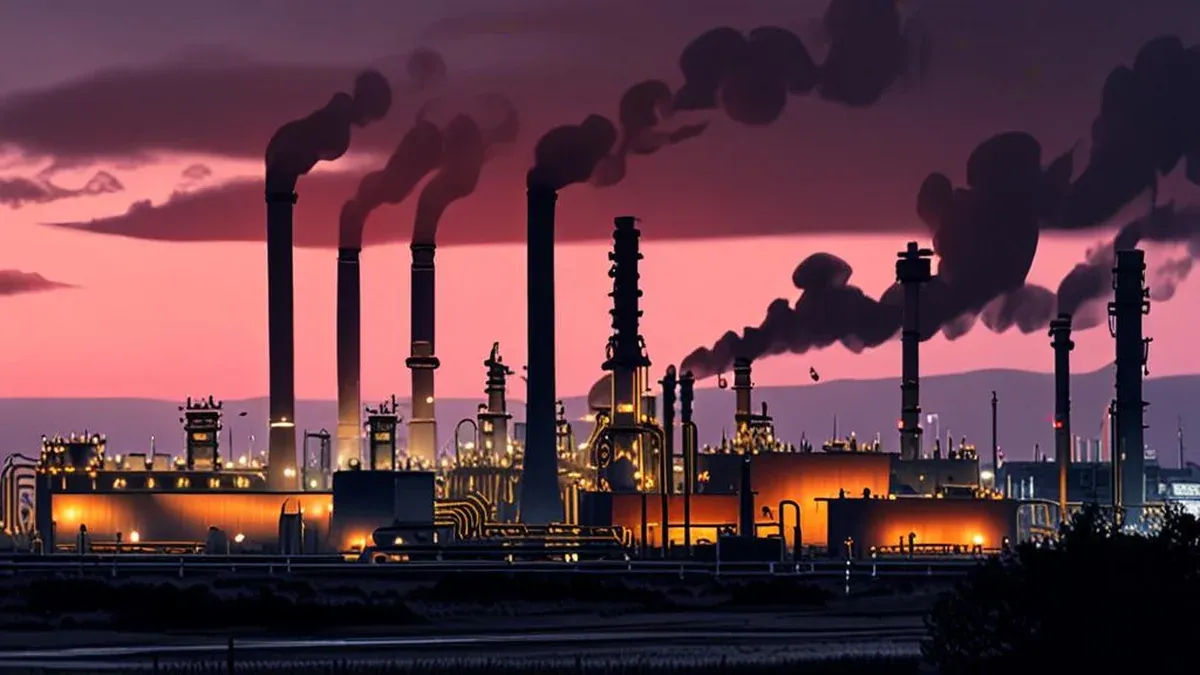
Australia is currently experiencing a massive surge in data centre construction, driven by the global race to build infrastructure for artificial intelligence. With 162 facilities already operational and 90 more in the pipeline, the country has attracted over A$155bn in planned investment. However, this rapid expansion is increasingly clashing with local communities, who are raising alarms over the environmental impact, noise pollution, and the strain these facilities place on essential power and water resources.
While industry advocates argue that these centres are vital for Australia’s digital future and economic diversification, residents in areas like Sydney’s Lane Cove and western Sydney are reporting significant concerns. The tension is centered on the massive energy and water requirements of modern AI infrastructure, which critics argue are being prioritized over the needs of local households and existing businesses. As the government faces pressure to balance this technological growth with sustainability, the debate has become a flashpoint for broader questions about the true cost of the AI revolution.
The Economic Pitch vs. Local Reality
Industry proponents, including Data Centres Australia CEO Belinda Dennett, argue that building domestic infrastructure is essential to avoid becoming merely a user of foreign tools. Dennett emphasizes that Australia’s stable energy grid, land availability, and political security make it an ideal hub for global tech giants. Business experts, such as Jon Whittle of the CSIRO, suggest that this investment has been a critical buffer against recession, urging the government to lean into the expansion to secure future-proof industries.
However, this economic narrative is being challenged by those directly affected by the construction. In Lane Cove, residents report constant humming and high-pitched noise from existing facilities, while local business owners have been told they must relocate to make room for new clusters. Critics point out that while construction creates hundreds of jobs, operational employment often drops to around 100 roles per facility, leading to concerns that the long-term economic benefits for local communities are being overstated.
Strained Power and Water Infrastructure
Energy and environmental experts warn that Australia’s current grid capacity is ill-equipped to handle the massive demands of AI data centres, which the Australian Energy Market Operator predicts could triple by 2030. The Climate Council has cautioned that without significant new renewable generation, power prices in New South Wales could rise by 26% by 2035. Fears are mounting that the industry will rely on new coal or gas-fired power plants to meet the need for uninterrupted, high-speed energy, undermining national net-zero targets.
Water consumption presents an equally pressing challenge. Some data centres require up to 40 million litres of water daily for cooling, a volume equivalent to the needs of 80,000 households. With Sydney already facing pressure to expand its drinking water supply for a growing population, the Water Services Association of Australia has warned that data centres could consume up to 25% of the city’s drinking water by 2035. This competition for resources has led to calls from community groups for a moratorium on all new data centre developments.
Transparency and Regulatory Challenges
A significant source of public distrust is the lack of transparency surrounding many data centre agreements. Critics, including Lane Cove deputy mayor Rochelle Flood, note that many deals are shielded by non-disclosure terms, making it difficult for local councils to verify claims about resource usage or sustainability. This opacity has fueled frustration, with residents arguing that they were never properly consulted before their neighborhoods were designated as hubs for massive, windowless server farms.
In response to the growing backlash, Prime Minister Anthony Albanese announced in July that new legislation will be introduced in 2027 to mandate that large-scale data centres underwrite their own power supplies and limit water usage. However, the legislation will not apply to projects already built or under construction, leaving many current community disputes unresolved. As Australia navigates this infrastructure boom, the government’s ability to enforce sustainability benchmarks will likely serve as a template for other nations facing similar tensions between AI development and local resource security.
A Global Pattern of Resistance
The friction in Australia is not an isolated incident but part of a broader global trend. Similar conflicts have played out in the United States, particularly in Virginia’s 'Data Center Alley,' as well as in Ireland and the American Southwest. In these regions, tech giants like Microsoft, Amazon, and Google have faced intense local resistance over grid strain and the environmental impact of their infrastructure. Regulators in Australia are closely monitoring these international precedents as they attempt to manage the current wave of applications.
As the AI infrastructure race continues to accelerate, the tension between the promise of technological advancement and the reality of resource scarcity is becoming a recurring theme. Whether Australia can successfully integrate these massive facilities without compromising the quality of life for its residents remains an open question. For now, the debate highlights a fundamental challenge for the digital economy: how to build the physical backbone of AI in a way that is both sustainable and socially acceptable to the communities that host it.