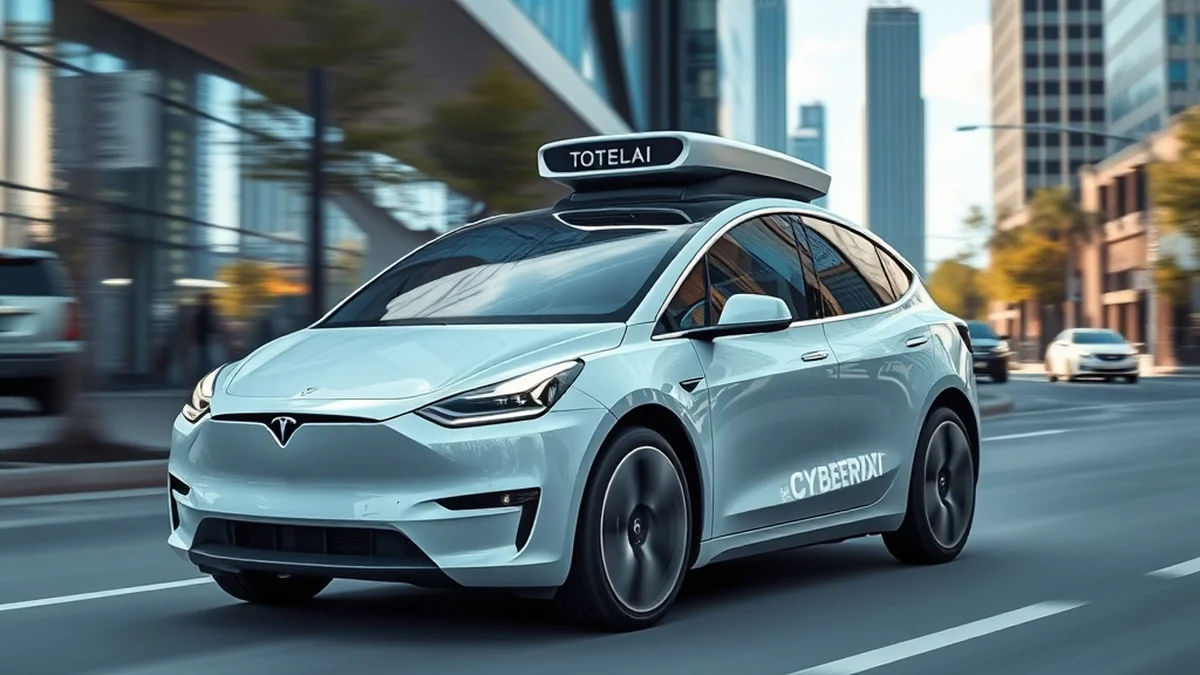
The United States auto safety regulator is actively evaluating Tesla’s commercial rollout of its Cybercab robotaxis in limited sections of Austin, Texas, as federal oversight intensifies around fully autonomous vehicle deployment. The National Highway Traffic Safety Administration confirmed the ongoing evaluation through a spokesperson on Thursday, putting the spotlight on a vehicle architecture that challenges traditional regulatory frameworks.
The deployment centres on Tesla's newly introduced Cybercab, which is engineered as a two-seater autonomous vehicle completely lacking a steering wheel, pedals, or rearview mirrors. These missing mechanical controls place the vehicle squarely at odds with established federal safety standards that have historically mandated physical driver interfaces for all motor vehicles operating on public roads.
Regulatory Scrutiny and Federal Safety Norms
The decision by the National Highway Traffic Safety Administration to evaluate the Austin rollout brings foundational automotive safety rules into direct conflict with modern autonomous vehicle design. Federal regulations traditionally require physical controls such as steering wheels and pedals to allow a human driver to intervene in emergency situations. Tesla's decision to strip these interfaces from the Cybercab leaves the vehicle entirely reliant on automated systems for navigation and control.
Industry observers note that operating vehicles without manual overrides requires specific federal exemptions or rigorous compliance reviews under current motor vehicle safety standards. The agency's evaluation will likely focus on whether the Cybercab's autonomous driving architecture satisfies existing safety performance metrics or if new regulatory pathways must be established to accommodate steering-wheel-free vehicles on American roadways.
Limited Deployment in Austin, Texas
Tesla has initiated the rollout of the Cybercab within tightly restricted geographical zones in Austin, Texas, using the city as a testing ground for its driverless taxi service. Restricting operations to specific neighborhoods allows the company to gather initial operational data while managing the complexities of urban driving environments without manual driver backups.
Local deployment details indicate that rides are currently available only to a select audience or under monitored conditions, reflecting a cautious approach to scaling autonomous fleets. This localized release strategy mirrors tactics used by other autonomous vehicle developers seeking to validate safety and system reliability before pursuing broader commercial expansion across multiple states.
Design Specifications of the Cybercab
The Cybercab represents a radical departure from conventional automobile manufacturing, featuring a minimalist two-seater cabin optimized exclusively for autonomous ride-hailing. By eliminating the steering wheel, pedals, and mirrors, Tesla has redesigned the interior layout to prioritize passenger space and infotainment integration during transit.
The absence of physical driver controls underscores Tesla's commitment to achieving fully autonomous operation without human fallback options. However, this engineering choice also intensifies the regulatory burden, as federal authorities must determine how safety oversight applies to vehicles that cannot be manually driven under any circumstances.
Industry Implications for Autonomous Transport
The evaluation by the National Highway Traffic Safety Administration carries significant implications for the broader autonomous vehicle sector and other manufacturers pursuing steering-wheel-free designs. A stringent regulatory review could set a rigorous precedent for how driverless technologies are vetted before achieving widespread commercial viability in the United States.
As the evaluation proceeds, the outcome will likely influence future deployment timelines for similar autonomous concepts across the American automotive landscape. Stakeholders across the tech and automotive industries are closely monitoring the agency's review to gauge how federal regulators will balance innovation with passenger and pedestrian safety.
Future Oversight and Compliance Milestones
Federal safety officials have not yet specified a definitive timeline for completing their evaluation of the Cybercab deployment in Austin. Further regulatory actions could include requests for additional safety data, formal guidance on autonomous vehicle exemptions, or potential restrictions if compliance gaps are identified.
The progression of Tesla's robotaxi service will depend heavily on the findings of this federal review and the company's ability to demonstrate compliance with evolving safety mandates. Unresolved questions remain regarding how the National Highway Traffic Safety Administration will formally classify and regulate vehicles lacking standard human-operated controls.